
Electronic money maintains a strong connection with traditional money, as both are articulated in the same unit of account and are pledged on an asset. In contrast, Bitcoin relies solely on an agreement between its users, without a legal framework drawn up by any centralized body.
Furthermore, its users are the sole players in the virtual currency, creating a situation that is the opposite of traditional currencies. In this case, it is informal, challenging the formal structure of central banks. It’s noteworthy that this type of currency is not subject to any financial institution. Financial institutions are expected to act as intermediaries in information gathering, risk management, and liquidity. It is highly unlikely that this type of currency will fit into this traditional financial circuit.
This economic perspective examines a new phenomenon in the world of money, that of digital currencies such as Bitcoin. The use of these currencies, for the time being, remains very marginal and limited to basic transactions. However, some see a much greater potential and invest heavily in them. In our system, a boost in the exchange rate means that the currency appreciates. Evidently, exchange rate convenience should also be assessed in relation to inflation. If the exchange rate rises, but prices in the other country have also risen, it may be that the overseas purchasing power of our currency remains unchanged or even worse, which is the situation with the actual exchange rate.
Since the relationship of trust requires at least two individuals, and with currencies where the sender is not known, it is a safe bet that one is closer to money laundering than to procedural confidence based just on the currency itself. However, a huge gap separates them from fiat currencies because they are not supported by governments and central banks. The absence of a regulatory framework and regulatory mechanisms is very challenging, and individuals interested in purchasing these new currencies must, for that reason, remain careful and be aware of the inherent risks.
The exchange rate is determined by the acquisition of demand and supply of currency in the foreign exchange market, called Forex. The demand and offer of a currency are due to the exchange rate from a foreign currency to international trade. In this regard, there is an expectation that Bitcoin would evolve in a way that allows users to determine an exchange rate and truly be a currency, even though traditional currencies serve the three functions. In that regard, there is confidence in the unit of account, a value and savings reserve, and a protocol instrument.
While considering this, it should be noted that the price of Bitcoin is very volatile. When comparing this component with fiat currencies, it is the stability of exchange and inflation rate that generates confidence among investors. Additionally, with no intermediary financial mediations, this function is not sufficiently respected because of the lack of guarantee of deposits. This raises the question of whether it is reasonable to consider Bitcoin or any other cryptocurrency a safe haven, as there is no guarantee for its value. However, regardless of the smaller volatility of other currencies and commodities, the level of safety of transactions is higher than within traditional monetary transactions.
The exchange rate fundamentally depends on the balance of payments of a country, and primarily derives from two key factors: trade and financial investments. In the first case, it encompasses imports and exports of goods, including tourism from one country to another. Regarding the latter, it involves activities such as the purchase of foreign treasury bills, as this amount of exchange is linked principally to the level of interest rates that engage capital for good returns.
An aggregation of cryptocurrencies was established in the channel of Bitcoin, but the major principles remain the same. The creators of other cryptocurrencies tend to advocate the fact that their network is less inconvenient to support, transactions are done much faster, and the reward in terms of new currencies created is more beneficial. Some count on a faster or longer expansion of the money supply, though in that case, the difference has no effect on the purchasing power at the certain moment regarding these cryptocurrencies. Even riskier exchange rate transactions, such as currency purchase and sale transactions with the aspiration only to make a profit from the change in exchange rates over time, affect the value. Depending on the situation, monetary authorities may choose to let the exchange rate openly follow the forces of demand and supply, or they may prefer not to diverge from a certain value.
It should be noted that cryptocurrencies are one of the main restraints in the fight against piracy. To overcome the financing of pirate sites, corporations have signed agreements with electronic payment companies, such as Visa, MasterCard, American Express, PayPal, and Skrill, to ensure that illegal actions cannot be financed. This is declared through agreements between monetary authorities that advance the international monetary system.
Regarding this, the real problem is more in the misgiving of a particular currency, especially in those that lose the status of a safe haven they used to have, than in confidence in cryptocurrencies. This is evidenced by the increasing download of Bitcoin, returning the problem to national currencies and their particular monetary systems and central bank policies. Unlike Bitcoin, the derivation of national currencies is centralized, and in most countries, this role rests with a central bank.
The growth of the amount of assets is not fixed, so the choice to increase or decrease the supply of money depends on the objectives traced by the entity that issues money. In this area, traditional currencies have several advantages, since a banknote is not decomposable by itself. However, a central bank system favors inflation over the long term, continually degrading the value of the state currency.
There could be some doubts regarding the ability of central banks to make good decisions, as in most industrialized countries, central banks maintain a low and stable rate of inflation, ensuring the maintenance of the value of the currency. It must be admitted that this system works very well when one looks at the low-price increase over the past two decades.
This article is part of the academic publication Dividing by Zero by Ana Nives Radovic, Global Knowledge 2018
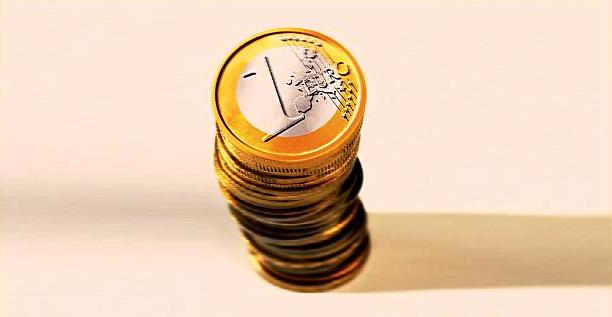
 Ovakvo stanje, međutim, podupiru oni subjekti kojima je jaka valuta garant ekonomske stabilnosti, a u sedamnaestočlanoj eurozoni to su isključivo Njemačka i Francuska. U pretkriznom vremenu ove dvije zemlje imale su relativno nizak rast, njemački u prosjeku 1,4 odsto, a francuski oko dva odsto, koji je pratila relativno niska inflacija. Takođe, prije izbijanja krize rast u Španiji iznosio je 3,4 odsto, a inflacija u prosjeku 3,2 odsto. U slučaju jakih zemalja sa nižom stopom rasta politika ECB u velikoj mjeri uslovila je da ne dođe do krahova, dok prema onima koje je kriza najviše pogodila u vremenu prije nje, kada je bilo prostora za regulaciju jednostavno nije reagovala.
 Kada se razmatraju mogućnosti za brzo, vještačko povećanje likvidnosti prva mjera koja asocira na to je doštampavanje novca. Ovaj mehanizam se već duže vrijeme koristi u najmoćnijim svjetskim ekonomijama u trenucima kada se želi stimulisati izvoz, zbog čega dio stručne javnosti ne prestaje da zagovara da se isto uradi i sa eurom. Ovo pitanje još jedno je u nizu onih koja potvrđuju postojanje nesuglasica između evropskih i finansijskih institucija država članica, a u stanju u kojem se odluka o ovom pitanju ni ne planira usvojiti rastu samo troškovi za ublažavanje posljedica recesije. No zašto se ECB na odluči na isti onaj korak za kojim posežu mnogi drugi sistemi uglavnom se objašnjava kratkoročnim pozitivnim efektima ovakvog poteza.
 Sastanci međunarodnih zvaničnika na visokom nivou donose sve manje rješenja za veliki broj gorućih problema kada je monetarna politika u pitanju, ali i sve više povoda da se brojna od njih ponovo prošire na ostatak, za debatu uvijek raspoložene javnosti. Prilikom razmatranja pitanja valutnog rata u primarnom fokusu uvijek je euro, zajednička valuta koja je za kratko vrijeme postala sve prisutniji denominator u svjetskoj trgovini, ali i uslovila da međusobni odnos drugih valuta ne zavisi isključivo od političko-ekonomskih faktora i odnosa zemalja koje ih koriste.

 No, kako ovakva kretanja određuje i niz drugih činilaca, logika reda veličina izostaje. Na ukupna kretanja utiču i faktori koji se u početku zanemaruju, a naknadno se nameću kao imperativ. Iako se najčešće ukazuje na neophodnost fiskalne discipline, na prvom mjestu riječ je o disciplini u njenom izvornom značenju.
 Perperzona