The Fall of the Assad Dynasty – A New Chapter in the Syrian Crisis

The civil war in Syria is one of the key crisis points of the 21st century, with complex interactions between local, regional, and global powers, each with its own agendas, alliances, and rivalries. For over a decade, the war has involved a broad range of state and non-state actors, from Assad’s regime to Kurdish forces, from Iran and Hezbollah to the United States and Russia. However, despite the blockade that marked most of the war, the sudden and unexpected change in Syria’s political landscape has raised numerous questions about the future of the region, as the rapid advancement of opposition forces in Syria marks a key turning point in the civil war.

The regime of Bashar al-Assad, once thought to be invincible, is beginning to show cracks. The complex political landscape of Syria has been largely altered by recent events, highlighting the fragile nature of Assad’s power.

A London student, who was more interested in new technologies than politics, was unexpectedly called to return to Syria to inherit his father, Hafez al-Assad, the “Lion of Damascus” (Assad means lion in Arabic), who came to power in a 1970 coup. After Hafez died in 2000, Bashar took power. However, the 50-year regime was toppled when rebels launched a stunning attack, seized Damascus, and forced Assad to flee, marking the fall of the long-standing Assad dynasty.

This “accidental president,” as Le Monde called him, was not groomed for leadership, as he was trained to be an ophthalmologist, and his older brother, Basel, was meant to be the successor. However, the tragic death of Basel in a car accident in 1994 pushed Bashar into political prominence. With little experience in governance, he quickly took leadership, relying on his father’s old allies to consolidate power and shape the country’s complex political landscape.

Influence of External Powers

Historically, Assad’s regime largely depended on strategic alliances with Russia and Iran, who invested heavily in its survival. The decline in external support for Assad, particularly from Russia and Iran, led to a sudden decrease in his authority, making his regime more vulnerable. Russia’s diminished military capacity due to the war in Ukraine, as well as Iran’s focus shifting to its conflict with Israel, have significantly weakened the pillars that once upheld Assad’s rule.

In essence, the collapse of the regime is not only a domestic phenomenon but also a result of the withdrawal of these foreign political factors. As CNN points out, the political vacuum created by reduced support for Assad is quickly being filled by forces that were previously marginalized, particularly Hayat Tahrir al-Sham (HTS), a group that began as a faction of al-Qaeda but later presented itself as a more sophisticated actor. With Turkey’s support, HTS has gained ground as an alternative to Assad’s regime, particularly among the diverse ethnic groups in the country that have long been divided.

One of the most significant developments in Syria’s changing landscape is the growing role of Turkey, which has long been involved in the conflict but is now emerging as a key player. Turkey’s involvement in relations with Syria can be traced back to its strategic concerns regarding the Kurdish population along its border. The Syrian Democratic Forces, which received support from the United States in the fight against ISIS, were seen by Turkey as a direct threat due to their links to the Kurdistan Workers’ Party. U.S. support for the Syrian Democratic Forces put Ankara in a delicate position, forced to balance its NATO membership with its own regional security interests.

Despite these tensions, Turkey has become a key player in shaping Syria’s post-Assad future. Turkey’s support for HTS, particularly in recent weeks, suggests that Ankara sees an opportunity to reshape Syria’s political dynamics to its advantage. CNN reports that Turkish President Recep Tayyip Erdoğan openly supported the opposition attack, signaling Ankara’s growing influence on the course of events. The swift military success of HTS, despite its controversial roots in al-Qaeda, marks a new period in Syria’s civil war, where foreign political actors, particularly Turkey, will play a decisive role in determining the country’s future direction. HTS’s apparent evolution from an extremist group to a more inclusive political force, though still unclear, offers Ankara a potential ally in its efforts to secure its borders and influence Syria’s future governance.

Turkey’s growing influence also reflects broader changes in the geopolitical landscape of the Middle East, as its proactive engagement in Syria can be seen as part of its ambition to expand regional influence, especially in the context of diminished Russian and Iranian power. Turkey’s increasing alignment with certain factions in Syria is not only a matter of immediate military interests but also an attempt to establish a long-term strategic presence in the region, where Turkey can exert significant influence over its neighbors and challenge other regional powers.

Shifting Power Balance

The weakening of Assad’s regime coincides with a broader regional trend — the decline of Russian and Iranian influence in the Middle East. Russian military interventions in Syria were a key feature of the conflict, providing Assad with essential air support and diplomatic protection. However, Russia’s involvement in the war in Ukraine has drastically drained its resources, both in terms of military capacity and political focus. Russia’s inability to effectively assist Assad in this new phase of the war was underscored by the comments of Russian Foreign Minister Sergey Lavrov, who acknowledged that Syria’s future is uncertain and beyond Moscow’s immediate control.

Similarly, Iran’s influence has been weakened by its ongoing conflict with Israel, leading to more visible Iranian military activities in the region. The Washington Post evaluates that Iran’s support for Assad has waned, as the Islamic Republic has been overstretched in trying to balance its proxy war policy against Israel and broader regional ambitions. Iran’s inability to create the same level of influence in Syria, along with the shift in global alliances and reduced benefits from its involvement in Syria, suggests that Tehran’s once-dominant role is now facing significant limitations.

This decline in the power of Russia and Iran has created a vacuum in Syria, allowing Turkey to take the initiative. With Russia focused on Ukraine and Iran facing numerous regional challenges, the geopolitical center of gravity in Syria has shifted, and Ankara is seizing the opportunity. The withdrawal of these once-dominant powers from Syria, whether due to overstretching or changing priorities, has significantly disrupted the regional balance of power.

With the sudden erosion of Assad’s regime and the rapid rise of opposition forces like HTS, Syria finds itself at a crossroads, and the country’s future remains highly uncertain, with the possibility of fragmentation still present. Le Monde highlights that Syria’s complex ethnic and sectarian structure makes any attempt at reconciliation or stabilization even more difficult. The rise of HTS, despite its messages of inclusivity, has raised concerns about the potential for greater fragmentation as ethnic groups fight for control of key territories. These divisions, which have existed throughout Syria’s history, are now exacerbated by interventions from foreign powers, each with opposing interests.

The possibility of reaching a resolution through negotiations seems increasingly distant, especially with the weakening of Assad’s regime and the emergence of rival factions vying for control. The West’s failure to act decisively during earlier stages of the conflict may have helped create conditions that allowed extremist groups to flourish, leading to the complex and chaotic situation that now threatens to engulf the entire region.

Syria’s future will depend on how foreign political powers adjust their strategies in response to these changes, and whether Syria moves toward a more stable political order or further fragmentation will ultimately depend on the ability of regional and global actors to reconcile changes in alliances, which continues to delay the end of the Syrian crisis.

A Montenegrin version of this article is available on the Antena M portal.

The Battle for the Soul of American Democracy

As the presidential elections in the United States approach, the atmosphere is filled with tension, uncertainty, and political maneuvering. Democratic candidate Kamala Harris and Republican candidate Donald Trump are confronting deeply rooted divisions in American society while trying to win over undecided voters in key states. The stakes are enormous, and the fate of American democracy appears uncertain as both sides intensify their strategies for the final phase of the campaign.

The overarching theme of the 2024 election campaign is clear—polarization. This is not just a battle over policy differences, but a stark choice between two opposing views of America. Harris, who took on the candidacy after President Joe Biden decided to withdraw from the race, positions herself as a stabilizing, centrist figure against Trump’s chaotic, populist politics. Yet, despite these clear distinctions, an alarming number of voters remain undecided, reflecting a broader sense of distrust in both the political system and the candidates.

Electoral Rules and Legal Challenges 

Among the most noticeable features of this election is the ongoing struggle over electoral rules, particularly in key states. A recent analysis by the Washington Post highlights the legal challenge by the Republican National Committee in Mississippi, where they are trying to invalidate mail-in ballots sent on Election Day that arrive afterward. Such moves are not limited to federal states where voters have consistently voted for the Republican Party—so-called “red” states like Mississippi.

Similar struggles over mail-in ballots are occurring across the country, with Republicans attempting to use judicial rulings to their advantage in key states like Pennsylvania and Arizona. These efforts suggest that Republicans are not relying solely on convincing electoral victories but are focusing on legal and procedural battles to secure even the smallest advantages.

This is not a new tactic for the Republican Party, which has a history of using legal avenues to challenge electoral rules, especially in the context of mail-in voting. The stakes in these legal battles are further heightened by the fact that the Supreme Court, with its conservative majority, has signaled an unwillingness to change electoral rules ahead of the election.

For Harris, the implications of these challenges are serious, as in states like Pennsylvania, where mail-in ballot laws are already complex and subject to change, any alteration of the rules in the final weeks leading up to Election Day could disproportionately impact Democratic voters, who are more likely to vote by mail. Even as both campaigns direct energy toward winning over undecided voters in key states, the struggle over voting mechanisms could be a decisive factor.

The Puzzle of Undecided Voters 

Despite the clear differences between the two candidates, both campaigns are targeting an apparently elusive segment of the electorate—undecided voters. A recent analysis by the New York Times summarized the confusion surrounding this group by raising the question of how, in an election with such pronounced differences between candidates, so many voters remain undecided. Polls suggest that roughly one in six voters in key states are still unsure of whom they will vote for. These voters are primarily young, lower-income, and more often of African American or Latino descent—groups that have traditionally leaned Democratic but now express ambivalence toward Harris.

One explanation for this ambivalence is the skepticism many voters feel toward Harris, as concerns about her reliability, preparedness, and even her liberal inclinations persist, even among traditional Democratic voters. Voters from historically marginalized groups—including poorer communities—from whom one might expect support for Harris are questioning whether she truly represents their interests. Some fear that she is “too liberal,” while others are cautious about her relatively untested political experience at the national level.

On the other hand, support for Trump, while narrower in demographic appeal, appears more stable. Despite numerous legal challenges, unpredictable behavior, and a recent assassination attempt that further polarized his base, Trump continues to enjoy the loyalty of his core supporters, which is bolstered by his appeal to deep feelings of discontent, particularly among rural whites and workers who feel alienated from the political system.

However, Trump’s strategy of relying almost exclusively on this base, without significant attempts to attract undecided moderate voters, could prove risky, especially given his failure to address economic issues that could appeal to moderate voters during his televised debate with Harris.

The Battle for the Political Center 

Both candidates are making efforts to reach out to the political center, although their strategies differ significantly. Harris, recognizing the delicate balance needed to win over moderate Republicans without alienating her progressive voter base, is taking a cautious approach to her campaign. Her strategy of appearing with Republican figures like Liz Cheney and even invoking the support of former Vice President Dick Cheney reflects her intention to build a broad, centrist coalition, and the message that the country is above the party is directly aimed at voters who may be disappointed with Trump but do not feel entirely comfortable with the progressive wing of the Democratic Party.

Yet, this centrist approach has its costs, and Harris risks alienating key segments of the Democratic coalition, particularly young voters and progressives, who view her outreach to Republican figures with suspicion. Her attempt to balance between these different currents is fraught with tension. For example, as The Guardian notes, her meeting with Arab and Muslim leaders in Michigan highlighted the challenge of balancing domestic political interests with the complex reality of American foreign policy, especially regarding the Israeli-Palestinian conflict. These tensions could cost Harris valuable support in key states like Michigan, where every vote matters.

On the other hand, Trump’s turn toward the center has been less visible, and where it has occurred, it has been clumsy. His attempts to soften his stance on abortion by suggesting that the decision should be left to the states have met skepticism on both sides of the political spectrum; while some conservative voters are concerned that Trump might abandon their cause, polls show that many Americans remain unsure about what another Trump term would mean for abortion rights, primarily because his harsh style and disregard for moderate voters have only solidified his image as a divisive figure rather than someone who could unite the country.

Economic Insecurity and the Forgotten Crisis 

Another key factor in this election is the pervasive economic insecurity affecting the nation, as inflation remains a significant issue, especially for lower-income voters and the working class. Both campaigns are focusing on the economic challenges faced by “ordinary” Americans.

However, Trump’s failure to capitalize on these issues during the debate represents a missed opportunity, as his shift to bizarre claims about Haitian migrants and the attack on the Capitol on January 6 not only alienated undecided voters but also diverted attention from potentially strong criticisms of Harris’s alleged inability to address the economic issues faced by average Americans.

Harris has focused on stabilizing the economy, but doubts about her ability to tackle problems like inflation and rising living costs remain a frequent reason for the distrust expressed by surveyed citizens. What undecided voters, particularly those from lower-income and minority communities, are increasingly concerned about is that neither candidate has a clear plan to address the economic challenges they face daily. This dissatisfaction, combined with broader distrust in political institutions, has left a significant portion of the electorate disillusioned on both sides.

The Role of Identity 

One of the subtler dynamics of this election is the role of identity. Kamala Harris, as a historic candidate—a darker-skinned woman—represents both an advantage and a challenge. On one hand, her rise to the highest office would be a symbolic victory for diversity and inclusion, while on the other, for some voters, particularly the undecided ones, her identity complicates their perceptions. As an analysis of poll results recently published by the New York Times shows, some voters, notably those from minority communities, express concern that her background could work against her in certain segments of the electorate. This reflects a broader ambivalence about the role of identity in American politics, where symbolic victories do not always translate into political trust or security.

Trump, on the other hand, has long avoided any narrative about diversity and inclusion, instead relying on a white, predominantly male working class. His rhetoric and policies have consistently alienated minority groups, but his loyal supporters seem unfazed by his chaotic tactics.

The contrast between the two candidates is most evident here—while Harris must navigate the complexities of identity politics, Trump’s strategy remains focused on maximizing support from his core base, even if it means alienating all others.

The State of American Democracy 

Perhaps the most important theme of this year’s American elections is the fragility of American democracy, given that both Harris and Trump have framed the elections as a struggle for the soul of the nation, yet their approaches to governance and democracy are radically different. Harris has positioned herself as someone who defends democratic norms, emphasizing the importance of compromise, moderation, and the rule of law. Her partnership with figures from the Republican world underscores her commitment to a broad democratic coalition that transcends party lines.

Trump, in contrast, continues to sow doubt about the integrity of the electoral process, and his ongoing legal battles—refusing to accept the results of the 2020 election and incendiary rhetoric—have heightened concerns for the stability of American democracy. His focus on the previous electoral outcome, rather than a vision for the future, reflects a desire to reshape the foundations of the American political system.

This year’s elections are more than just a choice between two, in many ways, opposing candidates—they are a referendum on the future of American democracy.

A Montenegrin version of this article is available on the Antena M portal.

Israel-Hamas War One Year Later – Humanitarian Crisis and Regional Instability

The year marks the aftermath of a sudden yet carefully planned bloody attack by the militant Hamas movement in southern Israel, and the events that followed have fundamentally changed the geopolitical and humanitarian landscape of the Middle East. What began as a terrorist attack by Hamas escalated into a prolonged, multi-front conflict, with devastating consequences not only for Israelis and Palestinians but also for regional stability and international law.

The war started with horrific violence that resonated around the world. At 7:43 AM local time on October 7, 2023, Hamas launched a massive and coordinated attack on Israel, catching the Israel Defense Forces (IDF) off guard and inflicting significant casualties on both civilians and soldiers. Israeli settlements and military bases in the south were attacked, leading to a profound sense of vulnerability in a country that had long prided itself on its military strength. The Washington Post describes this attack as a moment that “turned the Middle East upside down,” marking a point where Israeli military power appeared weakened, and Hamas’s audacity shocked the world.

Israel’s response was swift and devastating. The IDF launched airstrikes and began a ground invasion of Gaza, aiming to dismantle Hamas’s infrastructure and leadership. By October 2024, Hamas’s military power was severely diminished, with many of its fighters killed or hidden in underground tunnels. Iran openly supported the attacks and expressed solidarity with Hamas, while Hezbollah, another key Iranian ally, also suffered significant losses, including the assassination of its leader Hassan Nasrallah by Israeli forces.

Attacks on leaders in both Hezbollah and Hamas led to a temporary shift in the balance of power in the region, with Israel regaining some of its lost defense capabilities and becoming emboldened to expand its military operations into Lebanon.

However, while Israel may have achieved tactical victories, the strategic picture remained more uncertain than before. The conflict, instead of consolidating Israeli security, increased the risk of a wider regional war. According to an analysis published by The Atlantic Council, daily skirmishes along the Israeli-Lebanese border, rocket attacks carried out by Iranian allies the Houthis in Yemen, and previously unseen launches of over 500 Iranian rockets brought the region closer to a direct confrontation between Israel and Iran.

Humanitarian Crisis in Gaza

Despite Israel revitalizing part of its military status, the human cost of its campaign has become alarming and disheartening. Gaza has borne the brunt of the conflict, with the number of Palestinian casualties reaching 41,000, according to data published in the scientific journal Nature. The United Nations estimates that nearly 90 percent of Gaza’s population has been displaced, indicating the catastrophic toll the war has taken on civilians, especially children.

The humanitarian crisis in Gaza has been further exacerbated by the destruction of infrastructure, from homes to hospitals, leaving millions without adequate shelter, food, or medical care, leading to the spread of disease, while the already fragile healthcare system collapsed under the weight of thousands of casualties. The blockade, which Israel tightened as the war progressed, further worsened conditions, resulting in severe food shortages and the spread of waterborne diseases.

While Hamas bears responsibility for the outbreak of the war with its initial attack, Israel’s military response has been widely condemned for its disproportionate impact on civilians. The scale of destruction and loss of life has led to accusations of war crimes from international human rights organizations, including the United Nations and the International Criminal Court (ICC). The Atlantic Council emphasizes that both Israeli and Hamas leaders are under investigation by the ICC, which seeks to hold them accountable for the devastation caused during the conflict.

Collapse of International Norms

In addition to the immediate humanitarian and military dimensions of the war, the conflict seriously undermined the liberal international order established after World War II. The British Guardian notes that how the war has been conducted, particularly due to support from the United States, has “permanently undermined the idea that all states would be equally accountable under international law.”

This criticism is based on the apparent double standards exhibited by the U.S. and its Western allies, who have vigorously defended Israeli actions despite widespread accusations of war crimes, thus eroding trust in international institutions and norms, especially among nations of the Global South. The war has thus become a focal point for the growing rift between the Global North and South, with the latter increasingly questioning the legitimacy of the U.S.-led international order.

Unconditional support for Israeli actions, as assessed by the Guardian, has deepened doubts that international law applies only to the Global South, while Western powers, particularly the U.S. and its allies, remain beyond the reach of criticism, pushing countries in the Global South to seek alternatives to the U.S.-dominant system. This shift is predicted to accelerate the decline of U.S. global influence, with warnings of an “epidemic of impunity worldwide” if the country does not change course.

Diplomatic efforts to quell the war have so far been largely unsuccessful. Despite numerous mediation attempts by the U.S., Egypt, and Qatar, ceasefires have been short-lived, and peace talks have made little progress. Partly, this is due to the maximalist goals of Israeli Prime Minister Benjamin Netanyahu and Hamas leader Yahya Sinwar, whose intransigence has perpetuated the cycle of violence. Both sides are driven by existential fears and political survival, making compromise extremely difficult.

Cracks Within Israeli Society

In addition to military and geopolitical changes, the war has deeply scarred Israeli society. A nation already divided over controversial Netanyahu’s judicial reforms now faces the social and political consequences of an increasingly nationalist and militaristic ethos. The war has exacerbated long-standing divisions within Israeli society, and although Israel has never fully realized its self-perception as an egalitarian democracy, the past 12 months have essentially conditioned the collapse of this ideal.

The erosion of democratic norms is most evident in the way Israeli authorities treat Arab citizens, who have faced persecution on an unprecedented scale during the war. Protests against the campaign in Gaza have been heavily suppressed, and Arab citizens have largely been excluded from the public discourse, further alienating the Arab population and deepening the already profound rift between Jewish and Arab communities in Israel. The leaders of the country now appeal to the “people of Israel,” referring exclusively to Jews rather than “citizens of Israel,” which once encompassed the entire diverse population of the country.

This rise in nationalist fervor has also led to growing tolerance for violence within Israeli society. Netanyahu’s government, prioritizing military objectives over humanitarian issues, has normalized a brutal form of governance that cares little for international law or democratic values, which could have long-term consequences for the Israeli political landscape, even after the current conflict ends. The legacy of the war will be a more deeply divided society, in which the rule of law and democratic principles will be subordinated to security and survival imperatives.

Palestinian Struggle

On the Palestinian side, the war has only deepened the despair and divisions that have plagued them for decades. Hamas, while militarily weakened, remains a powerful force in Gaza, and its leaders show little willingness for compromise. Sinwar has made it clear that the group seeks not only survival but also to retain control over Gaza and position itself as the dominant actor in Palestinian politics after the war, a goal that complicates prospects for lasting peace, as it is unlikely that its demands, including a permanent ceasefire and humanitarian aid, will be met without significant concessions from Israel—those that Netanyahu is unwilling to make.

The broader Palestinian movement is also divided, as while Hamas enjoys significant support in Gaza, the West Bank remains under the control of the Palestinian Authority, which has been marginalized during the conflict. This division weakens Palestinians’ ability to present a united front in negotiations with Israel and the international community. Moreover, the destruction of infrastructure in Gaza and the displacement of millions of its residents means that any post-war reconstruction will be a colossal task, requiring not only international aid but also a political solution addressing the underlying issues of occupation and self-determination.

Escalation of Conflict in Lebanon

Conflicts spread to Lebanon in September of this year, following the assassination of Nasrallah, who died in an Israeli airstrike. His death led to a sharp increase in Hezbollah’s rocket attacks on northern Israel, prompting Israel to launch extensive bombardments of southern Lebanon and initiate a broad ground invasion aimed at dismantling Hezbollah’s military infrastructure. The conflict soon escalated into a wider regional crisis when Iran, Hezbollah’s main patron, retaliated by firing nearly ballistic missiles at Israel, while other Iranian allies, including the Houthis in Yemen, joined the conflict, intensifying violence and deepening regional instability.

Lebanon has faced catastrophic consequences due to the ongoing conflict between Israel and Hezbollah, with at least 1,000 Lebanese civilians killed and more than 6,000 injured, according to a Washington Post report. The violence has also displaced over a million people, triggering a humanitarian crisis in a country that has been struggling with serious economic problems for years. Israeli airstrikes, aimed at destroying Hezbollah’s military capacities, have inflicted significant damage on Lebanese infrastructure, worsening living conditions for civilians.

A year after the start of the war in Gaza, the Middle East region is not only no closer to peace than it was on October 7, 2023, but the fear of the conflict spreading is even more pronounced. In all of this, the immediate military objectives of both Israel and Hamas remain unfulfilled, while the death toll continues to rise.

A Montenegrin version of this article is available on the Antena M portal.

Oil Market Stability and Geopolitical Risks in the Strait of Hormuz

The escalation of conflict in the Middle East once again raises the question—amid expectations of supply chain disruptions due to the complex geopolitical relationships in this oil-rich region—of how the current events will impact oil prices, financial markets, inflation, and global economic stability.

As Israeli forces have intensified their military presence in Lebanon, and Iranian missile attacks targeted Israel, oil prices surged by around four percent, reaching nearly $75 per barrel. This market reaction highlights investors’ sensitivity to geopolitical events in a region critical to global energy supply. However, despite the recent tensions, financial markets have shown surprising resilience, as the MSCI Global Equity Index has slipped by only one percent below its record highs, reflecting a relative calm among investors.

Resilience Despite Tensions

There are several reasons for this unexpected stability, primarily due to the prevailing belief that diplomatic channels could help de-escalate the current conflicts. There is cautious optimism that the recent surge in violence could be reduced, especially considering the high stakes involved in the conflict. Moreover, oil prices had already been on a downward trend, falling more than 10% prior to the recent attacks, which softened the impact of the price increase after the attacks occurred.

Additionally, the VIX volatility index, often referred to as the “fear index” on Wall Street, remained moderate at 18.7 at the time of writing, just surpassing 20 on Thursday, significantly lower than the post-pandemic peak above 60 during previous market turmoil. This stability in the VIX suggests that investors, for now, are adopting a cautious approach to the situation in the Middle East.

At the heart of any discussion about oil supply and Middle Eastern geopolitics is the Strait of Hormuz, a narrow waterway through which about 20 million barrels of oil pass daily, accounting for nearly 30% of the world’s seaborne oil trade. This critical point connects oil-rich Gulf states like Saudi Arabia, Iraq, and the UAE with global markets. A significant portion of the oil transported through the strait is destined for Asian markets, particularly China, India, and Japan, which are among the largest consumers of Middle Eastern oil.

Given its strategic significance, the Strait of Hormuz remains vulnerable to disruptions caused by geopolitical tensions. If Iran were to take aggressive actions disrupting maritime traffic in the area—such as threatening to close the strait or targeting oil tankers—the consequences could be severe. According to the International Energy Agency (IEA), any major disruption to oil flows through the strait could lead to significant increases in oil prices, with recent forecasts suggesting that a barrel could cost up to $100 or more in the event of a prolonged crisis.

Potential Israeli strikes on Iranian oil infrastructure, as noted by the New York Times, raise further questions about the implications of such actions on regional stability. There are concerns that Iranian retaliatory actions could deepen the crisis, leading to a broader conflict that further jeopardizes global oil supplies. Such a scenario would not only impact oil prices but also other trade routes critical to the health of the global economy.

The U.S. and Rising Oil Production

One of the most significant developments in this area since the beginning of the century has been the positioning of the United States as a dominant player in global oil production. According to EIA data, the U.S. has consistently maintained its status as the world’s largest oil producer, holding this position for over six years. This evolution in production capacity has significantly changed the global energy market landscape and reduced dependence on Middle Eastern oil.

The U.S. has bolstered its crude oil reserves, reaching historically high levels, providing a key buffer against the negative effects of potential oil supply disruptions due to geopolitical tensions in the Middle East. Moreover, the U.S.’s growing ability to produce shale oil has made the country less vulnerable to price fluctuations caused by Middle Eastern conflicts. For example, in October 2023, U.S. crude oil production averaged around 12.9 million barrels per day, significantly contributing to global supply and offering reassurance to investors concerned about disruptions in Middle Eastern oil supply.

According to the IEA, OPEC+ members—which include oil-exporting countries and their allies, including key players like Saudi Arabia and Russia—can adjust their production levels to stabilize the market. This means that even if Iran’s oil exports were reduced due to the conflict, other producers could increase their output to fill the gap. While Iran’s production is significant, averaging around three million barrels per day, the IEA emphasizes that this represents only about three percent of global supply, making it easier for other producers to offset potential losses.

Iran’s Role and Potential Consequences

Although current market reactions to geopolitical tensions have garnered attention, it is essential to place these developments in a broader economic context and consider the possible consequences for global economic growth and inflation. Oxford Economics estimates that if oil prices were to rise to $130 per barrel due to an escalation of the conflict, global production growth could decrease by as much as 0.4 percentage points, which is a cause for concern given the International Monetary Fund’s recent forecast that global economic growth is expected to be 3.3 percent next year.

The potential for rising oil prices is particularly pronounced in regions with limited domestic oil production, such as Europe. Unlike the U.S., European countries remain highly dependent on oil imports, making them vulnerable to any sharp increase in prices triggered by conflicts in the Middle East. Europe’s energy markets, as noted by the New York Times, face unique challenges due to their dependence on imported oil and gas, especially in light of the ongoing conflict in Ukraine, which has further complicated energy security in the region.

Decision-makers in the most developed countries of the European Union are aware that even a moderate increase in oil prices, estimated at around 10%, could lead to higher inflation rates. Central banks may find themselves in a challenging position, as rising energy costs could undermine their efforts to stabilize prices and promote economic growth. The Bank of England has signaled its commitment to closely monitoring inflation trends, stating in its latest report that a sustained increase in prices could lead to more aggressive interest rate cuts in an attempt to alleviate inflationary pressures.

The role of central banks in navigating the complexities of geopolitical tensions and oil price fluctuations is crucial. Recent statements from various central bank officials emphasize the need to consider both immediate shocks and long-term economic trends. For instance, Bank of England Governor Andrew Bailey recently noted that, while the ongoing conflict in the Middle East poses risks to economic stability, it does not currently necessitate drastic changes in monetary policy.

Today’s economic landscape is significantly different from that seen during Russia’s invasion of Ukraine in 2022, when central banks were forced to tighten monetary policy aggressively in response to soaring inflation. In contrast, many central banks are now in a loosening phase, creating an environment conducive to economic growth. As a result, there is growing optimism that the U.S. economy might avoid a recession, which, coupled with declining inflation, provides an additional buffer against the impact of Middle Eastern developments.

Balancing Inflation and Stability

It is also important to consider the phase of the economic cycle. According to Royal London Asset Management, the global economy is currently in a “softer phase,” making it less susceptible to shocks caused by rising oil prices. This contrasts with previous crises when inflation was already climbing, allowing for greater flexibility in monetary policy responses.

Geopolitical dynamics play a key role in shaping market sentiment and investor behavior. As tensions rise, risk perception can significantly influence market movements. As mentioned earlier, the VIX index serves as a measure of market fear and uncertainty. Its rise typically signals increased market volatility and concerns over potential losses, while a lower VIX indicates investor confidence.

At this stage, however, the VIX remains at moderate levels, reflecting a relatively calm market environment despite geopolitical tensions. This stability can be attributed to the underlying strength of the U.S. economy and the ability of other oil-producing countries to adjust their output in response to market dynamics. Nevertheless, market participants remain vigilant, carefully monitoring developments in the Middle East and any signs of escalation that could affect supply chains.

If there were a sharper increase in oil prices than what has been observed this week, it could directly lead to higher costs for businesses and consumers worldwide, potentially triggering inflationary pressures that could influence central bank decisions. Therefore, developments in the Middle East present significant challenges for global oil markets and the broader economy. Although rising oil prices are a cause for concern, current market dynamics and structural changes in oil production offer some degree of resilience against potential shocks. However, while Iran’s oil production accounts for only 3% of global supply, transport through the Strait of Hormuz remains a crucial determining factor in the global supply chain.

A Montenegrin version of this article is available on the Antena M portal.
EU Leadership Crisis Leaves It Powerless in Middle East Conflict

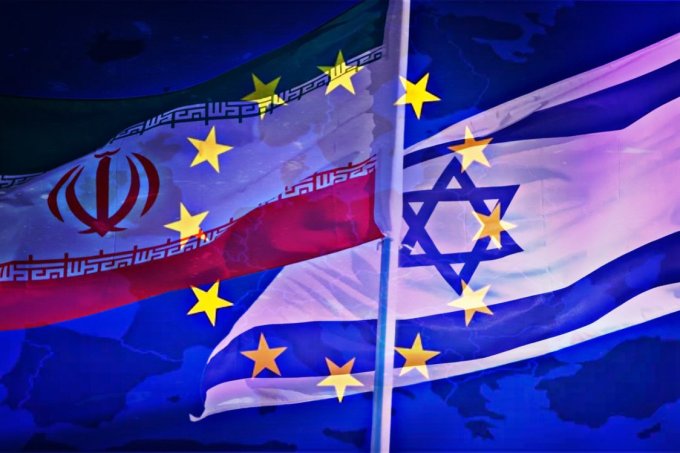
Conflicts in the Middle East are increasingly worrying the rest of the world, while the European Union, caught in internal political struggles, appears indecisive and incapable of taking concrete action. This complex geopolitical situation, in which Iranian missile attacks on Israel and Israel’s aggressive responses are destabilizing the region, exposes an evident weakness in European foreign policy. As the threat of war grows by the day, the EU, grappling with internal divisions and focused on its own problems, sends the message that it cannot assert itself as a decisive player in mitigating the crisis.

The Middle East is experiencing an escalation of violence, with recent attacks, including an Iranian missile strike on Israel, pushing the region to the brink of a catastrophic war. According to Euro News reports, the attack involved around 180 ballistic missiles, sparking fears of a broader conflict that could spread to neighboring countries such as Lebanon and Syria, while Israeli Prime Minister Benjamin Netanyahu’s promise to retaliate only increases the risks of uncontrolled escalation.

European Commission President Ursula von der Leyen and other European leaders have condemned Iran’s actions, calling for restraint and a ceasefire in conflict zones like Lebanon and Gaza. The urgency is felt in Europe, as EU High Representative for Foreign Affairs Josep Borrell warned of the risks of a chain of attacks that could spiral out of control. Similar condemnations of the violence came from UK Prime Minister Keir Starmer and German Chancellor Olaf Scholz. However, these verbal condemnations are mostly reactive, reflecting Europe’s limited influence in the region, rather than proactive diplomatic engagement.

At the core of Europe’s problem lies its inability to present a coherent strategy for addressing the Middle East crisis. According to an analysis published by The Guardian, while the EU has managed to develop ambitious policies on economic and environmental issues, its stance towards the Global South, especially the Middle East, remains uncoordinated and weak. Although the EU previously achieved successes, such as the 2015 Iran nuclear deal, it now seems passive, almost absent from current efforts to resolve or even influence events in the region.

European leaders have repeatedly called for ceasefires and negotiations, but few concrete actions have followed these statements. For instance, despite growing consensus on the need for de-escalation, few European countries are willing to suspend arms sales to Israel or engage more actively in diplomacy. This is further complicated by internal divisions, as evidenced by the EU’s weak performance at the United Nations General Assembly, where its votes on the Israeli-Palestinian conflict were scattered and inconsistent. While individual EU member states, such as France, Germany, and Italy, have historical and strategic interests in the region, these efforts remain fragmented, and Europe’s overall response is, at best, incoherent.

The paralysis in EU foreign policy is closely tied to domestic political challenges, particularly regarding migration and the rise of nationalism across Europe. As violence in the Middle East escalates, especially in Lebanon and Gaza, the risk of a new refugee crisis grows. Lebanon, a key flashpoint in the current conflict, is just over 160 km away from Cyprus, an EU member state, and any regional war could lead to a sharp increase in refugees heading towards Europe.

This possibility is already causing concern in European capitals, particularly in countries where anti-immigration sentiment is on the rise. From France and Italy to Austria and Germany, populist and right-wing parties have gained popularity by exploiting fears of uncontrolled migration, and a new influx of refugees from the Middle East would only exacerbate these tensions. In fact, domestic political pressure often dictates the EU’s foreign policy approach, making it more focused on short-term crisis management, such as migration agreements with North African countries, rather than long-term engagement.

This was evident in the EU’s ineffective response to recent Iranian provocations. Despite the immense importance of this issue, the EU is stuck in its own internal problems. Perhaps the most damaging aspect of Europe’s current position is its sense of helplessness. While the EU has sent aid to Lebanon and deployed peacekeeping troops as part of a UN mission in the country, it appears completely unprepared to deal with the consequences of an all-out regional conflict. Sixteen EU member states, including France, Italy, and Spain, have significant peacekeeping forces in Lebanon, but as tensions between Israel and Hezbollah rise, there is no indication that Europe can protect its interests or have a significant impact.

Although the EU has expressed concern over regional stability and offered diplomatic initiatives, such as von der Leyen’s calls for hostage releases and ceasefire negotiations, these efforts have not changed the situation. Despite Borrell’s public appeal for all sides to show “maximum restraint”, the reality is that Europe lacks the leverage to impose its will in the Middle East. The EU’s focus has shifted to internal problems, and its once prominent role in international diplomacy has significantly diminished.

One of the most glaring failures of the EU is its neglect of the Global South, particularly in relations with Middle Eastern and African countries. As The Guardian notes, increasingly protectionist and inward-looking policies in Europe have alienated many countries in these regions, further diminishing their influence on shaping international outcomes. EU initiatives that have often been announced, such as the €300 billion Global Gateway infrastructure program, have so far had little impact on these countries, while its internal regulations, such as the Carbon Border Adjustment Mechanism, have been criticized for imposing unfair burdens on developing nations.

The crisis in the Middle East highlights a broader challenge facing Europe – its withdrawal from the global stage, particularly about the Global South. As violence continues in the West Bank, Gaza, and Lebanon, the EU risks becoming irrelevant in a region where it once had significant influence. In its current state, Europe is seen more as an economic partner than as a geopolitical power capable of making a decisive impact.

A Montenegrin version of this article is available on the Antena M portal.

Iranian Attacks on Israel Challenge U.S. Role in the Middle East

Yesterday’s rocket attacks by Iran on Israel pose a threat not only to Israel’s security but also to American policy in the region, which is facing challenges such as the rise of Iranian nuclear ambitions and uncertainties regarding regional alliances. The Middle East is once again a hotspot of conflict following yesterday’s Iranian rocket attacks on Israel, which threaten to provoke a full-scale regional conflict. While Israeli and American air defenses intercept these attacks, the rest of the world watches the situation with great concern, not overlooking the fact that the balance between deterrence and escalation is becoming increasingly unstable. What once seemed like a distant scenario – a direct military conflict between Iran and Israel – is now becoming a reality.

The recent rocket attacks on Israel are just part of a broader mosaic. In a recent analysis by the New York Times, it was assessed that Iranian nuclear ambitions are no longer a hypothetical threat. Secretary of State Antony Blinken recently warned that Iran is one step away from producing enough uranium for a nuclear bomb. The proximity of the Iranian regime to nuclear capability, combined with its willingness to carry out direct rocket attacks, places the entire Middle Eastern region on high alert. The Iranian regime has shown a readiness to cross boundaries, and as it gets closer to the status of a nuclear power, the stakes for Israel, and indirectly for the United States, have never been higher.

This development represents a decisive moment for U.S. President Joe Biden and his administration. Long-standing U.S. policy to curb the Iranian nuclear program through diplomacy and covert sabotage has failed to prevent Tehran from approaching the nuclear threshold. For decades, Israel has tried to slow Iranian nuclear ambitions through secret actions – assassinations, sabotage, and cyberattacks – but these efforts have always aimed at buying time rather than permanently neutralizing the threat. Today, Israel has fewer options at its disposal, and the Biden administration must confront the uncomfortable reality – that diplomatic engagement is insufficient to deter Iranian aggression.

To understand the seriousness of the current crisis, one must also consider the broader geopolitical dynamics. Iran does not act in isolation. Its partnerships with Russia, China, and North Korea provide it with strategic protection, encouraging Tehran to act more aggressively. According to the New York Times, such alliances result not only in the Iranian attacks on Israel but also in challenges to the liberal international order led by the U.S. Tehran sends a clear message that it is ready to target American allies and test U.S. resolve in the region.

However, the Biden administration’s response so far has been restrained. The hesitation to confront Iran more aggressively reflects a more complex American fatigue with conflicts in the Middle East, particularly after the disastrous withdrawal from Afghanistan. The U.S. administration, cautious not to be drawn into another protracted war, has instead opted for diplomatic gestures and cautious rhetoric. Yet, as Iran continues to act, the question arises whether such an approach is sustainable.

As CBS News reported, U.S. missile defense strategies, rooted in Cold War thinking, have proven inadequate in addressing the complexities of modern missile threats. Billions spent on missile defense have failed to produce a system that reliably counters these threats, whether from North Korea or Iran, leaving the U.S. and its allies in a precarious position – while missile defenses save lives in the short term, they do not offer a long-term solution to the broader strategic problem posed by Iran’s growing missile and nuclear capabilities.

Moreover, the assumption that missile defense alone can ensure security is a dangerous fallacy. Even if technology advances, missile defense systems are fundamentally reactive, contributing little to preventing aggression or neutralizing the root causes of conflict. As CBS News emphasizes, the U.S. has focused on hypothetical missile threats, such as those from North Korea, while ignoring the actual, present danger posed by Iran’s increasingly sophisticated arsenal. The technical challenges of intercepting missiles are enormous, and any system, even if reliable, could easily be overwhelmed by a barrage of missiles.

The consequences of these technological and political failures are severe. The latest Iranian rocket attacks on Israel are not isolated incidents – they are part of a broader strategy of regional destabilization, which includes the use of proxy forces such as Hezbollah and the Houthis. Iran’s support for Hezbollah, which has fired thousands of projectiles at Israel in solidarity with Hamas, illustrates how the conflicts in Gaza and Lebanon are connected to the larger Iranian-Israeli struggle. Israel, already burdened by fighting on multiple fronts, cannot afford to be constrained by American calls for restraint.

However, as Israel prepares for an escalation of military response, it faces a paradox. Biden’s administration’s calls for restraint may reflect a desire to avoid deeper involvement in the conflict, but Washington’s unwavering commitment to Israel’s security ensures that any action by Israel, whether aggressive or not, will ultimately receive U.S. support. As the New York Times notes, the Israeli missile defense system, previously criticized, has proven its worth by saving lives, yet even the most sophisticated defensive technology cannot resolve the fundamental problem – Iran’s pursuit of regional dominance and nuclear weapon capability.

In this context, it is clear that Israel is unlikely to heed American calls for restraint for long. The Israeli government and Benjamin Netanyahu, encouraged by recent successes against Hezbollah and Hamas, may decide that now is the time for a stronger blow against Iran, hoping to deliver a decisive strike against its military infrastructure and nuclear program. While the Biden administration would prefer to avoid direct military involvement, it may face pressure to support Israel in any confrontation with Iran.

This situation poses a dilemma for Biden. Allowing Iran to operate with impunity, whether through support for proxies or advancing its nuclear program, could embolden Tehran and undermine U.S. influence in the region. Moreover, the convergence of these events, along with the campaign for the American presidential election, adds a political dimension to the crisis. As Donald Trump positions himself as a candidate who claims he can restore global stability, Biden must not allow his administration to appear weak or indecisive on national security.

The Biden administration must decide whether to continue with a cautious approach or take a firmer stance against Iran. The consequences of either decision are profound. Escalating the conflict would risk drawing the U.S. into another conflict in the Middle East, while inaction could allow Iran to become a nuclear-armed state. This is a dangerous balancing act for the U.S. as the future of American leadership in the region is now at stake.

The current approach of the Biden administration to the escalating conflict between Israel and Iran is unsustainable. Iranian aggression and nuclear ambitions require a more decisive response, both from Israel and the U.S. While missile defense systems have provided temporary security, they are not a long-term solution. The U.S. must reassess its strategy, acknowledging that failure to act decisively now may lead to even greater conflict soon. The stakes are high, and the eyes of the world are on their next move.

A Montenegrin version of this article is available on the Antena M portal.

Factors Behind the Market Collapse

The world is facing complex economic challenges that require a careful balance between controlling inflation and supporting economic growth. Consumers are making sacrifices due to inflation, technology giants are under pressure, and global markets are unstable. As policymakers seek solutions, investors and the public will need to monitor developments to adapt to the new economic reality.

Global stock markets have recently been on the edge of chaos, chronologically coinciding with the release of a disappointing employment report in the United States. This has exaggerated the cause-and-effect relationship, with reactions to the report data being viewed as the sole factor in the new situation, sparking speculation that the Federal Reserve might lower interest rates. However, a deeper analysis reveals a more complex picture – key causes of the decline are linked to specific investment tactics and global economic changes, particularly in the technology sector, rather than a single isolated report.

Investor reactions to employment reports often seem exaggerated, highlighting that the stock market does not always reflect the real economic picture. Current employment reports appear to be just one of many variations. The market often signals a recession that does not materialize, as evidenced by numerous previous recession predictions that did not come to fruition.

One of the main factors is the phenomenon known as “carry trade” – a strategy where investors borrow money in a currency with a low interest rate and invest in assets denominated in a currency with a higher interest rate, allowing for greater returns due to the interest rate difference.

In carry trading, investors borrow money in a currency from a country with low interest rates, such as Japan, which traditionally has very low or even negative interest rates. The borrowed money is then converted into a currency from a country with higher interest rates, such as the US dollar, and invested in financial instruments or assets that earn interest in that currency. Investors earn on the difference between the interest rate on the borrowed money and the interest rate on the investment. For example, if the interest rate in Japan is 0% and in the US it is 5%, the investor can earn a 5% return minus transaction costs and potential currency risk.

Currency risk is a major risk in this strategy because if the currency of the country with a high interest rate depreciates relative to the currency of the country with a low interest rate, profits may be reduced or the investment result may be negative.

Regarding the current market situation, everything functioned well until there was a change in Japanese monetary policy. The Bank of Japan increased its benchmark interest rate in March for the first time in 17 years and announced another increase at the end of July, signaling the end of the era of ultra-low interest rates in the Land of the Rising Sun, making carry trades less attractive. The yen strengthened against the dollar, reducing the profitability of this trading strategy, and as investors pulled back, markets reacted with declines.

This raises questions about what to expect in the field of monetary policy, particularly concerning the US. The Federal Open Market Committee (FOMC) now has several options—they could opt for an immediate reduction in interest rates, similar to what they did in March 2020 due to the pandemic, or they could wait until the regular September meeting and decide on a larger cut than the initially announced 25 basis points.

What the wider public often does when interpreting sudden shifts in the stock market is to place such phenomena in a political context rather than a detailed market analysis, especially when it comes to the technology sector.

American technology giants such as Apple, Microsoft, Alphabet, Meta, Tesla, Amazon, and NVIDIA have an increasing influence on market trends compared to other factors due to their share of returns in stock market indices. The fact that market performance is not tied to political events is a good sign for the health of the market economy. For instance, technology sector companies, many of which were not favored by Donald Trump during his presidency, recorded excellent business results during that time. We can observe a similar trend now with Joe Biden, who is not particularly favorable towards oil companies, yet these companies are performing well. In other words, investors can achieve profits regardless of the president’s political preferences.

However, what has definitely impacted the markets is how businesses across various sectors have experienced the trend of adopting artificial intelligence solutions, as concerns about overestimated demand for specialized chips and servers have also burdened sentiment. Consequently, NVIDIA, which briefly became the most valuable company in the world this year, lost more than 25% of its value from its record high in June.

Despite the sharp decline, markets are recovering. Asian markets have already regained a significant portion of the lost ground, and US futures have also significantly risen after the earlier week’s decline. Although a recession is inevitable at some point, it is not expected to be triggered by recent stock market events.

Although recent events, including the employment report and changes in Japanese monetary policy, have caused significant turbulence in the capital markets, it is important to understand that these shifts are part of a broader picture and that markets have reacted to a range of factors, from specific investment strategies like carry trade to global economic changes and technological innovations. Regarding the Fed, the most likely option is to maintain the status quo in interest rate policy to avoid additional turbulence.

While short-term volatility is inevitable, the fundamental values of the market economy continue to provide a stable foundation for growth and development, and adapting to new conditions and understanding the complexities of current challenges are crucial for navigating this dynamic economic period.

When placing all this in the context of the financial picture in Montenegro, or any small country that is not immediately affected by the crisis, there is no need to fear a repeat of scenarios similar to those seen in 2008. Global markets continuously go through different phases, but unlike the great crisis of the first decade of this century, we have a significantly different situation.

Caution and active monitoring of market movements are certainly necessary, but the key parameter that becomes relevant for Montenegro, prompted by these developments, is the potential changes in interest rate policy and the costs of future credit arrangements that are expected.

It Felt as if the Earth Had Stopped Spinning 2

When all Google services went down in December last year, a wave of concern about the fate of the internet world engulfed the planet. Earthlings were mixed with feelings of panic and fear, but the conviction that nothing would ever be the same lasted only until Google resumed functioning, reassuring that nothing could actually be different.

The recent outage of Facebook and its services has opened up space for interpretations of mystery, speculation, publicly expressed desires for the alleged hated network to cease to exist, and secret apprehensions that it might actually happen.

The largest social network, in this expected kind of dependence on the use of its services, builds its influence. Facebook is not a company where an obsession with a positive user experience prevails to the extent that it will cater to users by adapting to their habits in the way that those who directly charge end consumers for what they deliver do.

On the contrary, this giant creates habits to such an extent that the user of its influence is unaware and does not spend resources convincing anyone of the inaccuracy of the assessment that it is the “worst network” as long as you use it. The fact that it has reached a significant place in the lives of most internet users makes even this six-hour downtime for Facebook almost negligible, like the number of those who, disappointed with such a user experience, have decided not to use it anymore.

Facebook is not a local café where no one will stop by anymore because once they received terrible service and experienced an outcome they didn’t expect, so any forecast that this negatively affects its image goes against common sense.

Much more, the image has been tarnished for all those who have built their own business model on the dependence on Facebook – companies for whom it is one of the primary promotion channels because their fate is tied to a service whose disappearance erases them from the customers’ radar.

We know only as much about what happened as the company has stated, and it is quite possible that it will remain so almost forever. It is also very possible that the company has been the most open about its problem precisely because it does not want to leave additional room for doubt. Allegedly, there was a change in the configuration of routers. These are specialized computers that route traffic to websites, and allegedly there was a problem, either a mistake by company engineers or a software glitch.

In a vast system where absolutely everything is automated, an error in action in one place jeopardizes the entire network and could not have been isolated. Why doesn’t Facebook try to explain this to us in more detail? Precisely because it knows that we will not change our relationship with it due to mere dependence on its platform – whether personal or professional, it doesn’t matter.

In the penultimate paragraph of the article that earned today’s number two in the title, Google’s one-hour shutdown was called the largest and longest, but it was mentioned that similar outages can be expected in the future.

Facebook’s image has formally been tarnished by scandals and affairs – unauthorized use of personal data by Cambridge Analytica, numerous legal disputes, both with other tech giants and with national governments, the European Commission, public figures, etc., as well as the freshest example of a former manager, now in the role of a whistleblower. However, fundamentally, nothing has influenced, for example, small companies for whom this social network provides the simplest and cheapest communication channel, to massively leave the platform.

That’s why Facebook, its policies, its own rules, while simultaneously disregarding those rules imposed by other systems, can concern us to the extent that they touch on issues of privacy rights and everything that is the subject of an endless series of disputes constantly brought against it, but what concerns us the most are business models based on this social network being an irreplaceable sales channel.

Kao da je Zemlja prestala da se okreće 2

Kada je u decembru prošle godine došlo do prekida rada svih servisa koje pruža Google talas zabrinutosti za sudbinu internet svijeta zapljusnuo je planetu. Zemljanima se miješao osjećaj panike i straha, no uvjerenje da više ništa neće biti isto potrajalo je tek do trenutka u kojem je Google ponovo profunkcionisao, uvjeravajući da zapravo ništa ne može biti drugačije.

Najnoviji prekid rada Facebooka i njegovih servisa otvorio je prostor tumačenjima misterioznog, nagađanjima, javno istaknutoj želji da ta navodno omražena mreža prestane da postoji i potajnom pribojavanju da će se to zaista desiti. 

Najveća društvena mreža na toj očekivanoj vrsti zavisnosti od upotrebe njenih servisa gradi svoj uticaj. Facebook nije kompanija u kojoj vlada opsjednutost željom za pozitivnim korisničkim iskustvom u toj mjeri da će se dodvoravati korisnicima prilagođavanjem njihovim navikama na način na koji to rade sve one koje direktno naplaćuju od krajnjih kupaca ono što plasiraju. 

Sasvim suprotno, ovaj gigant je taj koji stvara navike u mjeri u kojoj korisnik njegovog uticaja nije svjestan i ne troši resurse na to da bilo koga ubjeđuje u netačnost ocjene da je „najgora mreža“ dok god ga koristite. Činjenica da je dostigao značajno mjesto u životima većine korisnika interneta čak i ovaj šestosatni prekid rada za Facebook je gotovo zanemariv, poput broja onih koji su razočarani ovakvim korisničkim iskustvom odlučili da ga više ne koriste.

Facebook nije lokalni kafić u koji više niko neće svratiti zato što su jednom na tom mjestu dobili očajnu uslugu i doživjeli iskustvo kakvom se nijesu nadali, pa se svaka prognoza da ovo negativno utiče na njegov imidž kosi sa zdravim razumom. 

 Ovaj gigant je taj koji stvara navike u mjeri u kojoj korisnik njegovog uticaja nije svjestan 

Mnogo više je ovim narušen imidž svima onima koji su sopstveni poslovni model zasnovali na zavisnosti od Facebooka – kompanijama kojima je to jedan od osnovnih kanala promocije, jer su svoju sudbinu vezali za servis čiji nestanak ih briše sa radara kupaca. 

O onome što se dogodilo znamo tek onoliko koliko je kompanija saopštila i vrlo je moguće da će tako ostati gotovo zauvijek. Vrlo je moguće i da je kompanija najotvorenije govorila o svom problemu, upravo jer ne želi da ostavlja dodatni prostor za sumnju. Navodno je napravljena promjena u konfiguraciji rutera. Riječ je o specijalizovanim računarima koji usmjeravaju saobraćaj do veb lokacija i navodno je tu postojao problem, greška kompanijskih inžinjera ili softverska greška. 

U ogromnom sistemu u kojem je apsolutno sve automatizovano greška u radnji na jednom mjestu ugrožava cijelu mrežu i nije mogla biti izolovana. Zašto se Facebook ne trudi da nam to detaljnije objasni? Upravo zato što zna da naš odnos prema njemu nećemo promijeniti zbog puke zavisnosti od njegove platforme – lične ili profesionalne, svejedno.

U pretposljednjem pasusu članka zbog kojeg je današnji u naslovu označen brojem dva Googleovo jednosatno isključivanje nazvano je najvećim i najdužim, ali je pomenuto da slične prekide možemo očekivati i ubuduće.

Facebookov imidž formalno jesu uspjele da naruše afere i skandali – neovlašćeno korišćenje ličnih podataka kompanije Kembridž analitika, brojni sudski sporovi, kako sa drugim tehnološkim gigantima, tako i sa nacionalnim vladama, Evropskom komisijom, javnim ličnostima itd. kao i najsvježiji primjer bivše menadžerke, sada u ulozi zviždačice. Međutim, suštinski ništa nije uticalo na to da, na primjer, male kompanije kojima ova društvena mreža omogućava najjednostavniji i najjeftiniji kanal komunikacije masovno napuste platformu.

Zato Facebook, njegova politika, njegova sopstvena pravila, uz istovremeno nepoštovanje onih pravila koja nameću drugi sistemi mogu da nas brinu u mjeri u kojoj nas se tiču pitanja prava na privatnost i svega onoga što je predmet beskonačnog niza sporova koji se protiv njega neprestano pokreću, no ono što nas najviše dotiče su biznis modeli zasnovani tako da je ova društvena mreža nezamjenjiv kanal prodaje. 

English version of this article is available HERE.

Evergrande Is (Not) The Trigger for a New Crisis

The difficulties faced by the Chinese construction giant could result in consequences of significant magnitude if the government in that country doesn’t find a mechanism for rescue. However, despite many drawing comparisons to the onset of the global financial crisis in 2008, the situation, though extremely complex, is still different.

The Chinese company Evergrande was relatively unknown to most Europeans until it gained global attention with the announcement that its potential collapse could trigger a new global financial crisis.

This is a Chinese real estate giant founded in 1996, less known in Western markets, and it’s also the largest property developer in the country. Its founder, Xu Jiayin, was the richest man in China in 2017.

Uncertainty and Concern

The Chinese giant is facing bankruptcy, and yesterday it announced the payment of interest on a small portion of its debt, but without reassuring the financial markets, which are still waiting to see if the official Beijing government will intervene and to what extent.

The events in Evergrande have sparked concerns worldwide that a scenario similar to the one caused by the collapse of the investment bank Lehman Brothers in September 2008 could be repeated.

The feeling of concern has significantly impacted the capital markets, with all eyes on the Chinese government, which hasn’t clearly indicated whether it will intervene in favor of the troubled construction conglomerate facing a debt of 260 billion euros.

While outstanding obligations still threaten the group’s survival, Evergrande has managed to reach an agreement with bondholders for a small portion of its debt.

In a letter sent to the Shenzhen Stock Exchange, the group mentioned that one of its subsidiaries, Hengda Real Estate Group, had been negotiating a plan to pay interest on a bond due in 2025. According to Bloomberg’s data, Evergrande was supposed to pay 232 million yuan (30.5 million euros) of debt that matured last Thursday, related to a bond with a 5.8% interest rate, limited to the domestic market.

The announcement of interest payments wasn’t sufficient to calm the markets. The Shenzhen and Shanghai stock exchanges continued to decline, even after a four-day pause due to national holidays. The Hong Kong Stock Exchange remained closed.

Creditors’ Claims

The repayment deadline for loan installments is today, and the group hasn’t specified how it intends to settle them. The partial repayment announcement is meant to reduce instability and prevent a collapse.

For trust to truly return, market participants need to see a genuine restructuring of Evergrande. The response from the Chinese government is most anticipated by the owners of 1.4 million apartments under construction, who organized protests outside the company’s headquarters and in various locations across the country last week.

Creditors, employees, and suppliers are also demanding Evergrande fulfill its debts, which increased investments until last year when Beijing tightened borrowing rules. The group’s chairman, who currently denies the possibility of bankruptcy, assured employees that Evergrande would “soon emerge from the darkest days,” as reported by Chinese state media two days ago.

Multi-billionaire Xu Jiayin reassured that construction would continue as planned and the group would offer a “response to customers, investors, partners, and financial institutions.” However, he didn’t provide further details.

The notion of Evergrande’s collapse raises concerns due to its colossal debt exceeding 300 billion euros and its economic involvement spanning over three million direct and indirect jobs, projects in more than 200 cities, and partnerships with over 8,000 companies.

Evergrande’s downfall could have significant implications for China’s job market, as it employs 200,000 people and indirectly engages over 3.5 million associates. Furthermore, it’s facing illiquidity, leading many affiliated companies to halt their activities, consequently stopping construction projects nationwide.

Differences Compared to the Year 2008

Although uncertainty has gripped the markets lately, with questions arising about whether China is heading toward a collapse of the giant Evergrande, the situation is not comparable to the one the world witnessed in 2008. The current scenario is not likely to trigger a global crisis, though efforts to overcome the problem will involve numerous entities.

Despite liquidity issues, the effects of a potential bankruptcy wouldn’t be as severe as the collapse of hedge funds with massive positions or a bank with assets approaching zero value.

Land, Not Financial Assets

Comparisons to Lehman Brothers are inappropriate, as Evergrande owns tangible real estate assets, including land, whose value can fluctuate but won’t disappear entirely. Lehman Brothers, in contrast, had financial assets whose value was completely wiped out. A single stimulus could enable Evergrande to complete some properties, sell them, and gradually repay its debt.

The present value of the land and housing projects is estimated at slightly over 1.4 trillion yuan (185 billion dollars). This is a crucial difference from Lehman Brothers, where the complete erasure of value from financial derivatives—credit default swaps and collateralized debt obligations—affected other banks.

Land prices are more transparent and stable than financial instruments, particularly in China, where local governments have a monopoly on the majority of land and can even repurchase it if needed. The value of land isn’t expected to depreciate due to such events.

Moreover, unlike Lehman Brothers, which operated in a somewhat independent system, Evergrande is subject to high levels of government control and involvement in the Chinese real estate sector. Additionally, intermediaries don’t play a pivotal role as they did in the case of the U.S. bank. All strings are in the hands of the Chinese government.

Awaiting Concrete Government Action

Chinese banks and numerous other entities are under the supervision of national institutions with decision-making authority. Even non-state financial services can be controlled to an extent that’s unimaginable outside China.

In other words, if a commercial entity in China truly fails, it means the government has assessed that there’s no broader interest justifying its rescue. Chinese authorities have two key objectives: preventing excessive risk-taking and maintaining stability in the real estate market.

Thirteen years ago, Lehman Brothers went bankrupt, and the U.S. government began rescuing other financial entities. This was also seen in Europe, where banks were saved instead of economies. The collapse of one bank, caused by overvalued assets that were suddenly devalued, was addressed by saving other banks.

Permanent Risks

At a time when it seems that the world has never before been so overwhelmed by events, phenomena and information, the belief that some processes in the world of money are taking place for the first time is often heard, but that is not the kind of theory we should accept.

The notion that we are the first generation, even in a few centuries, to perceive market phenomena not seen before borders on something between narcissistic manipulation and non-acceptance of the laws of nature.

The cause is, among other things, a value system that sets things up in a chaotic way, which leads to the belief that everyone can take the risk they want. To make matters more complicated, the wind in the back of accepting such a distorted truth is given by the central banks, especially those in whose hands is the fate of the world’s leading currencies – Fed and ECB.

There are many rules that, when we notice, we can use to make predictions, literally unaware of the duration of this phenomenon. In this way, much more than the usual method was created to determine whether something had already happened or not.

In the discrepancy between the claims and beliefs, capital market participants are encouraged to believe that it is possible to buy all the securities they want, in the quantities they want, without a negative result.

This further promotes the view that all instruments actually arose from the need to call all financial instruments, whatever they may be, “fake money”. This belief takes as its premise the assessment that financial assets are always easy to exchange for central bank money.

Such a belief in the continuous growth of property value causes the feeling that money is always financially lost in the markets and that the only “risk” that can happen to it is to be replaced, e.g. for gold, digital money or shares of the company being traded.

Initially, some kind of “disinterest” of the outside world of money, which does not require a replacement as such, could make it difficult to understand any transaction with it and separate it from banking activities and bringing them to the global financial market.

Everything in the bank can be placed on the market, transferring the risk to others, because there is always one of the leading central banks ready to accept this type of risk and, with small losses in the beginning, eventually increase the balance sheet.

The money is now within a system that has provided support to banks when they do not have enough balance sheet capacity. All banking risks are transferred to large central bank systems, which explains the reasons why its value stabilizes, because almost without any examples, which would serve to convince otherwise, like a wizard, there are central banks that find interest in this type of activity.

Belief in rising real estate prices could ensure the cult structure of loans, creating an opportunity for them to always easily find a buyer.

The transformation of money was made possible by the trust that existed in it until the moment when it became superfluous when liquidity became something that was “taken for granted”.

Of all the changes that have taken place in the last few centuries, the key one is that we now clearly see what has always happened in some form, and is now taking place artificially and for the needs of long-term investments.

Such a relationship of elements in this or any system always finds sources of resources. The problem, then, is not in the scarcity of resources, but in some inexplicable, unnatural idea that the value of everything should constantly grow.

The article is the part of the series of research into post-pandemic economic recovery 2021

Silver Rush

While in the advanced phase of digitalization, in which everything becomes electronic and as the part of the population is still being accustomed to its features, there are those who approach all phenomena and processes that seem less close to them with a dose of distrust or simply lack of information to relieve worries whether something they could touch and what they saw on the screen actually had the same purpose.

While some say they can’t imagine reading a book that hasn’t been printed (and therefore remain deprived of so many editions whose authors have decided not to cut down any tree to get their words down on paper) others still understand the notion of electronic money that can be used to pay for more than a decade with “real” banknotes.

To check and determine whether, for example, cryptocurrencies have the features of money, it is not necessary to make a test that would have the characteristics of what is in the spirit of the times, because the way Aristotle spoke about money may be the best way to understand how and why it became the means of exchange. As early as the fourth century BC, five basic characteristics of what should define the means of exchange were established.

According to Aristotle, the ideal currency had five basic features – stability, divisibility, coherence, practicality and intrinsic value. If we were to compile a matrix with these characteristics and assign them to everything that is considered a more significant asset, we would see that money is not really what fits the description of its essential characteristics.

Money, either physical or digital, has only slightly more of these properties than, for example, land ownership. On the other hand, precious metals are those that meet all the properties listed within this definition, because only real goods contribute to the growth of the usefulness of individuals, since money is not able to meet the basic needs of man, but only serve to pay for what has these characteristics.

If we try to apply these five features to everything that comes to mind as we enumerate what can be considered wealth – real estate, oil, artwork, securities and precious metals, we will come to the conclusion that only the latter corresponds more to the properties that were analyzed by Aristotle and the current moment in monetary policy and the obsessive reprinting of money may be the best way to illustrate why this is so.

Precious metals fit more precisely into the definition of money than – money itself. As we think of bank gold reserves and gold bars as custodians of values, silver coexists almost unnoticed in our definitions and matrices – a precious metal whose time is yet to come.

Unlike gold, which is more expensive and more often mentioned in the story of wealth, silver, although on the market about eight times cheaper, is important not only when it comes to stock exchanges and investment, but also when it comes to industrial production, especially the technologically advanced world is looking for. The unique features of silver, which make it an indispensable raw material in production, rank it among the most important elements of sophisticated technological devices, from telephones and computers, through cars to photovoltaic cells of solar panels.

The use of this precious metal in production could be doubled in the short term as soon as the introduction of the 5G network becomes more intensive. It will find special application in electric vehicles and their battery charging mechanisms, as well as in water purification systems.

Despite that, the amount of silver extracted from the mine has been gradually decreasing for several consecutive years, regardless the pandemic, during which there was a general slowdown in production, because this trend appeared earlier. All this leads to a weakening of global silver stocks, but also new challenges, not only the industry, but also in the supply chain. This is the reason why silver production must rely on other mines, because less than one third of this precious metal is extracted from silver mines, and the rest from mines that extract other metals, such as gold, copper, lead or zinc.

This means that even in the event of a new rise in the price of silver, mines like these, from which extraction of silver is not the primary activity, will not be forced to increase silver production, as it is not their main source of income, but fits them perfectly reimburse the cost of production of their primary metals.

Another specificity of this metal is that it is recycled to a very small extent – approximately one sixth of silver comes from recycling. In addition to the pandemic, stocks over the past two years have barely been sufficient to meet production’s growing market demands for all those devices that require the use of silver. In order to store silver, expressed in the amount of gold, about 70 times more space is needed for the same stock market value.

Orders of silver as a raw material this year only for the production of several leading technology companies have increased to such an extent that, if this trend continues, there could be a time when we will start hearing news about the dizzying jump in prices of this precious metal as a commodity. Growing demand with declining, limited supply creates the potential for a major market turnaround when it comes to investor interest.

For some, trading silver this year will be perhaps the most interesting move so far, although this precious metal is usually less attractive than anything else that can be traded, mostly because of sudden price changes, much larger than those that gold has. For others, at least the news that the price of silver is growing faster and higher than before should not come as a surprise.

The article is the part of the series of research into post-pandemic economic recovery 2021

Saga of Expensive Fuel

The harmfulness of using fossil fuels is a topic that we hear from time to time, like an evergreen, always at the right moment and just to let the elimination system make one think about what seems to be the perfect alternative.

The 21st century, which only a few decades before its beginning was expected to bring flying cars and vacations in outer space, has been talked about in some, reasonably, most acceptable option, as the moment when the use of oil will end, with the inevitable sequel story of extinguishing the splendor of Middle Eastern luxury and wealth.

If we take a look at the evolution of the oil sector, as well as the numerous and increasingly frequent challenges of the new age, we can clearly see the processes that the tobacco industry went through not so long ago, as it has undergone significant transformation over the past few years, that was significant in terms of changing the business model, but not the results it gave in reducing the percentage of smokers in the total population.

Most tobacco companies have not made significant progress in eliminating cigarettes and other risky products, but in switching smokers to alternatives where the health risk is somewhat lower. However, in such phases of transformation, with the significant funds invested and monitored, there is too little space left to draw logical conclusions.

At a time when climate change and global warming are the two biggest reasons for concern when it comes to environmental protection, the story of the use of petroleum products turned into a factor within the equation that calculates the number of deaths associated with these events simply does not support healthy logic, nor basic arithmetic.

If we just add the creation of jobs conditioned by exponential productivity growth in numerous areas, especially during the past decade, which are related to the use of petroleum products, and each life saved in this way, it is an additional “plus” in mathematical expression whose result is persistently trying to be negative.

The reason for this comparison is not to justify the unwanted effects of the oil industry, just as it is not the case with the tobacco industry as well, but to emphasize the nature of insisting on alternatives when everything seems to announce a complete revolution in this area and to remind how reactionary they are and how much the idea of renewable energy for a long time cannot be realized broadly.

When the governments of countries that make money from the oil industry in any part of the production chain are included in this story, it is almost impossible to hide the elements of attempts to protect the interests of those who will present themselves hiding from showing that they are tightly connected with the alternative.

Just because there are good reasons to criticize, especially the excessive use of something, in this case fossil fuels, it does not mean that it is necessarily a harmful or useless investment.

From this point of view, it doesn’t matter whether you are an angry opponent of fuel use except in really necessary situations, or you see the oil industry as a whole, it is clear that investing in “black gold” has never ceased to be one of the most attractive investment moves.

Oil and gas can, not only, at least occasionally, bring investors a profit on price changes, but they are increasingly relying on oil trading to protect themselves from the inflation.

As in the tobacco industry, which was banned from advertising and spreading smoke in public spaces, the focus on the type and mode of making of tobacco products was much smaller, so leading players managed to find an alternative in a short time, therefore many investors from the world of oil in eras of forcing alternative energy sources have fewer motivation to invest money in new oil platforms, thus gaining an additional value for their invested capital.

Being demotivated to invest in this area also leads to a reduction in supply. In a post-pandemic world, where one cannot be motivated by an additional competitiveness in this area, oil companies will have the opportunity to be more profitable than ever before, regardless the fact that this is not a lasting phase.

The formula is simple – in the post-pandemic world, where the desire for green energy will be further awakened, the volume of fuel production will not be able to grow, but the demand will increase with each new recovery, which will result in further price growth.

So, the price of fuel has only started to move upwards at the beginning of this year, and this trend will continue for some time, with minor fluctuations, even when the use of petroleum products returns to the level that existed before the pandemic, as in some markets it is already the case.

Interest in oil futures has grown sharply since the beginning of the year, because investors hope that the time of expensive energy is yet to come, and such investments are especially motivated by inflation and the need of big players to protect themselves from its consequences.

For those who do not belong to the group of big players, this simply means that almost everything they buy will be more expensive for a while – not necessarily because of rising prices, but because the value of the money they have at their disposal, will decrease as a consequence of quantitative easing programs.

The article is the part of the series of research into post-pandemic economic recovery 2021

A threat from Beijing – a salvation from Brussels

The negative perception of China in Western countries results in the interpretation that imperial ambitions are hidden behind the investment power of Chinese companies, which results in constant attempts to keep the power of official Beijing under control, mostly without visible separation of political and economic goals.

Concern about the lack of reciprocity is constantly expressed on both sides of the Atlantic – the administrations of American democratic and republican presidents have led this relationship to the highest level of apprehension for decades, while the countries of the Old Continent support economic relations through distinct investment projects and interstate cooperation, remaining concentrated to the mere need to stay unwavering in giving priority to democratic values, in the spirit of which the key points of bypassing China should not be overlooked.

In a situation where some form of failed economic cooperation recognizes the risk of geopolitical confrontation, it is necessary to emphasize that it restricts to a lesser extent from the place taken by China in relation to the position of the West, where the leading investor from the East comes to a hostile environment.

At the same time, there each European capital chooses more intensive economic cooperation with Beijing, despite increasingly visible efforts to name China’s relationship within the EU as a common threat, and therefore to form a common Western block as a result of creating a common action. The formation of such a bloc, however, is far from the European agenda, mostly due to dissonant tones among EU members who are not ready to easily give up the benefits of cooperation with the Middle Kingdom.

Although the withdrawal of production from Chinese industrial plants has not happened despite many announcements, European and American governments have ceased to see China as a place where cheap labor tirelessly produces sneakers and phones, as trying to create a joint strategy to strike back at the unstoppable dynamics of the development of artificial intelligence, telecommunications equipment and 5G infrastructure become more visible.

Such a groundbreaking China does not fit in with the typical American and European thought patterns of rivalry that once existed with The Soviet Union, where it was not difficult to recognize the purposes for distancing or suspending cooperation.

In China, there is only one segment in front of which the capital-driven West closes its eyes from time to time – the form of government and the notion of human rights, due to which they are not able to consider that country as an ally in any field except the commercial.

The American answer to the Chinese question is reflected in the belief that the values ​​of one civilization are those that another should accept since they have proven to be good. Several US presidents and presidential candidates, in their comments on US-China relations, persistently assured the global audience that economic liberalization would be followed by political ones, i.e. that Chinese economic growth would undoubtedly be accompanied by the strengthening of human rights and freedoms.

From the emergence of civilization until today, no empire in history has managed to achieve so much economic, military, and political authority over the rest of the world the way that the United States did in just 232 years, that is, from the day George Washington became the first American president.

The history of China lasts for millennia, and its wider population did not feel much benefit until the end of the 20th century, and just at the time when the American nation was experiencing a flourishing of democracy, the Chinese people were struggling with the consequences of the Opium War. Yet, in just a few decades at the turn of the 21st century, hundreds of millions of people have been lifted out of the deepest poverty and transformed into the most numerous and stable middle class on the planet.

The Chinese dictatorship and the attitude towards the role of the individual in society for the Western world, especially for the EU, which arose with the idea of ​​fighting totalitarianism, are incomprehensible and unacceptable to the same extent that it is inconceivable in China that Western democracies shape social media.

Western countries, and especially EU members, are becoming increasingly aware that China is not creating its plan to be in the European market in the form of a relationship with a single entity, but to avoid a blockade by building bilateral relations with governments that have never recovered enough from the crises from the end of the first decade of this century, in which the measure of support to the economy included the selfless rescue of the banking sector, which irrationally strengthened its own position and therefore caused the crisis.

At least this post-crisis moment sheds light on the EU’s real priorities – in the absence of a single bloc and a common response to external factors, while the heterogeneity most clearly reflected in the Greek euro-crisis, there is the belief that Brussels is the place to go and cry over any country’s China-related problems are more than naive.

Moreover, Montenegro has just appeared on that scene with a binary interpretation of the world, the division into East and West in one single section where it has disappeared over the previous decades – the investments.

Of course, Brussels and Washington, as well as all other centers of the Western world, will welcome Montenegro’s discontent if it recognizes possible indicators of China’s aspirations to shape the world according to its sociopolitical model, where it would have the right to veto power while making economic or security-related decisions.

However, being united on the political, but not on the economic level, in general, sends a sincere message that could be read between the lines in the European response to the Montenegrin request for help with the highway loan – “we have our own problems, too”.

The Montenegrin version of this text is available here.

The Twenties

The years we imagine the way we saw them through modern literature, jazz, surrealist painting, Charleston dance, and some of the oldest sound films have at least once led many of us to think of it as the most creative and productive part of human history, accepting that it was the perfect time to enjoy civil liberties, small and great victories in the struggle for women’s rights and the products of the second industrial revolution, in the course of which the master of the era was transformed into useful inventions with which life became better and more beautiful.

The time immediately after the First World War, called the Great War at that time, as it was believed that it has ended all battles forever, and which took 10 million lives and left about eight million disabled, seemed to say that conflicts were persistently a thing of the past and that no one will have a reason to return to them anymore, because there was only one signpost at the crossroads of humanity – to move forward, but without warning that this path leads to deep crises, detachment, hatred and fascism.

Nearly after WWI, the Spanish flu appeared – a strong epidemic of lung disease that spread for years and during that time killed more than 50 million people. Life in the United States at that time was marked by a ban on the production, sale, and transportation of alcoholic beverages – prohibition.

However, the 1920s witnessed robust economic growth, which led to a modern form of consumption based on innovation – products and services that did not exist before, which were bought because of their competitive advantage and the way they were promoted. Radios and other gadgets slowly entered the homes of the Western world, and cars were increasingly seen in the streets.

Apart from all these items that had the actual cost of production, there was also something that added value to everything – – advertising and marketing, an industry within an industry that then received clear principles and brought much money to those who knew it well and, combined with a sudden growth in demand for industrial products, as well as the dynamic development of new types of banking services, the popularity of service and hospitality businesses, contributed to the creation of a modern American economy, transforming the USA into a leading economic power, increasingly different from European societies. While in Russia, almost seven decades after the publication of the Communist Manifesto, a party with an undisguised Marxist orientation – the Bolshevik Party – came to power, communist movements in Berlin and across Bavaria have been more and more repressed.

The overseas connection has been particularly hampered by the fact that the US has not ratified the Treaty of Versailles, after which it would enter the League of Nations, which slackened this international project. Due to the impossibility to cover the postwar cost of reconstruction, the former Weimar Republic faced huge inflation of 21% on a daily basis, caused by money printing. In just half a year, the US dollar has increased its value by as much as 117 times against the Deutsche Mark.

Hyperinflation, which was the key cause of dissatisfaction of millions of citizens, opened space for support for fascism. Across the Atlantic, the value of capital was rising at an unprecedented speed, and the purchase of securities was authorized with an extremely low percentage of hedging. Borrowing to trade on the stock market was extremely popular, which led to the creation of speculative bubbles when bursting followed in 1929 through a domino effect on the global economy after the outbreak of the Great Depression, which resulted in economic collapse, mass unemployment, drastic decline in consumption and strong deflation.

Whether this reminder of the time between the Great Gatsby and the Great Depression sounded like a description of an era whose contemporaries were blessed or you believe it was better to be lucky enough not to live in that time, no matter what impression you had of the twenties – still you live right in twenties. Only a decade or two ago, although those who could remember that time well are no longer with us, when we would say “twenties”, it would mark the third decade of the twentieth century, the period between the two world wars.

Today, the name “twenties” is just entering speech as a determinant of the time in which we live, which will later become more common. After the 1990s, which the rest of the world remembers for the first home internet connections, unlike Balkan countries that will remember them for wartime events like the twilight of civilization, language constructions did not allow us to group the time we live in and the years within the last decades with common names without sounding like language stunts. The twenties are the first in this century whose name is simple, but in which everything is complicated.

As it was the case a century ago, today we are witnessing the spread of the infection that causes lung disease, market trends resulting from fictitious actions and reliance of the economy on the tertiary sector, money printing, enormous over-indebtedness and households, and countries, fight for women’s rights from scratch, rising unemployment, pronounced intolerance, vampire fascism, and undisguised anti-anti-fascism. Between those two twenties, the world has gone through several major market shifts, of which today’s generations can recall the oil shock of the 1970s and, even more closely, the 2008 financial crash.

All inter-war and post-war crises have shown that, sooner or later, an institutional response is always found to stop them, although at an advanced stage, and then create the conditions for recovery, increased productivity, and reduced inequality. It has, to a greater or lesser extent, succeeded every time. The problem is that such methods were an introduction to new crashes and that, by constantly romanticizing the pre-crisis years, we have set an unsustainable ratio of key parameters as an objective which should be (re)achieved.

Three Reasons for the Rise of Bitcoin: Trust, Trust and Trust

Now the price of bitcoin is $34,974. Two years ago it was ten times cheaper, and five or six years ago one could buy it for a few hundred euros, no matter how much its value varied and 11 years ago you could buy 1,250 of them for just one dollar. You might ask who knew that they should buy it then and wait for today… The answer is: Nobody.

Bitcoin was created on January 3, 2009 with the intention to become a digital currency that is not under control of banks, nor part of the financial system that only a few months before that caused the whole world countless problems that many needed a decade to recover. Created in response to harsh banking practices, many initially viewed it with disbelief and suspicion… Now they regret it.

Unlike currencies that are regulated by central banks as the official means of payment, the value of the digital currency bitcoin is not controlled by any institution, but by the relationship between supply and demand, i.e. the price that customers are willing to pay. Therefore, the market principle, i.e. the higher the demand – the higher the price – is the only that affects the change in value, given that the level of supply cannot increase ever.

There are countless reasons for the increase of the demand, as when it comes to anything else, the most common cause is the relocation of capital from anything that does not work reliably at a given time, which is especially clear in these times of global economic turmoil – crises and trade wars, due to which many give up trading currency pairs, gold, oil, etc.

Contrary to the monetary policy of countries that are focused on currencies and are subject to political and economic development, the ecosystem within which bitcoin operates is a fully decentralized monetary system in which no central government manages the monetary structure. Therefore, the exchange of bitcoin takes place in accordance with precise rules and according to a strict protocol. This process takes place on a blockchain network, and all transactions on it are intangible and encrypted.

The reason for the price change

The price of bitcoin varies because, compared to other cryptocurrencies, it includes the largest volume of transactions, but its market is still relatively small compared to the markets of currencies or commodities and the value is exposed to greater fluctuations. When it comes to supply, it is limited to the initially issued 21 million units, which is why demand follows its deflationary movement in order to maintain price stability.

In addition to this, the level of demand is also affected by events that improve or damage its reputation. For example, during the first wave of its more intense growth, when its value increased from $50 to $250 in a few months and exceeded $1,000 six months later, some of the world’s largest banks spoke of it as a “bubble,” a risky phenomenon, saying that all those who invest will soon regret it. Meanwhile, electronic money such as Onecoin has emerged, which was one of the biggest scams when it comes to digital money because it was based on a pyramid scheme, but its promoters identified it with bitcoin, confusing the audience and causing the loss of value, due to the luck of trust.

However, when technology companies began testing the application of the blockchain platform, on which bitcoins run, within their services, they began to offer the possibility of paying this type, and the same banks that initially criticized this phenomenon enabled its exchange for physical money in both direction, there was a return of confidence, which raised its value above the new psychologically significant goal of $10,000. In the meantime, the oscillations continued in accordance with a series of market and political-economic events, where the largest role was played by the relations between the USA and China, including all political decisions that change the course of their economic cooperation.

Old users, new users

In times of crisis, it has become most noticeable how much the value is actually conditioned by the perception of investors: someone will buy bitcoin, so he or she believes that the price will rise in the near or distant future. The reasons for the fall in prices range from failure to use technology designed to be the part of this process, through political pressures to regulate it, as part of the agenda of some governments, to the spread of misinformation placed by many media and public figures in the last decade. Decisions of governments, cities and other public entities do not have to be repressive, they may also stimulate bitcoin payments through infrastructure improvements or tax-free transactions. For example, if you enable bitcoin payments on a certain destination, the news spreads as very interesting, achieving two goals – a good way of promotion and attracting investors. Some will use bitcoin to buy museum tickets, others will start a business in an environment as such.

Unlike the trend that was common when bitcoin has just been created, the majority of today’s owners are not only enthusiasts who buy it to pay for a video game, students and, in general, the younger population of lower purchasing power, as it is now owned also by wealthy investors who have the opportunity to spend money in this way. An example that might illustrate former spirit of buying bitcoin, that shows how much everything has changed so far is the event in May 2010 when one owner of a larger quantity of bitcoin decided to order two pizzas in a restaurant in Florida that offered charging in this digital currency. Bitcoin was so cheap at the time that he paid the $25 bill, with 10,000 digital coins, whose dollar equivalent then totaled $41, giving the “tip”.

One may wonder how much the wealth of those who then bought about 400 bitcoins for one dollar was worth today. If there are still such examples then they are extremely rare, because the only thing that could make you wouldn’t decide to sell your coins for so long is to forget the password or have the device on which you installed your e-wallet unavailable for so long and functional all the time. Many sold it when the price rose from $250 to $1,000 in less than a year, convinced that they had made a perfect decision, as it seemed so. The previous year has shown how dynamically the price of this cryptocurrency can rise in situations when people around the world are losing confidence in other market assets where the value collapsed quickly due to the pandemic. First, the consequences of the crisis were very visible, and then trust was renewed, especially in the last quarter of 2020.

Impact of the COVID-19 crisis

After reaching the $19,000 threshold in 2017, the global climate was not particularly favorable to investing in bitcoin, because after the last recovery of almost all major markets from the effects of the global economic crisis at the end of the first decade of this century, the world finally turned to more relaxed spending. The previous year completely reversed the perception of spending and savings, so the world went back to bitcoin again.

More dynamic value growth began in October 2020 when online payment service PayPal announced it would integrate bitcoin and other cryptocurrencies so that they could be used in transactions, first in the US and then in the European market this year. It is a company with more than 360 million users worldwide, who will have the opportunity to have cryptocurrencies in their PayPal e-wallets. This has greatly helped the public to become familiar with the characteristics and role of bitcoin, as PayPal’s announcement actually illustrated how bitcoin is used to pay, not just to make money on the value change.

On the other hand, when they realized that it would be necessary to address the economic consequences of the pandemic, the European Central Bank, the Bank of England and the Federal Reserve began a new phase of expansionary policy that pushed very low interest rates to even lower or they even became negative. This meant that investors would have to discover that part of the usual investment activities would not only be unprofitable, but create an additional cost, which made it necessary to move capital to what would at least temporarily keep its value.

The best is yet to come

All this is just the beginning of a significant interest in bitcoin from the general public, as traditional investors will only start moving their capital into this area in the way they used to reallocate it in gold. After the expansionary policy of central banks was added to the effect created by PayPal in this market, any possibility of returning to the traditional market of government bonds or fixed income assets was literally erased.

In other words, the entry of such investors into bitcoin trading has enabled it to be not only a way to make money on the price difference, but also an instrument for medium or long-term storage of value. The policies of the leading central banks to be implemented this year will make the currencies they manage worth less in order to stimulate exports. In such conditions, anyone who has more capital does not want to keep it in one of the currencies whose value will fall, therefore they relocate it to a safe haven, as gold used to be, in something that will bring additional earning opportunities.

The question that arises is what would happen if all the capital that turns into bitcoin today was abruptly withdrawn towards some other forms of investment. The probability of such a thing happening is extremely small, because this is the trend that guarantees the growth of the price of bitcoin. Not only will that growth sometimes be slowed down, but it will not be constant either. However, that will not eliminate the possibility of continued growth. Funds drawn from such roles in any existing option could not be regenerated so quickly, which is why such intentions would be lacking, as such moves would be unprofitable until a new fintech revolution occurs in the market, and this has only just begun.

It Felt as if the Earth Had Stopped Spinning

Nothing this Monday hinted that we would witness what it looks like when everything that serves as an indispensable support in our daily lives, which we take for granted, disappears. The beginning of the week, precisely at a time when most people along this geographical longitude are most active and productive, was marked by the interruption of all services provided by Google.

The pandemic dragged even those who weren’t particularly fond of it into the world of online communication, and Monday noon sounded like the ideal time for a virtual meeting in a season designated for making plans and discussing the first steps after flipping the calendar leaf. You joined the meeting via the Meet application, it was your turn to present, a presentation you had prepared for the entire weekend, and then, in an instant, like in the time of old telephone switchboards, the connection suddenly dropped.

While fearing that your disappearance from the network might be interpreted as an inability to overcome stage fright or a lack of information, you desperately tried to email the other participants of the virtual meeting to inform them about your connection problem, but then Gmail betrayed you. Desperate, you went to YouTube to distract your thoughts with some music, but even that didn’t work…

This, or something similar, was how the day looked for most of the working population of Europe and some late-night stories from America – a day that showed that we can do without conferences, nights out, travels, celebrations, and friendly hugs for almost a whole year, but we can’t do without what Google provides for even an hour.

Social media seemed like the only window to the world for most internet users – and this tech giant shut down its Google+ network as soon as it realized that competing with Facebook was futile. This is the only segment where Google admitted defeat and decided to give up on something that never really took off, turning its focus to what was destined for global popularity. Concerned users and meme posts flooded social media platforms, while big companies raced to make the most of this break for marketing messages.

After some amusing moments to pass the time, the question of global dependence on just one major tech service provider and its ecosystem arose. This incident partially exposed the problem of centralization within the same entity, even when it operates in a decentralized manner with the help of about twenty available services, further raising concerns about business continuity and information accessibility.

It’s probably becoming clearer to many now why the institutions of the European Union have been so persistent over the past decade in their efforts to establish rules that not even global players will be exempt from. Regardless of whether someone thinks the EU is exaggerating in its efforts to achieve certain goals, in this case, it’s extremely important for consumers to understand the significance of technological centralism and how such circumstances affect consumer freedom. In a world of almost complete global connectivity, Google has an absolute monopoly in certain segments.

The company restored the operation of all services that experienced disruptions after about an hour, but what was partly lost is the trust in its ability to safeguard everything users want to be preserved, along with an open question about the extent to which they share or take on the risk of changes that may occur in the future, potentially resulting in the loss of digital assets.

These circumstances prompted reflections on the role of digital technology in our lives, as for a moment, it seemed as if the world had stopped turning, when in fact, only the services of one company were not functioning for almost an hour. Considering the number of users affected by this, everything indeed seemed as if the world had come to a halt, as most people don’t have any backup options ready in such situations.

Google isn’t the only one forcing us to worry about the extent to which we actually control our own digital space in this case. Just think about all the digital repositories on services through which we access certain movie or music content. It probably happened to you at least once to read a message on the screen stating that certain content is (no longer) available in the country from which you are accessing it.

Therefore, we can’t watch a movie, series, or listen to music we want via the internet whenever we want, even if we pay for some services, nor can we make virtual visits to museums and galleries everywhere, even though we’ve been reassured countless times that “everything is on the internet”, which means that our access to culture and art is reduced to what companies managing the digital space, financed by millions of our small subscriptions, decide we should watch and listen to. Those people who talk about buying vinyl records might seem less strange to you now, not to mention those who are happy because they managed to buy the first DVD editions of movies whose scenes were later edited and changed, as was done, for example, in the Star Wars series.

Google’s outage isn’t the first nor the last we’ve identified in the online space as a temporary service disruption, although it’s undoubtedly the biggest so far, as it lasted relatively long compared to anything else in the internet world where seconds sometimes determine entire processes, and it affected the largest number of users. Similar outages, although shorter in duration, have occurred with Facebook, Amazon, Twitter, which means we can expect them in the future as well.

It’s difficult to predict what kind of crash is possible in the online world in the future because even if the same technical problem recurs, other circumstances make it have different effects. If Twitter, which has recently become the center of all political life, experiences something similar to what happened to Google the day before yesterday, we probably won’t feel as if life has stopped that day, but at least for a short while, we’ll experience the beauty of engaging in other life topics.

Kao da je Zemlja prestala da se okreće…

Ništa ovog ponedjeljka nije naslućivalo da ćemo vidjeti kako izgleda kada nestane sve ono što nam je nezamjenjiva podrška u svakodnevnom životu koju ne dovodimo u pitanje. Početak sedmice, baš u vrijeme kad je većina ljudi na ovoj geografskoj dužini najaktivnija i najproduktivnija, obilježio je prekid rada svih servisa koje pruža Google.

Pandemija je i one koji to nijesu naročito voljeli uvukla u svijet online komunikacija, a ponedjeljak u podne zvučao je kao idealno vrijeme za virtuelni sastanak u doba godine predviđeno za kovanje planova i dogovaranje prvih koraka nakon što se list na kalendaru okrene. Pridružili ste se sastanku putem Meet aplikacije, došao je red na izlaganje za koje ste se cijelog vikenda pripremali, a onda je u trenutku, kao u vrijeme starih telefonskih centrala, veza odjednom prekinuta. 

Dok ste se pribojavali da će vaš nestanak sa mreže neko možda protumačiti kao nemogućnost savladavanja treme ili nedostatak informacija bespomoćno ste pokušavali da mejlom obavijestite ostale učesnike virtuelnog sastanka da imate problem s konekcijom, no baš tad vas je i Gmail izdao. Očajni odlazite na YouTube da misli usmjerite ka nekoj muzici, međutim ni to vam se ne da…

Ovako ili približno ovome je većini radnog naroda Evrope i tek nekim noćnim pricama Amerike izgledao dan u kojem je mnogo toga planirano – dan koji je pokazao da skoro čitavu godinu možemo bez konferencija, noćnih izlazaka, putovanja, proslava i prijateljskih zagrljaja, ali da bez onoga što nam pruža Google ne možemo ni sat.

Društvene mreže izgledale su kao da su za većinu korisnika interneta bile jedini prozor u svijet – a ovaj tehnološki gigant je svoju mrežu Google+ ugasio čim se uvjerio da je besmisleno takmičiti se sa Facebookom. To je jedini segment u kojem je Google priznao poraz i odlučio da digne ruke od nečega što nikada nije zaživjelo, okrećući se onome čemu je zacrtana globalna popularnost. Na društvenim mrežama nizala su se pitanja zabrinutih korisnika i meme objave, dok su se velike kompanije utrkivale koja će ovu pauzu iskoristiti što bolje za merketinšku poruku.

Nakon simpatičnih momenata kojima se kratilo vrijeme čekanja otvoreno je pitanje globalne zavisnosti od samo jednog velikog ponuđača tehnoloških usluga i njegovog ekosistema u kojem je tek sad ogoljen problem centralizovanosti unutar istog entiteta, čak i kada uz pomoć dvadesetak dostupnih servisa djeluje decentralizovano, budući da to dalje upućuje na zabrinutost za kontinuitet poslovanja i dostupnost informacija.

Vjerovatno mnogima tek sada postaje jasnije zbog čega su institucije Evropske unije već čitavu deceniju toliko uporne u nastojanju da utvrde pravila od kojih čak ni globalni igrači neće biti izuzeti. No, bez obzira na to da li se nekome čini da EU pretjeruje u namjeri da ostvari neke ciljeve, u ovom slučaju od izuzetno velike važnosti je da potrošači razumiju značenje tehnološkog centralizma i načina na koji takve okolnosti utiču na potrošačku slobodu. U svijetu gotovo potpune globalne povezanosti Google u pojedinim segmentima ima apsolutni monopol.

Ova kompanija je otprilike nakon sat vratila u funkciju sve servise u čijem je radu bilo prekida, ali je ono što se dijelom izgubilo povjerenje u njegovu moć da čuva sve ono što korisnici žele da bude sačuvano, uz otvoreno pitanje u kojoj mjeri upravo oni dijele ili preuzimaju rizik promjena koje mogu da uslijede ubuduće, zbog kojih bi mogli ostati bez digitalne imovine.

Ove okolnosti bile su povod za razmišljanje o ulozi digitalne tehnologije u našem životu, jer je na trenutak sve izgledalo kao da je Zemlja prestala da se okreće, a zapravo samo servisi jedne kompanije nijesu funkcionisali skoro sat. Ako uzmemo u obzir broj korisnika na koje se ovo odnosilo, zapravo sve i jeste djelovalo kao da je svijet stao, jer većina ljudi u ovakvim situacijama nema spremnu nikakvu rezervnu opciju. 

Nije samo Google taj koji nas u ovom slučaju tjera da se zabrinemo za to u kojoj mjeri zapravo gospodarimo sopstvenim digitalnim prostorom. Pomislimo samo na sve digitalne baze na servisima uz pomoć kojih pristupamo određenom filmskom ili muzičkom sadržaju. Vjerovatno vam se makar jednom desilo da na ekranu pročitate poruku da određeni sadržaj (više) nije dostupanu u zemlji iz koje mu pristupate. 

Dakle, ne možemo kada god poželimo, čak i kada neke servise platimo, putem interneta gledati film, seriju ili slušati muziku koju želimo, niti praviti virtuelne ulaske u muzeje i galerije baš svuda iako smo bezbroj puta uvjeravani da je „sve na internetu“, što znači da se naš pristup kulturi i umjetnosti svodi na ono što kompanije koje upravljaju digitalnim prostorom finansiranim milionima naših sitnih pretplata odluče da gledamo i slušamo. Vjerovatno vam sada manje čudno djeluju oni ljudi koji pričaju o kupovini gramofonskih ploča, a da ne govorimo tek o onima koji ističu da su srećni jer su uspjeli da kupe prva DVD izdanja filmova čije su scene kasnije izbacivane i mijenjane na način na koji je to, na primjer, rađeno u Ratovima zvijezda.

Googleov pad nije ni prvo ni posljednje što smo u online prostoru identifikovali kao privremeni prekid rada, iako je nesumnjivo do sada najveći, jer je trajao relativno dugo u poređenju sa bilo čim u internet svijetu gdje sekunde nekada opredjeljuju čitave procese, a i odnosio se na najveći broj korisnika. Slične prekide su, iako s kraćim trajanjem, imali i Facebook, Amazon, Twitter, što znači da ih možemo očekivati i ubuduće. 

Teško je predvidjeti kakav je krah u online svijetu moguć u budućnosti, jer čak i da se ponovi isti tehnički problem ostale okolnosti čine da on ima različite efekte. Ako se Twitteru, na koji se nedavno preselio sav politički život, desi što i Googleu prekjuče vjerovatno kao toga dana nećemo imati osjećaj da je život stao, već ćemo makar na kratko osjetiti ljepotu bavljenja drugim životnim temama.

English version of this article is available HERE.

Pristup Poglavlju 17 i druge izabrane bajke

Dođe to doba godine kad pjevanje i natpjevavanje budu glavna tema žučnih rasprava naroda s gomilom gorućih problema, pa se izbor za predstavnika na Eurosongu, koji se nekako uvijek poklopi s uvodom u maskenbale, po pravilu pretvori u vrijeme kada maske padaju, a mitovi o urbanosti i smislu za humor ruše kao posječena stabla i to da niko ne uzvikne „timbeeeeer”. Doduše, to nije rekao niko ni kad su obarani barski čempresi – čulo se samo kad su tresnuli o zemlju, potvrdivši da nam se sve dešava bez upozorenja, ostavljajući da jedini izbor bude onaj između zgražavanja ili potrage za neuvjerljivim izgovorima.

Reagujemo na užas tek kad je našem oku vidljiv jer je premalo šansi da ga spriječimo, što i ne bi bilo toliko zabrinjavajuće da nije uslovljen tim što ne dobijemo priliku da se upoznamo s mogućnostima da izbjegnemo štetu. Umjesto na uzrok, reagujemo na način na koji se problem manifestuje – na posječene čemprese, aferu s nazivom formata u kojem je sporna situacija nastala ili javni dug koji je „izašao iz okvira Mastrihta“, iako ni 1% onih koji se koriste tom frazom ne razumiju šta mastrihtskih 60% znači.

Vratimo se Eurosongu. Crnu Goru je 2012. predstavljao Rambo Amadeus pjesmom „Euro Neuro“ – za jedne tek simpatičnom, za druge po mjeri sarkastičnom numerom s dozom onoga što angažovana umjetnost treba da nosi, za neke razlogom da naglašavaju da na kičasto evropsko natpjevavanje treba slati isključivo soprane i tenore, a za onih 1% koji razumiju mastrihtskih 60% – razlogom da ih naslov numere asocira na nešto starije iz opusa ovog umjetnika. Rambo je 1997. objavio album „Titanik“, uvertiru za milenijum koji dolazi, protivtežu neutemeljenom optimizmu i predosjećaj svih povoda zbog kojih se danas ovim pjesmama iznova vraćamo.

Titanik nedvosmisleno asocira na krah zbog greške u procjeni, na potonuće i nenadoknadivu štetu kojoj se niko nije nadao. U isto vrijeme kada su se Rambove „Otiš’o je svak ko valja“ i „Ulizica“ premijerno uvrštavale na plejliste onih kojima su predstavljale sinopsis svakodnevice, američki bend „New Radicals” se u jednom stihu pjesme „Someday We’ll Know“ zapitao da li je kapetan Titanika plakao. Odgovor na to pitanje ne nalazimo u istorijskim podacima, ali iz njih zaključujemo da je pogrešna procjena da će se ledeni brijeg rasuti u komade ako brod udari u njega prouzrokovala kobni događaj.

Svi lako vizualizujemo ledeni brijeg otkako je ta ilustracija počela da se pojavljuje uz svaku priču o površnosti ili odsustvu osjećaja za suštinu koju ne vidimo. Jedino nikako da je usvojimo kao zvanični prikaz problema crnogorskih javnih finansija. Javni dug od 70 odsto bruto domaćeg proizvoda ono je što se vidi iznad površine vode u koju se utapaju sve iluzije da je taj odnos moguće kontrolisati tako što će se, kako nadležni kažu (a narod il’ upija il’ tek internetski negoduje) preduzeti mjere da se do 2020. on „vrati u okvire Mastrihta“.

Mastrihtski kriterijumi (kriterijumi konvergencije) služe da bi se zemlje koje su se učlanile u Evropsku uniju pripremile za učlanjenje u eurozonu – monetarnu uniju sa najrigoroznijim pravilima u istoriji novca. Poštujući te kriterijume Njemačka je marku, Francuska franak, Italija liru i tako redom zamijenila eurom – valutom sa mnoštvom mana koja je ogolila sve do tada potiskivane probleme u monetarnim sistemima različitog nivoa otpornosti na krizu. Crnogosrski građani kojima monetarna pitanja nisu zanimljiva da bi bila razumljiva, iako bi ih razumjeli da su im bolje objašnjavana, čuli su za nekakvih mastrihtskih 60% kojih, eto, nekako, prekoračismo i sad smo, eto, u nekom problemu. Strukturu tog duga ne poznaju, a zašto su brojke i pravila koja su važila velikim industrijskim silama odjedmom mjera za Crnu Goru ne mogu da razumiju ni da im se crta. No, ona slika ledenog brijega je dovoljna.

Ono iznad površine su podaci koje, nikad ne volim reći laička, već nedovoljno uvažena da bi je institucije pravovremeno informisale javnost donekle može da spozna – udio javnog duga u BDP-u, početak otplate kredita za auto-put nakon isteka grejs perioda koji nam je pred vratima i priča o putu ka blagostanju zbog povećanja stope rasta kao nikad dovoljno olinjao spin da ga konačno izbace iz upotrebe, iako je PDV dva puta za manje od pet godina povećan uz najavu da je to mjera nakon koje ćemo doživjeti procvat. Ispod površine su uzroci zaduživanja, postupci koji su prethodili donošenju najpogubnijih odluka, odbijanje da se minimalac, a s njim i nivo potrošnje i bankarske aktivnosti poveća, zaprepašćujuće zatvaranje očiju pred svakim problemom onih koji su dužni da ih otklone, bahatost, nebriga, neznanje, nezainteresovanost…

Ne mora svaki poreski obveznik apsolvirati kako funkcioniše komunitarna monetarna zmija i šta je pravilo privremenog odstupanja, ali se njegova inteligencija ne smije potcjenjivati objašnjenjem da Crna Gora očekuje da će biti oslobođena kriterijuma koje su morale ispuniti zemlje osnivači EU. Informisanje o monetaernoj politici je obaveza svih onih koji su u njeno kreiranje uključeni, jer njen kvalitet je i uzrok i posljedica brojnih društvenih procesa. Mi, međutim, strahujemo od pomisli da će se insistirati da pred učlanjenje koristimo sopstvenu valutu. Kakvi su administrativni kapaciteti, a koliki nivo korupcije u zemlji koja zazire od sopstvnog monetarnog suvereniteta ostavljam da sami procijenite.

Nimalo slučajno pomenuh New Radicals i stvar koja se našla na albumu pod, za ovu priliku kud ćete boljim nazivom „Maybe You’ve Been Brainwashed Too”, na kojem je i istoimena pjesma, čijim stihom „I bet you trust your bank“ otvaramo pitanje na koje se kao odgovor preko malih i još manjih pametnih ekrana prikazuje nekakav grafikon sa kojeg se vidi da građani i dalje vjeruju bankama, institucijama sistema i tarot majstorima.

Sa samo jednom namjerom – da pojasnim da je ova oblast, suštinski Rambov „monetary break dance“, a formalno „Poglavlje 17: Ekonomska i monetarna unija“ predstavljena isuviše bezazleno u poređenju sa opasnostima koje se u njoj kriju i da se ne radi na prevazilaženju problema koji će svima postati vidljivi tek kada budu nerješivi za kraj podsjećam na najpjevljiviju stvar s prethodno pomenutog albuma – „You Get What You Give“.

Posted in MNE

Zlot za sreću (i rast) • Złoty for luck (and growth)

Vijest u znaku koje je trebalo da bude protekla sedmica, no o kojoj su vodeći evropski mediji izuzetno skromno izvještavali je svrstavanje prve članice nekadašnjeg Istočnog bloka, Poljske, u kategoriju razvijenih zemalja prema FTSE Russell indeksu, čime se našla u grupi 25 najmoćnijih svjetskih ekonomija.

Poljsku su, za razliku od većine evropskih zemalja, tokom protekle decenije, obilježene izbijanjem globalne ekonomske krize i nikada u potpunosti završenim oporavkom, pratili intenzivan ekonomski rast, jačanje bankarskog sektora i stabilnost javnih finansija. Za ovu zemlju od XVI vijeka, odnosno zlantnog doba tokom kojeg se njena teritorija prostirala od Baltičkog pa skoro do Crnog mora, u istoriji nije bilo većeg blagostanja od onog koje pokazuju ekonomski indikatori posljednjih nekoliko godina.

Zamjerke bi se nesumnjivo mogle uputiti na račun demokratskih procesa u Poljskoj, budući da ne samo da su uslijedlie zamjerke zbog ustavnih reformi, nego je i Evropska komisija tužila tu zemlju Sudu Evropske unije zbog reforme Vrhovnog suda, uz stav da nakon reforme ta sudska institucija neće biti nezavisna od zakonodavne i izvršne vlasti. Uprkos prijetnjama evropskim sankcijama u Poljskoj je prošle sedmice imenovano deset novih sudija vrhovnog suda u novoosnovani savjet, za koji mnogi vjeruju da bi se mogao iskoristiti za borbu protiv sudija koji kritikuju vladajuću elitu.

No, priča koja se plasira kao udarac na temelje evropske demokratije doprla je do centralnih informativnih emisija i naslovnih strana dnevnih listova, dok su na vijest o nalaženju na listi razvijenih zemalja mogli nabasati tek oni koji su se uglavnom malo duže zadržali čitajući sadržaj britanskih medija koji su u jeku priče o brexitu svrstani u one koji otvoreno promovišu prednosti istupanja Velike Britanije iz Evropske unije.

Ono što je, međutim, lajtmotiv u reakcijama na pozitivne vijesti o ekonomskim dešavanjima u toj zemlji je naglašavanje činjenice da Poljska nije članica eurozone. Uprkos postojanju brojnih drugih faktora koji doprinose stabilnosti javnih finansija u Poljskoj, monetarnom suverenitetu daje se poseban značaj.

Ova zemlja članica je Evropske unije od 1. maja 2004. godine, a proces koji je nazivan monetarnom integracijom, odnosno prilagođavanjem Mastrihtskim kriterijumima, mogao je biti okončan još 2011. ili, još vidljivije, 2015. da je raspoloženje za uvođenje eura bilo veće. To, međutim, nije bio razlog za prekid dugogodišnje debate da li Poljskoj treba euro ili je za nju bolje da zadrži nacionalnu valutu zlot, čija se jedna jedinica sada mijenja za nešto manje od četvrtine jednog eura.

Nakon niza poteza Evropske centralne banke iz kojih se od 2008. do danas vidjelo koliko je neuspjelih pokušaja oživljavanja tržišta sprovedeno kroz ni na čemu realnom utemeljene stimulanse i dalje se nije došlo do željene dinamike zdravog rasta stope inflacije, što je posebno ohrabrilo protivnike ideje o eurozoni. Ova monetarna unija, odnosno euro kao jedinstvena valuta, od starta je u dijelu stručne javnosti smatrana izvorem gorućih problema u sistemu koji nije u stanju da se istovremeno prilagođava i jakim i slabim ekonomija, a grčki scenario samo je potvrdio ovakve tvrdnje.

Štaviše, priča o visokim troškovima istupanja perifernih zemalja iz eurozone zapravo je odlično poslužila širokom političkom spektru od euroskeptika, preko konzervativaca u krizom najpogođenijim zemljama, do ekstremnih desničara širom EU da je stave u kontekst koji joj ne pripada, posebno za potrebe obesmišljavanja evropskih integracija onih zemalja kandidata koje imaju problem sa vladavinom prava.

Sa druge strane, eurozona danas predstavlja svjedočanstvo svih neuspjeha jednog monetarnog sistema koji je uslov ekonomske anemičnosti u postkriznom vremenu uslovljene monetarističkom dogmom da bi stavljanje različitih po veličini i fazi razvoja ekonomskih sistema u okrilje jedne centralne banke moglo nanijeti manje štete nego koristi većini obuhvaćenih subjekata.

Za Poljsku, zemlju čiji izvoz, posebno prehrambenih proizvoda, bilježi rast, sloboda da se utiče na kurs valute je neophodna, prije svega gledano iz ugla desetogodišnjih ekonomskih tokova, no u nekoliko navrata iznošenje ovakvih stavova rezultiralo je ngativnim komentarima na račun untarpolitičkih pitanja u Poljskoj upućenim sa njemačkih i francuskih adresa, kada je ova zemlja opominjana zbog narušavanja evropskih demokratskih vrijednosti.

Monetarna integracija nije nešto od čega se načelno bježalo. Ideja o jedinstvenoj valuti, koja datira još iz XIX vijeka kada ju je, u kontekstu priče o ujedinjenim evropskim državama promovisao Viktor Igo za zemlje koje su prihvatile približavanje kriterijumima konvergencije ni u startu nije izazivala otpor. Prvi signal tek je poslao tadašnji britanski premijer Toni Bler 1997. zahtjevom za pet vrsta testiranja ekonomskog i finansijskog okruženja, a samo tri godine kasnije u Danskoj je na referendumu odlučeno da se kruna zadrži kao nacionalna valuta. Danas se o prednostima eura, prihvaćenog 1999. te zvanično uvedenog u novčane tokove 2001. godine, za zemlje koje ga još ne koriste govori sa znatnom dozom nagađanja ili nedoumica, dok je priča o opasnostima realna i u nekim sistemima već viđena.

Brexitom narušeno pitanje opstanka EU uslovilo je vjerovanje da je budućnost te nadnacionalne zajednice u proširenju eurozone. Nesumnjivo je da bi se vjera u bolju evropsku budućnost podstakla kada bi Češka, Mađarska i Poljska prihvatile euro, no poljske vlasti su svjesne da bi efekti takvog slijeda događaja trajali koliko i oduševljenje  tom idejom. Sa druge strane, kao ključni argument za pristupanje eurozoni ova se opcija ističe kao jedina alternativa povećanom ruskom uticaju na privredna kretanja u Poljskoj.

Euro bi se u tom slučaju smatrao sredstvom za povećanje ekonomske efikasnosti, pod pretpostavkom da se zemlje korisnice jedne valute nalaze u sličnim fazama ekonomskog ciklusa, što u eurozoni ipak nije slučaj. Poljska, koja koristi sredstva evropskih fondova u vrijednosti od oko 100 milijardi eura za tekući šestogodišnji period, bez snage Unije ne bi imala ekonomske pokazatelje koji je sada čine jednom od najperspektivnijih evropskih zemalja i upravo taj podatak je kontraargument priči o odsustvu ključnih dodirnih tačaka sa ekonomijama eurozone.

Sa evropskih adresa su, naročito u svijetlu kritika na račun nedemokratskih dešavanja unutar zemlje, uslijedile najave da će korišćenje sredstava iz evropskih fondova biti drastično smanjeno nakon 2021. godine, prije svega u nastojanju da se utiče na prekompoziciju na političkoj sceni Poljske, gdje konzervativne struje dobijaju na popularnosti.

Omogućavanje zlotu da slobodno pliva u odnosu na euro uslovilo je porast poljskog izvoza, koji je omogućio jačanje ekonomije, no njemu je doprinio i niz drugih mjera, od kojih je najkontroverznija bila uvođenje poreza na bankarsku aktivu, potpuno suprotna spašavanju banaka novcem poreskih obveznika širom eurozone.

Stoga je i zagovaranje uvođenja eura bivalo sve blijeđe. Danas, kada se Poljska nalazi na listi razvijenih zemalja priča o tome da bi, kako se ranije tvrdio, euro svrstao tu zemlju u klub privilegovanih evropskih nacija potpuno gubi smisao, jer je ona, sa sve otvorenim unutrašnjim pitanjima na polju demokratije danas u klubu zemalja u kojem su SAD, Velika Britanija i Japan.

Svrstavanje među razvijene zemlje učiniće Poljsku primamljivijom investitorima — tačnije, onoliko primamljivijom koliko im je oslovanje na tržištu zemlje van eurozone primamljivo. Nivo investicija i tržišta sa kojih investitori budu dolazili pokazaće (ne)opravdanost korišćenja nacionalne valute, no kakvi god rezultati u narednih nekoliko godina budu vidljivi, mogućnost prelaska na euro ostaje, dok je za zemlje eurozone napuštanje jedinstvene valute u ovim uslovima doslovno neizvodljivo.

⚪️ 🔴 ⚪️ 🔴 ⚪️ 🔴

The news that was supposed to be the last week’s highlight, though the leading European media reported very modestly about, was the classification of Poland, the first member of the former Eastern Bloc, into the category of developed countries according to the FTSE Russell Index, putting it in the group of 25 most powerful world economies.

Unlike most European countries, that seen the outbreak of the global economic crisis and never fully recovered, Poland had the intense economic growth, the strengthening of the banking sector and the stability of public finances. Since the 16th century, that is, the golden age when its territory ranged from the Baltic and almost to the Black Sea, there was no such a prosperity in history of Poland than the one that was shown in economic indicators in the last few years.

While the democratic processes in Poland could undoubtedly be questioned, since not only constitutional reforms were criticized, but the European Commission sued the country with the Court of Justice of the European Union due to the reform of the Supreme Court, with the view that after the reform this judicial institution will not be independent of the legislative and executive authorities. Despite threats to European sanctions in Poland last week, ten new Supreme Court judges were appointed in a newly-formed council, which many believe could be used to fight judges who criticize the ruling elites.

However, the story being put forward as a blow to the foundations of European democracy has reached the breaking news and cover pages of the daily newspapers, while the news of the placement on the list of developed countries could be found only by those who stayed a little longer reading the content of the British media that during brexit ware classified into those who openly promote the advantages of Britain’s withdrawal from the European Union.

What is, however, a leitmotif in the reactions to the positive news of the economic developments in that country is keeping focus on the fact that Poland is not a member of the eurozone. Despite the existence of many other factors contributing to the stability of public finances in Poland, monetary sovereignty is given a certain kind of significance.

This country is a member of the European Union since May 1st 2004 and a process called monetary integration, that is, adapting to the Maastricht criteria, was supposed to be completed in 2011 or, more obviously, in 2015 if the willingness for the introduction of the euro was greater. This, however, was not a reason to terminate the long-standing debate whether Poland needs to accept the euro or it is better to keep its national currency, whose single unit is nowadays worth a quarter of one euro.

After a series of moves by the European Central Bank, where it was obvious how many unsuccessful attempts to revive the market have been realized through real-life stimulus since 2008, the desired dynamics of a healthy rise in the inflation rate has still not developed, which especially encouraged the opponents of the idea of ​​the eurozone. This monetary union, i.e. the euro as a single currency, has been regarded as a source of major problems in the system that was not able to adapt to a strong and weak economy at the same time, as the Greek scenario has confirmed these claims.

Moreover, the story of very high costs of joining the peripheral countries of the eurozone has actually served the broad political spectrum of the Eurosceptics, the conservatives in the countries most affected by the crisis, and the extreme right-wingers across the EU to put it in an unattainable context especially for the purpose of refocusing European integration candidate countries that have a problem with the rule of law.

Contrarily, the eurozone today presents a testimony of all the failures of a single monetary system, which is conditioned by the monetarist dogmatic cause of economic anemicity in the post-crisis period, so that the placing economic systems of different sizes and stages of the development under the control of a single central bank could cause less damage than the benefit for majority of the involved entities.

For Poland, a country whose exports, especially exports of food, recorded an increase, the freedom to influence the exchange rate is necessary, first of all, from the point of view of the 10-year economic flows, but on several occasions the emergence of such attitude has resulted in negative comments on the untargeted issues in Poland sent from German and French addresses, when this country was warned about violating European democratic values.

Monetary integration is not something that anyone was generally trying to avoid. The idea of ​​a single currency, which dates back to the 19th century when it, in the context of the story of united European states, was promoted by Victor Hugo for countries that accepted convergence criteria was not the reason for resistance. The first signal was sent by the British Prime Minister Tony Blair in 1997, demanding five types of economic and financial environment testing, and only three years later in Denmark, the voters on referendum decided to retain the Danish crown as the national currency. Today, the benefits of the euro, accepted in 1999 and officially introduced into cash flows in 2001, speak of a considerable amount of speculation or doubt about countries that have not yet accepted it, while the story about hazards is realistic and has already been seen in some systems.

The question of the survival of the EU disturbed by the Brexit has led to the belief that the future of this transnational community is in the expansion of the eurozone. It is undoubtedly that faith in a better European future would prompt if the Czech Republic, Hungary and Poland were accept the euro, but the Polish authorities are aware that the effects of such flow of events would last as much as the enthusiasm of the idea. On the other hand this option is the only alternative to the increased Russian influence on economic trends in Poland highlighted as a key argument for joining the eurozone.

In this case, the euro would be considered as a means of increasing economic efficiency, assuming that the beneficiary countries are in similar phases of the economic cycle, which is not the case in the euro area. Poland, which uses funds of European funds worth about 100 billion euros for the current six-year period would not have economic indicators that now make it one of the most prosperous European countries without the Union’s power, and this is precisely the fact that the counter-argument is about the absence of key touch points with the economies of the eurozone.

Especially in the light of the criticism of undemocratic developments within the country, the announcements from Brussels that the use of funds from the EU would be drastically reduced after 2021, primarily in an effort to influence the overcompensation in the political landscape of Poland, where conservative subjects are getting on popularity.

Allowing zloty to float freely in relation to the euro caused the increase in Polish exports, which enabled the strengthening of the economy, but a number of other measures, of which the most controversial was the introduction of a tax on banking assets, was completely opposite to the rescue of banks by taxpayers’ money across the eurozone.

Therefore, insisting on the introduction of the euro has weakened. Today, when Poland is on the list of developed countries, ithe story that, as previously argued, the euro has classified the country into a club of privileged European nations completely loses its meaning, because it is, with all open internal issues in the field of democracy today the club of countries in which the United States, Great Britain and Japan are.

The ranking among the developed countries will make Poland more attractive to investors — more precisely, as much as it would be tempting to grow a business on the market outside the eurozone. The level of investments and markets from which investors come will show (un)justification of the use of the national currency, but whatever the outcomes in the next few years will be visible, the possibility of switching to the euro will still remain, while for the eurozone countries the abandonment of the single currency in these conditions is literally unfeasible.

Ten Years Later: The Crisis Has (Not) Taught Us So Much

A growing debt-to-GDP ratio of many countries, high credit indebtedness of individuals and households, insufficiently dynamic development of small businesses that was supposed to generate employment growth, advocating for austerity, even when such an approach is detrimental, the political divergence of decision-makers who were supposed to lead to any kind of new regulation and general the state of hopelessness – all this is a picture of today’s society, exactly a decade after the outbreak of the biggest economic crisis after the Second World War, the Global Economic Crisis, that appeared as the consequence of the preceding financial crisis, and that has started on September 15th 2018 with the fall of Lehman Brothers.

The rhetoric of the majority of European politicians, especially from those from the center, has split many concerns on the subject, mostly concluding that the financial markets had only to perform well and that the rest of the world would see the stabilization after a while. However, the financial crisis has rapidly turned into a more solemn international economic disaster since the crisis of 1929, as it affected the real economy by distressing credit and led to sharp weakening in GDP growth of the countries with the strongest economies by domino effect. As it became visible, the leaders of the most powerful countries at that time met regularly at G20 meeting, declaring big determinations, promising nothing would be the same.

More and more people nowadays are understanding that the numerous crises we face are connected to the perpetuity of the supremacy of finance and that the society is no longer able to stand the expenses of its overindulgences. Global population clearly understands that economic growth has certain boundaries, that the unsustainable levels of dissimilarity we are experiencing are discordant with a society living in peace with it and that the climate problem is a major problem for our future. For example, if one country wants their trade imbalances to be sustainable, and the other surpluses to persist, absolute freedom of capital actions is needed, which is why it is impossible to seriously regulate finance without shifting the ladder and global economic scheme at the same time.

As information and technology move across borders without factual change of the ownership, countries are led to focus and position themselves in different parts of the productive system. This situation does not simply create interdependence, which, as a consequence, generates hierarchy. The latter financial crisis has determined, like the previous ones, by obtaining time so that nothing essential changes in the end except the announcement that any further crisis will probably be more threatening as the finance gained a specific role in the world economy since it now helps to cover the trade disproportions.

Correspondingly, the more significant these are, the more the financial imbalances would exist, which causes exhaustion of even world’s most powerful financial industries by allowing the deficits of some and the extras of others to grow faster. Similarly, any kind of effort at financial corsetry can only lead to the downfall of the global trading system, as it happened few months after the emergence of crisis when the disruption of the financial system led to the distraction of trade flows. For example, taking a look at the fact that the global economic machine yields to satisfy the need for consumption of households in the United States has something captivating about it, as brings together the way in which ancient Rome acquired the surplus of wheat produced in other Mediterranean areas in order to feed each day its population of one million.

Apart from that, the situation in the US also reflects something from not that much late history when the president Theodore Roosevelt has promised to move the merchants out of the temple while the American Congress approved a financial guideline named the Glass-Steagall Act. That specific financial act detached investment banks taking huge risks from deposit banks, beneficial and needed to the rest of the economy, as the president understood that this was the only method to evade a thoughtful catastrophe in the US. When the administration of Bill Clinton annulled the Glass-Steagall Act in 1999 it appeared that the fears of the Great Depression were forgotten. However, not so many people denounced it when the crisis occurred in 2008, while later the administration of the president Barack Obama made not enough effort in order to accomplish better financial results.

The situation in Europe was characterized by the regulation of bank under the policies of the European Central Bank, as they were compulsory to rise their own assets, to reinforce the barriers that protect them and to contribute to a joint reserve fund that could be used in case of bankruptcy. Since the world economic crisis many leading central banks were required to make financial stabilization a priority and therefore ECB handled a sovereign debt crisis that led it to reconsideration the broadcast of monetary strategy within the Eurozone. Besides that, the ECB initiated the process of massive refurbishments of state debt in the spring of 2015 by buying up to 80 billion euros each month until this year, while its zero interest rate policy is still in power.

When the crisis occurred, the banks themselves had become unable to assess their own losses. Some particular financial labels they had designed during the years of enthusiasm had become unconceivable to their own specialists, while the insurance taken out to cover their fatalities was misleading because the insurers themselves could became insolvent at any time. The biggest US banks that had been the machines of securitization and speculation could organize much more recovering than some of those small regional banks in Europe that had borrowed to individuals and businesses, which had been cautious not to gamble on the financial markets, and yet had to face the losses connected with the global crisis. Due to money creation over the past decade the expansion in liquidity has supported the financial markets and has directed to an increase in global stock market indices, as some of them have augmented roughly four times between 2009 and 2018.

Avoiding austerity was the key priority for investors who are currently driving for the regulation to be resolved while the banking system is both more cortrolled and because of the boost of some banks even more dangerous. That boost led not only to the lack of necessary reforms achieved, but also to the occurence of shadow banking as the financial actors were tryinh to avoid the regulations by multiplyig operations off balance sheet operations, as those subsidiaries were not subject to regulation. Today’s circumstances in the financial world are very similar to the situation that existed a decade and a half ago. The situation on financial markets is still dynamic as the stock indexes and real estate prices have exceeded the peaks they had reached before the crisis. The situation with the debt of households has not improved significantly, whic means that the solvency of large majority of population did not improve. This is also the case with small business that is shut out in the short term or is experiencing great difficulties and limitations.

Awareness of the crisis and regulatory needs has, to a greater extent, caused new fears that consequently contribute to the limited expansion of business, the insufficiently rapid dynamics of reducing unemployment and hopelessness, which many people find difficult to oppose for entrepreneurial steps. The decennial story of the crisis has produced more rhetoric that has served political subjects around the world for internal accounts with non-emigrants who are declared responsible for the emergence of a crisis situation even in segments where it is obvious that it is a product of a number of external factors to which no government has any of the countries whose banking system was internationally networked could not be affected.

Awareness of the crisis and the detrimental consequences of the policy that preceded the outbreak of the crisis did not produce a change, only diminished the possibility that political entities whose attitudes are united in finding a common solution, since the next steps are nevertheless transposed into the domain of decision-making by national governments, reduced chance of being properly reacted if one does not want to repeat a similar scenario.

There are not so many people who, ten years later, can claim that the crisis is behind us, especially those who do not feel any kind of relief in their financial situation, whether they are measuring the share of loans in their wages or they are tracking stimulus programs that remain at all levels as anti-crisis measures. Not only are there preconditions for the same terrible scenario to be repeated today, but the consequences would be much more dangerous.

Oil Price Range: From Conflicts and Terrorism to Mass Tourism

Crude oil price per barrel reached 75 dollars for the first time after four years. The International Energy Agency (IEA) recently stressed that the Organization of the Petroleum Exporting Countries (OPEC) would soon announce that it had achieved one of their key goals, which, based on a five-year strategy, included a reduction in inventories. However, all of this happened when global oil demand increased to nearly 100 million barrels per day, but which are not proportionally provided with the level of supply, which causes the fear of additional price increases.

Of course, the level of supplies depends on Russia’s decision whether to follow OPEC and end the politics of cuts in deliveries that the global market denies from 1.5 million to 2 million barrels per day. On the other hand, US shale gas producers are no longer the key factor on the basis of whose actions prices fluctuate. From 2014 to the last week the price of crude oil was between $27 and $70 per barrel, which has stimulated a number of different industries.

Thanks to cheaper fuel, the airline industry and cruising companies experienced significant flourishing, which, thanks to reduced operating costs, represented the possibility to offer arrangements to an increasing number of passengers whose income ranks among the national average of the countries they live or even below. Flights and cruising were never cheaper and more accessible to those who, over a decade ago what they would reason what they could have to give up if they wanted to afford summer and winter holidays abroad.

The price of crude oil from 2010 to 2014 was above $100. During this time, the political situation in the Middle East countries as well as in the African countries has drastically worsened, along with the redirection of revenues from the sale of oil into pockets of oil tycoons, as well as weapons dealers, and for the financing of terrorist organizations instead of public goods.

Even in the welfare countries there was a resurgence of the population and the emergence of shortages that the current generation never experienced due to the fact that production in some of them has dropped drastically. Such a situation was very obvious in Morocco, which was in front of bankruptcy and therefore forced to use supplies from countries that helped them, thanks to which the financial crisis was sidestepped.

Over the course of the year 2014, oil prices had a downward trend for most of the time, and shorter periods of stability mainly included the price between about $50 per barrel. With a particularly difficult situation, Algeria, a country with 40 million inhabitants, faced a particularly difficult situation, which in large quantities does not produce anything other than oil for other markets, and where money from the sale of energy is necessary for the import of all other goods for the normal functioning of the economy. In order to maintain Algeria’s economy, it was necessary for the barrel price to be around $115, in an ideal world $120, in order to provide funds for imports. However, due to the decrease in oil prices in the global market in 2014 and 2015, purchasing power in that country has dropped significantly.

The downward trend in oil prices started in July 2014, when the barrel costed $115, to slide to around $30 in January 2016, and the situation in the exporting countries drastically worsened. Such a situation, in addition to panic in the global market, has caused and intensified the promotion of the use of energy from renewable sources, nevertheless new reasons for the concern of ecologists have appeared when, in all global projections from 2015 to 2017, it was highlighted that the energy produced that way can only partially reduce the necessity to use fossil fuels and increase CO2 emissions.

At the same time, none of the official reports published then indicated an increase in the number of pollution factors, although the level of pollution from CO2 is still above the anticipated level.

The theory of the emergence of fossil fuels has served many supporters of increasing production to refer to the claim that without existing pollution an animal population would change in the direction of a complete disorder of the food chain, dangerous to survival of the human beings, as the resources for the production of pharmaceutical products were the most vulnerable in that case, which would apparently further increase mortality rate of people faster than CO2 is currently triggering.

The concern for the survival of the resources necessary for the normal functioning of mankind was the most striking half a century ago when even many scientists claimed that the beginning of the 21st century would be ruinous for the mankind due to the anticipated phenomenon of mass hunger in the world caused by the belief that accelerated population growth would not be followed by an equal increase in dynamics food production.

What has happened, however, is that the population has been doubled since the 1970s, and that food production has been drastically improved so that there are no huge shortages. All this shows how much the assessment of the sustainability of certain resources has always been untouched, especially as regards the coal projection, which in fact has for three more millennia, as well as for oil and gas, whose production has doubled.

The industrial revolution has actually improved the quality of life, which can be directly linked to the increase in the use of fossil fuels and a drastic reduction in infant mortality, a reduction in hunger caused by shortages and a prolonged lifetime of the human beings.

The last decade has shown that the data about oil inventories are actually a far more important factor affecting the range of oil prices, since oil exporters, primarily the countries of the Arab world where it is a core business, can achieve economic growth exclusively when the barrel price is above 100 dollars, for all others, this price is extremely unfavorable, since all economic activities, from production of anything to the provision of services, require some type of transport, which is dominantly dependent on the price of oil.

While the high price of oil fits only exporting countries, especially those who count on other economic activities less, and only accumulate budgetary resources, such circumstances are detrimental to all other activities, as transport costs are increasing and making business more expensive. However, when the price of oil after a drastic fall on the transition from 2014 to 2015 was maintained for some time at a level that was sufficiently stimulating, primarily for industrial production, the stock exchanges were revived, and the owners of the capital were on the win again after a long time.

At that time, the price reduction could have forced Arab countries to make serious internal reforms through which, in order to secure a budgetary balance, funding for terrorist groups would be reduced. However, this did not come about through official strategy, but the changes became visible on a wider scale. Even if the statistics were taken into account, the number of attacks by militant groups at certain periods in which the producer countries would face the lack of money provided through the export would be shorter. Nevertheless, in such circumstances, taxes and other disbursements to the population would increase, which would become more dissatisfied, resulting in more and more frequent internal disorder. The problem of lack of funds was sought by the governments of these countries through an increase in the financial supply, which only encouraged inflation, and the purchasing power of the population seemed weaker.

In the period since the beginning of war in Iraq in 2003, until the conflict in the northeast of Africa in 2014, there was a pressure on the global supply chain, accompanied by foreseeable growth in capital and operating costs, and an additional challenge for manufacturers was research on the impact of oil wells on seismic activity. All these were the reasons why the world’s leading consumers were re-examining the possibilities to find alternative fuels for new fuel for industry and transport, since renewable energy sources are not yet exploited to the extent that they would satisfy even the minimal needs of a part of the market that try to concentrate on them. First of all, the construction of these power plants represents a relatively expensive investment in the moment when saving is avoided, although in the long run they bring benefits that, after less than ten years, result in earnings.

However, the problem is that the growing demand for energy products – now and immediately, as well as the fact that the world market for at least another two decades will depend on oil. While oil and gas prices continue to grow, exporting countries are the only ones benefiting from a change in prices that alleviate at times when production levels are in line with demand and when the key issue is to control production costs. Markets at that point depend on the manufacturer’s operational capacity – if, for example, part of the territory of the exporting country is blocked due to war, which is why it is forced to use ports at the other end of the country, increasing operating costs, regardless of other factors, affects the price increase.

The price of oil in the United States is conditioned by the amount of reserves, which are reduced in those periods of the year when seasonal fuel production is increased, but also due to shale production, which is becoming stronger and stronger. By concentrating on this type of production in the middle of this decade, price growth has been halted and temporary stabilization of the US economy has been made precisely because many American companies have seen a place for profit here. Not only have they increased their employment, especially in rural areas, but have influenced, on the principle of competitiveness, that fuel is being traded at lower prices.

The expectations were that by the beginning of the next decade, US oil imports could double in relation to the existing one. With regard to oil reserves, they are still concentrated on Iraq, Iran, Syria, Libya, Egypt and South Sudan – those countries with a very unstable political situation, which threatens the reduction of partial or complete spending cuts with each new geopolitical tensions and armed conflicts.

Only when no conflicts occur in order for OPEC member countries to provide budget sustainability oil must be exported at a price not lower than $80 per barrel, while any difficulty in exporting by blocking ports and inability to transport through the Suez Canal price of this fuel is rising sharply.

However, the IEA has long pointed out that, in order to recover from the global market, it is essential that the price of crude oil is calmed at no more than $100 per barrel, for a period of not less than a year, which, in view of the existing conflicts The Middle East is almost inconceivable.

With $75 per barrel of countries such as Russia and Saudi Arabia are on the rise, this price is still insufficient for the economic recovery of other OPEC members. In the rest of the world, the increase in fuel prices reduces the possibility of increasing wages and, consequently, personal consumption that further stimulates economic activity. Such a price ratio, however, makes US production of shale gas significantly more favorable. The Arab attempt to get the US competitors out of the game by lowering the price has actually returned to the OPEC countries as boomerang, as the US increased productivity, so the price of $40 per barrel was acceptable. Saudi Arabia, as the leading country in OPEC, has changed its approach after its financial reserves began to disperse.

However, the transition from $40 to $75 a barrel, although it implied a two-year period, went too fast to leave room for recovery, especially in European countries. In other words, economies need at least two years of functioning under certain conditions to see all the circumstances on the basis of which strategies for adapting to new prices would be created, but such a long stagnation was not nearly as early as this century.

Consequently, expansion in certain areas is to a much greater extent a reflection of a number of favorable circumstances than the actual results of the work of the entities that directly benefit from it. For example, focusing on tourism in any of the European, especially Mediterranean countries, shows that positive results are least conditioned by an internal approach.

A decrease in oil price, Middle East uprisings and better life standards of the middle class in Far east countries are three factors that have directed to a number of flights to a number of European airports, leading to a growing number of cruisers in the European ports of the European region. We should remember this, at the end of the year, when we will, as always, celebrate the results of a visit by as many more percent of tourists, especially American and Chinese, who would have a different attitude in case of dissimilar cyclical effects, when fuel would be expensive and when some destinations would not have status of risky ones, either negligible in relation to the one in these market circumstances.

35. Using the Mechanisms of Cryptocurrencies in Regular Cash Flow

Over the past several years, before the popularization of combining financial and technological trends to the extent of creating fintech trends, the general public was only familiar with the concept of digital currencies, bearing in mind that banks use their power to confront it in any way they can. However, the situation after fintech trends became the subject of scientific and academic research is very different.

Blockchain technology was initially operated in many areas, which, like all those advanced and too complicated things, was something that only enthusiasts used, showing that its development gave them more emotional satisfaction than material gain. The solutions are out of the act reflect upon one timeless, others contrived, but the way it is personified is usually tied to the defenders’ harsh attitudes to the current unfair system and the need for a significant change.

Since digital money was not designed only to represent a revolution but to bring about actual, gradual changes, its concept has not been disputed in the way of rejecting the idea a priori. Instead, it is a kind of fight from the centers of financial power against a phenomenon that poses a slow but increasing threat.

The sudden decrease in the value of the digital currency bitcoin that occurred several times was the result of a number of moves, from hacking platforms and destroying the electronic mining system to shopping at the market and selling at almost zero prices when Wall Street giants sought to eradicate it. However, the relationship of supply and demand did its part.

The focus has, however, for a long time been only on bitcoin as a phenomenon. But when it went deeper into what causes its indestructibility, it was observed that there is actually a system in which the function is revolutionary. Today, there are fewer sharp opponents, much fewer those who deny the success of bitcoin, as it was followed by a phase in which just leading global banks and corporations have shown a willingness to adopt infrastructure that allows traffic in cryptocurrency for their own business. This is a great milestone for joint technological and financial developments and from it could arise one of the most productive moments in banking in previous financial history.

This model was conceived in the created joint database which can be customized in many ways while retaining all the performance it has. Transactions limited models, such as those that occur with bitcoin based on a specific way of contracting or forced preservation process models, as in Ethereum, which at blockchain can perform general-purpose tasks.

There is already a huge number of companies in the world experimenting with Ethereum, usually working in a closed environment, and investment interest occurs at companies that still retain the status of market giants but are aware of how the strategy and the domain of business need to adapt to discern trends.

The first application and experimentation around blockchain begin, first of all, in the sphere of transmitting and sharing digital content, while in common with what is related to accounts and finances in general, it is far less represented. From the results of recently published research on digital currencies, in which the German Bundesbank participated in drafting, it is possible to conclude that the financial sector, in the next few years, expects more complex transformations than anything that happened in the last few decades. The emergence of digital currency has shown that the space for promoting electronic payments and earning transactions does not exist only in improving services provided to the end user but also in supporting these activities.

There was an attempt to improve the bitcoin network, which only allows the possibility of performing transactions but has not been adapted to other activities that, in banking practice with money, such as savings and the like. Therefore, the role of Ethereum is to try, based on decentralized networks that exist in cryptocurrency, to create options that will allow such coverage in contractual relationships, using just digital money, without having to be a value expressed in global currencies.

A few years ago, such an idea seemed to be, to say the least, vain, but now it does not initiate only alternatives. There is a huge interest from entities in the financial mainstream world. At the time of bitcoin breakthrough in the global financial waters, expecting JP Morgan to be interested in investing in this technology would be absurd. However, to date, this financial giant has invested millions of dollars in the financial startup Digital Asset Holdings to investigate the potential of bitcoin.

In private chains of cryptocurrency, no element completely defines the characteristics of the chain, without the possibility of observing it somewhere else. Here, in fact, lie all potential transactions in such networks, because defining values creates opportunities for the exchange, storage, withdrawal, and allocation of resources without involving physical cash or any other unit of measurement in the process.

This article is part of the academic publication Dividing by Zero by Ana Nives Radovic, Global Knowledge 2018

34. A Widespread Decline of Confidence in Euro and Dollar

Bitcoin is used for various types of online payments, where the user sends funds to the recipient’s address in the message, combined with a private key known only to the sender. Each user has a file on their side serving as a wallet, representing an arbitrary number of key pairs. This allows access only to their funds and the use of an amount just one time when it comes to real money.

Reviews of this phenomenon in the beginning were more disbelieving and lacked serious dedication to the issue. The assumption that caused many economists to draw wrong conclusions is that Bitcoin works as real money, which is not the case. Although it serves as a medium of exchange, it does not replicate all the traditional functions of money, such as being a store of value and unit of account.

This can be explained more clearly using the example of the significant rise in the value of Bitcoin in the last few months. In classical economics, this is equivalent to discussing deflation, as well as moments when, after reaching an extremely high value, the Bitcoin bubble bursts, and its value drastically drops, resulting in inflation.

However, with Bitcoin, this is not the case since inflation and deflation have no effect on the growing Bitcoin economy. Its value is created when users voluntarily accept it as currency in actual transactions. Bitcoins can be exchanged for existing currency, with the value applied on a particular day, but not as a Bitcoin price denominator. It is, however, a part of many investment portfolios, and the laws of supply and demand are affected by banks that had owned it and lowered its value by offering it to the market at extremely low prices. This lasted only until the bankers exhausted their stocks and lost the ability to continue affecting the value of Bitcoin, gradually realizing the original idea: that money is managed by all who use it, not just selected central banks.

This idea easily becomes accepted by the worldwide population, burdened by debt and loan installments until their currency differences are not in their favor. Alternative payment methods existed before, but Bitcoin became interesting to the public for a completely different reason. The total value of bitcoins on the stock market could be represented in billions of dollars, but the topic’s popularity in economic circles raises questions about whether it involves someone’s hidden intention to destroy the entire financial and banking system globally.

This is the reason many reviews point to the potential danger and risk, which exactly highlights the systems’ powerlessness at the time of dealing with their own limitations. At this time, bankers are becoming aware that the era in which sovereigns dominated the world of money is coming to an end. Hence, the public is increasingly warned that Bitcoin is a dubious and risky form of investment.

A lesson drawn from current trends and the orientation of a large number of market investors is a decline in confidence in the euro and dollar, along with the announcement of a new gradual redistribution of wealth. This is initiated by citizens’ distrust in the financial, primarily banking system.

Under these circumstances, confidence in Bitcoin grows because its value is not affected by decisions made by any center of power, such as the political and economic establishment. This revolutionary influence on financial flows is something that might be considered certain. The dominance of the financial elite that caused the crisis is slowly coming to an end, and the fear of Bitcoin, along with identifying its deleterious effects, is only the initial stage of entering the market for a long fight, from which the most damaged system will emerge as the loser.

This article is part of the academic publication Dividing by Zero by Ana Nives Radovic, Global Knowledge 2018

33. The Currency Market is Excluded from the Productive Economy

Taking into account the fact that the world population for four decades increased from four to around 7.5 billion people, that for what 1975 could be bought for 100 dollars today should allocate more than 450, and that the price of a barrel of oil then stood at about 13 dollars, there is no formula which could carry out a factor that makes the worth of anything increased much more than 500 times, as it is the case with the currency market.

If we consider the early seventies of the last century, currency exchange was primarily used to simplify international trade. Another striking aspect regarding the magnitude of this market is that foreign trade transactions in foreign currencies accounted for only two percent of the world currency exchange.

According to Inflation Calculator data, upon the resolution of the major oil crisis in the seventies, it took 200 days for foreign exchange markets to reach a global level equivalent to annual world exports. Even though world exports have quadrupled from the beginning of the seventies to the present, the turnover in the foreign exchange market has now been reduced to 84 hours. This serves as a key indicator that the currency market is somewhat detached from the productive economy and world trade.

In recent years, the four leading banks in the world — UBS, Citigroup, Barclays, and Deutsche Bank — have controlled half of the global market. When combined with six other powerful banks, including Morgan Stanley, Bank of America, JP Morgan, Royal Bank of Scotland, HSBC, and Credit Suisse, these institutions cover 80 percent of the foreign exchange market. The remaining 20 percent is controlled by smaller banks, and only a tenth of this free portion relates to transactions for exporting to international markets.

Half of the transactions take place in the London market, where the Libor manipulation scandal has not been fully resolved. However, fines for Libor-related misconduct amounted to “only” 5.8 billion dollars — much less than what the responsible bank could have paid if proven. The daily volume of euro-dollar exchanges alone is 1,300 billion.

Meanwhile, there are increasing warnings that the Bank of England could also be held responsible for manipulation. Since the spring of 2012, large investors have been receiving alerts, leading to the realization of transactions in a very short time, before any official information becomes available in the mainstream media. Countries that are actively trying to overcome this problem, striving to maintain control over all available mechanisms, are certainly members of the Eurozone.

The set of convergence criteria, which allows the use of the euro, along with the rigorous procedures of the European Central Bank and its restrained approach to conducting aggressive monetary policy, are attempting to retain control in this area. However, the competing interests of banks headquartered outside the beneficiary countries of the euro, as well as the governments of countries facing issues in the Eurozone, are not the only concerns that exaggerate these restrictions.

This article is part of the academic publication Dividing by Zero by Ana Nives Radovic, Global Knowledge 2018

32. Misuse of the Currency Derivatives Causes Losses that Affect the Entire Society

The data from the foreign exchange market for 2016 showed that the daily exchange turnover reached the amount of 5.067 billion dollars. This substantial sum is a key source of daily financing activities for banks. Due to transaction costs, even when marginal, they ensure bank liquidity in a system that relies on the principle of inter-related investment funds and daily resources.

However, banks didn’t stop at earning a commission through the possibility of converting funds from one currency to another. They went a step further by offering the ability to purchase certain currencies at a higher or lower rate, guaranteeing themselves profit from changes in foreign exchange differences. One of the key advantages that banks have is currency derivatives, where misuse can cause losses affecting the entire society.

A primary field where manipulation with rate differences takes place is in the everyday exchange between euros and dollars. For speculators on exchange rate differences, this currency pair, the most popular on the market, brings earnings expressed in billions of monetary units on a daily basis. Besides that, key irregularities became very visible during the big oil crisis in 2013. The exchange rate of the US currency, used by the world’s leading economies and the largest global consumer of energy, is conditioned by the price of oil and is inversely proportional to its growth and vice versa.

When information comes from the market in the United States, information regarding the observed phenomenon that increases the purchasing power of citizens of this country, the price of oil in the U.S. market grows. However, the level of growth depends on the effect of this trend on the price on the London market. In those circumstances, the dollar exchange rate was lower against the euro. The same relationship applied in cases where, due to the increase in oil prices, mostly because of the blockade of exports or deliveries as a result of the conflict in the Middle East, there was a decrease in the dollar. As the world’s largest consumer, the United States, due to increased production costs, tries to fight for favorable exports.

What has repeatedly happened in recent years is that, precisely at a time when the market was the most active, the daily volume of traffic was the largest. This occurred simultaneously with the growth of oil prices and the dollar exchange rate against the euro. Changes in the exchange rate between the dollar and the euro are among the most unpredictable trends and pose the highest risk for long-term forecasts. However, they are also a permanent source of income for those who assess opportunities, and banks earn a certain amount on every transaction.

Therefore, in addition to market derivatives, the foreign exchange market registered the highest growth in total global trade. Markets, particularly futures, of certain listed goods have already reached the level at which traffic is based on trade agreements that go beyond the actual stock exchange stocks. This is thanks to the fact that futures traders, for example, in oil, aluminum, or cereals, are not looking for the physical delivery of goods over which they have ownership.

The situation with gold from the stock exchange agreements has far exceeded what is physically possible to excavate from mining, showing how many market phenomena are fictitious and to what extent they are confined to papers. However, all this is negligibly small, even negligible, about the money that circulates. If the starting argument takes the information that is primarily about forty international currency market total assets worth less than ten billion dollars, and that today it is almost 530 times more, or 5,300 billion, the only conclusion that we can reach is that the growth is fictitious.

This article is part of the academic publication Dividing by Zero by Ana Nives Radovic, Global Knowledge 2018

31. Currency Wars Due to Introducing Monetary Incentives through Money Printing

Beyond the hesitancy of the legislator, the response of the banks to the questioning of their profession is also strongly to be feared. From this standpoint, it might seem that the banks have not yet realized that a peer-to-peer system, the bitcoin is based on, reduces the scope of depository banks since a bitcoin deposit does not exist as such. It is hard to see how the banks could justify their deposit services under Bitcoin.

The ongoing printing of money that occurred in Japan, the United States, and China also happened in the EU, which, in general, created an image of unsustainability, especially in the longer term. The generally accepted opinion is that the global scene today is characterized by currency wars of enormous proportions due to the fact that the United States, followed by Japan and later China, and finally the European Central Bank, began to introduce monetary incentives through additional printing money or programs to purchase bonds that increase the level of available resources but also cause a condition that is unsustainable in the longer term.

While for the economies of these countries, this was a signal that in the future could be a very complex problem, global financial centers have recognized it as a generous source of earnings. Changes in exchange rates were conditioned by political and economic developments in the countries that use them but also moved behind the scenes pulling the leading banks in the world, after which it seemed that once completely reliable guarantor factors are not expected to reverse the trend.

Forex trading, which became increasingly popular over the past decade, has attracted millions of users around the world, contributing to the vertiginous growth of the daily trading volume, a growing number of those who observed the legality of trading and the ability to predict the directions of growth, but also an increasing number of reports that start with the word “despite” and explain a situation in which there was an unexpected change in circumstances.

Since there are logical rules based on which the trends of changes in exchange rates can be predicted to the fifth decimal, but since, at the same time, one may also come up with unexpected shifts in this area, there is only one possible explanation, and that is that there are devices used to manipulate to enable additional income for certain entities. The currency market is huge and it continues to grow, which prevents any intervention, agreements, and coordinated actions of several participants with high stakes, especially so that it reflected at the global level could shake up relations between currencies. This does not mean that some are not able to influence the courses.

The mismatch of the political situation, reports on the economic growth of a country, inflation, employment data, and other parameters with courses of leading world currencies is explained as an outcome of activities performed by the biggest global banks. As one of the key subjects of currency exchange various mechanisms are contributing to the instability of exchange rates, mostly because a huge proportion of them are related to speculative schemes. In such an environment, only about five percent of foreign exchange transactions are related to investment, trade in goods and services that have an impact on the real economy, as well as remittances from inhabitants from abroad, while the rest of the leading banks in the world belong to the segment from which derive key sources of funding and the duration of, or in the currency exchange and the commission that thanks to the exercise.

This article is part of the academic publication Dividing by Zero by Ana Nives Radovic, Global Knowledge 2018

30. Defining the Level of Sovereignty in Comparison with the Position of Leading Central Banks

One of the biggest threats in today’s economy is deflation. When prices are falling steadily, consumers and businesses are less inclined to spend and invest. Also, the weight of debts automatically increases as they do not degenerate with prices. In particular, central banks target an inflation rate of more than 0 percent to 2 percent to reduce the risk of deflation. If the inflation rate is excessively low, interest rates are lowered, and the money supply is increased.

By observing the data related to global economic growth and policies of leading central banks in the world, it can be noted that since 2014, there have been billions of share repurchases. At the same time, a huge amount of money was spent to lift up prices of corporate shares from the companies themselves. The reason for governments to borrow was to cover their operating costs, while companies borrowed to increase and develop new segments, as well as to buy their shares, making up the prices. However, none of them was able to follow the rule of selling or buying at the lowest or highest, since during the crises, corporations took advantage of such a chance to buy back their own shares at reduced prices. Now that these prices are high again, they give the impression that almost everyone wants to buy, even though it must surely end. It is easier than ever to predict what will happen when stock prices collapse.

Since the global financial crisis emerged in 2008, a real war against savers has begun to lower interest rates and consequently the recompense of savings. This is followed by the lower refinancing rate almost zero level and Quantitative Easing programs. The increase in liquidity caused by quantitative easing programs does not wash out the real economy but is largely directed toward the financial sectors. The accumulation of public debts has reached such a level that monetary policies will have to transform, and inflation will make its return with its instructive dislocations, unemployment, and various types of injustices.

Measures that the leading central banks have applied to trace the path to economic recovery, combined with tighter regulations and heavier taxation, have led to an end of private investment and a deflationary spiral. In this situation, it became very obvious that currencies, especially those that are under the control of the leading central banks, are not only an expression of the value of commodities like the indicator, but they also serve as a connection between the present and the future. Price stability, which describes the situation where price fluctuations are very low or do not exist, does not concern the decisions of economic subjects, as they are standardized across all economic areas. On the other hand, the behavior of economic subjects, responsive to inflation or deflation, influences the development of inflation. Individuals try to preserve their real cash balances because they are not fooled by the monetary illusion created by inflation, and they require the maintenance of their purchasing power in real terms.

It is difficult to envisage that virtual currency, without the assistance of a government, without regulatory mechanisms, and likely to cause unstable inflation, may one day be used on a large scale. A strapping regulatory framework would also be required to guarantee that different users are not harmed. If account, exchange, and transaction costs are low with cryptocurrencies, it is notable because there is no protective covering and recourse in case of prejudice to the users. In the traditional monetary system, several components work to protect the citizens, but these structures have a cost, where deposit protection is a good example. Regulatory requirements are increasing according to the use of the currency to cover the new risks that appear. The Bitcoin network allows the currency to change owner but does not allow lending funds.

It seems that the method of the spread of monetary policy is not working or is at least detained. The spread means that the effects of changes in the key rate have a collision on the economy as a whole, down to the rate of inflation, which can be explained by the caution of banks to lend to the private sector as a result of recent stress tests and the rules set during 2010. Therefore, explaining the meaning and the purpose of the digital currency has led to defining its level of sovereignty in comparison with the existing monetary system or the position of leading central banks, where many people think that a country is sovereign and that if it has contracted a debt in a currency, it is free to reimburse it in another country it chooses.

All of these show that the users are hence reliant on its volatility, which is the spot on which bitcoin enthusiasts must not fail to turn down any liability, clearing up that the rate of conversion of regular money into bitcoin may be dissimilar from what is relevant when we convert bitcoin into regular money. This does not mean that one might require a bitcoin address to send money since an email or a phone number is enough. However, if the beneficiary does not have a digital wallet in some of the major supported currencies, they will receive bitcoins that could be exchanged on other platforms.

This article is part of the academic publication Dividing by Zero by Ana Nives Radovic, Global Knowledge 2018

29. Formation of a Private Blockchain Explains Optimizing the Reconciliation Procedures between Financial Institutions

The usage of blockchain in the financial sector could revolutionize the situation fundamentally by reducing the significant complexity of the reconciliation processes. This platform intends to make this process straightforward by performing only one computation and submitting a harmonized representation to the stakeholders, consequently eliminating dissimilarities in theory.

To make this transformation take place, a greater part of mining instruments will fall behind the idea that it should correspond to three-quarters of the computing power of the network for two weeks to reveal that it runs the engine correctly and can consequently enforce this new standard reasonably. Experiencing any kind of bugs at this time will lead to solving problems at the earliest stage to prevent any risky situation before broader implementation.

It would be too optimistic and even unreal to expect that this technology could transform the payment industry in the next several years since the current technological usage is not tailored to the performance of mass payment resources that require short-time responses, as is the case with payment cards.

The formation of a private blockchain, shared with the smart contract tools, comes out to be the ultimate explanation to optimizing the reconciliation procedures between financial institutions at the same time as lasting visible to the supervisory body. In any type of transaction service, this is supposed to ease the automatic transmission of verified information, while automating the confirmation procedures and definite supervision, and that is the reason why these segments would take advantage to a great extent of optimization, effectiveness, and protection.

The creation of new units of account for most cryptocurrencies that operate on the blockchain platform is programmed once and for all by an intangible algorithm, without the possibility of modification if not by a majority decision of its users. In that regard, new units in the bitcoin system are created every ten minutes as compensation for the formation of blocks by miners and only in that way.

Initially fixed at 50 bitcoins per block, it is currently 25 bitcoins, i.e. a growth of the money supply in bitcoins in the order of 10 percent per year. This fee will be divided by two every four years, implying a limit of 21 million, which will be reached around 2140, though 99 percent of this limit will have been reached by 2032. Bitcoin is ultimately an intrinsically deflationary currency whose value is destined to grow over time, giving it a competitive advantage as a store of value. The very low transaction fees explain the emergence of a third demand factor for bitcoins as a means of payment.

Some online vendors, more particularly specialized in the provision of Internet services and the online sale of rather exotic items, now accept to be paid in bitcoins, due in particular to the almost total guarantees of anonymity associated with them. The latter factor of increasing demand for bitcoins is still in its infancy, if only because at present only a very small number of items can be paid for in bitcoins, and most sellers continue to display their prices in dollars, euros, and other currencies.

The battle between customary payment systems and peer-to-peer payment systems, and therefore between state currencies and cryptocurrencies, is likely to be the subject of regulation. In the camp of bitcoin and its derivatives, two positions are already taking configuration. The first, faithful to the purpose of the existent promoters, is to fight frontally against attempts at state control, to further modify the anonymity, invulnerability, and closed nature of the system, even if it is at the cost of less user-friendliness and increased consumption of resources.

This trend is illustrated, for example, by Darkcoin or the analogous Zerocoin project, which aims at complete anonymity of transactions. The other more conciliatory trend is alternatively to seek reputability by respecting the regulatory constraints and by giving the operators the means to satisfy them in the role they have chosen. This is the beginning of a division from which two managers of systems appear, where the biggest part of users choose to be in good standing with the authorities rather than defending central orientation.

It can hence be expected that a vast majority of users will select as the reserve currency one of which they are sure that the value will not decrease over time, with bitcoin being a good candidate. Others will favor currencies standing on a material asset such as gold or currency guaranteed by the state, but in any case, it is a subjective persuasion about the promise made by the money establishment.

It should be noted that the mere coexistence of several currencies is a protection of the public against the loss of value or the disappearance of one of them. At the first sign of depreciation of a currency, users could convert their assets into a safer one, which would certainly accelerate the decline of the fragile currency but prevent it from ruin. The position of each of the money issuers would, therefore, be delicate. They should be vigilant and quick to respond to the first signs of depreciation, but the numerousness of issuers would limit the effect of the bankruptcy of one of them, and the system as a whole would be robust.

This article is part of the academic publication Dividing by Zero by Ana Nives Radovic, Global Knowledge 2018

28. Usefulness for Data Management, such as the Cost of Index Reproduction

To attract the general public, blockchain must surmount several major challenges, such as the user experience that is sometimes complicated when buying or handling bitcoins. However, the key challenge is likely to be the confidence gained from potential users.

Additionally, the study predicts that those who come through the best will be those who have succeeded in creating a very important trust capital and capitalizing on it. The study relied on historical information from 8 of the 10 largest investment banks globally and sought to figure out the type of consequence of using blockchain on costs. Accenture concluded that this technology would achieve about 30% savings in operational costs through streamlining and reducing certain functions.

The blockchain platform is the one that will have to demonstrate extreme robustness to date, as it has never been hacked since its initiation. It does not necessarily need to undergo the scrutiny faced by Bitcoin, especially because there are other cryptocurrencies. The business of bitcoins being copied could be explained by the fact that there are sites hosting bitcoins that have been duplicated, but not the blockchain platform itself.

This is good news for investment banks that are increasingly looking to reduce their costs to better value their advice and increase their returns to commercial banks. In addition to the use of bank support purposes, blockchain could also be used for data management, such as the cost of index reproduction, thus increasing data quality and lowering transaction costs. The most important feature of this platform could simply be explained to potential customers, showcasing what they would gain by using the service, without the need to qualify the details of the technology used.

For this reason, many banks have invested in this new technology since 2014, announcing that they will work together on a blockchain application in international trading. Similarly, the Wall Street clearinghouse DTCC also published a report suggesting that their project will use blockchain in the clearing process. But this technique, which relies in particular on the encryption of data, must be clearly understood by the banks but also by the regulators, the latter still being in the observation phase.

According to the announcement of DTCC, without going so far as to predict the end of banks, the idea that a certain number of banking functions may disappear in the near future for the benefit of actors using blockchain is a possible upcoming scenario, but everything will depend on the use proceedings, since the transfer of money abroad seems very promising, for example.

It highlights, in particular, “the very low intermediation costs of services based on bitcoin, compared to bank charges.” However, due to powerful regulatory barriers, particularly on credit activities at the heart of the banking business, it predicts, above all, the development of cryptocurrencies in countries where money is poorly controlled and where cryptocurrencies can function as a safe haven. More generally, in the short and medium term, cryptocurrencies and blockchain are of particular interest to developing countries and groups of people that do not use banking services.

It is also necessary to add that assorted trends come together at the same time and call for a redefinition of the role of banks. First of all, the crisis of lasting confidence, inactive due to crises and various cases, corresponds to a certain ideological antagonism of the original Bitcoin community confronted with financial institutions. After that, the technological world and the growing number of startups in the financial sector are positioned on the financial market, bursting.

Under this polymorphic pressure, which is constantly gaining in resources and visibility, traditional financial players are involuntarily forced to change their practices. Projects based on blockchain that is spreading all over the markets of developed countries are a major trend that is quickly changing automatically by conventional actors, who sometimes struggle to adapt.

For their part, the banks do not remain in remission in any case and try to turn the threat into an opportunity. The method adopted is generally the same and consists of incentivizing the suitable technology to adapt it within actual systems, by developing actual private or partially private blockchains, or by cooperating with startups in the blockchain ecosystem. This manner of operation describes quite asymptotically the state of mind of the banks, forced under the threat of cooperating, but also to conduct more or less indiscreet internal scientific research in order not to be surpassed by technology.

To continue control over their systems, experiments are accumulated around private blockchains, where only a limited number of players can record transactions or have the registry. Public blockchains are more complex to use for banks that do not want to lose control of their content and must comply with regulations such as Know Your Customer (KYC), which is not compatible with the character of transactions on a public blockchain, where the privacy of a customer is one of the key principles.

Regarding the situation within the private blockchain, for example, where the connections would be concentrated in a few selected associations or even within the different sections of the same bank, the attraction of the blockchain for the bank is simply cutting back in costs. According to a 2015 Santander report, the use of blockchain could save banks 15 to 20 billion dollars a year by 2022, thanks to a reduction in “infrastructure costs related to international payments, trading, and compliance.”

The blockchain could, for example, help them administer clearing and clearinghouses, which are complex, are concentrated, and can take two and a half days to guarantee complete clearing. At the same time, blockchain transactions would be more reliable and quicker, with lower transactional costs.

This article is part of the academic publication Dividing by Zero by Ana Nives Radovic, Global Knowledge 2018

27. Focusing on Bitcoin Combination in Conjunction with Fiduciary Currencies

Considering that the period without any constructive action has lasted too long, there is a strong determination among Bitcoin enthusiasts to take the initiative and promote a new version of a supplement to the blockchain world. This version competes with the original and proposes an irreversible adjustment of the rules of the software governing Bitcoin. The aim is to enhance control over the network and facilitate more transactions.

To achieve the incorporation of additional protocols, enthusiasts will focus on integrating Bitcoin with fiduciary currencies. In practice, Bitcoin continues to attract significant interest. The technology on which this currency was built is becoming a key factor in the investment strategy of major banks. Savings could reach as much as $12 billion per year by 2025 through the optimization of certain functions. Banks and financial markets are increasingly interested in this technology.

In this environment, as national currencies are put into competition, leading to the inevitable abandonment of many of them, various conceptions of settlement means and new disciplines of monetary creation may be proposed for judgment. User actions will determine the most satisfactory solutions.

The ongoing debate between virtual currencies, goods, and state currencies will be decided by the users themselves. Nevertheless, this process is likely to leave no chance for inflationary currencies and will pose challenges to those who remain in discretionary hands.

In 2015, thirteen international financial institutions, including Bank of America, Morgan Stanley, Citi, Commerzbank, and Société Générale, joined an initiative to adopt and use this practical blockchain application that could revolutionize their business. The implementation plan is expected to be realized by 2024, and under these conditions, blockchain has emerged as a potential resource for banking institutions whose authority was diminishing.

This initiative was launched due to the significant benefits of public blockchains like Bitcoin, where there is no barrier to entry, allowing anyone to create a service on the blockchain platform. It is challenging for organizations in the financial sector to ignore the subject since blockchain technology theoretically enables all types of transactions at a cost two to three times lower than current bank transaction costs. It operates on a decentralized network, eliminating the need for connected infrastructure and administrative costs.

Specifically, with confidence, anyone can establish a Bitcoin bank that accepts deposits and issues credits in bitcoins, disrupting traditional banking credit activities by breaking down entry barriers. Undoubtedly, studies on applying blockchain to finance continue to make this technology a new target.

According to a study published by Accenture, there are reasons for optimism for banks planning to implement elements of the blockchain platform in their future transactions. This movement is estimated to save up to $12 billion each year, particularly through the application of this technology to back-office functions.

This article is part of the academic publication Dividing by Zero by Ana Nives Radovic, Global Knowledge 2018

26. Denominating a Secure and Distributed Information Shared by Various Users

To understand the scope of fintech and blockchain revolution it is necessary to recognize a speeding up of hi-tech innovation. While observing these processes there are two phenomenons that became more and more visible and those are the tendency towards better connection with related parameters and the increased rivalry with fintech start-ups.

To understand the scope of the fintech and blockchain revolution, it is necessary to recognize the acceleration of hi-tech innovation. While observing these processes, two phenomena become more and more visible: the tendency towards better connection with related parameters and increased rivalry with fintech start-ups.

In the world of growing innovation, there is an obvious tendency towards better connection with rules and their fulfillment, as well as changes in banking practice. For example, if a majority of “minors” agree on the possibility of the transaction, then it is validated, time-stamped, and entered in the common register. A new block is then added to the blockchain in chronological order and definitively. This approach, which is at odds with the current model, however, faces certain slowness and high costs due to the computing power required to verify each transaction, limiting its development.

On the other hand, there is a growing rivalry among FinTech start-ups that take advantage of their quickness to have a strong impact on the outdated financial sector. This practice has been developing since the crisis of 2008, both in securities and in the cash system. The key problem visible from the earliest days of blockchain development was that the current banking system planned to be improved requires outsized technical resources, as well as a huge number of people on each side involved in these parts of transactions, such as the institutions that play the roles of the lender and the borrower. The key element of change introduction is openness, fundamentally through the exploitation of a blockchain.

By enlargement, a blockchain, literally a chain of blocks, denotes secure and distributed information shared by its various users, containing a set of proceedings, each of which can verify its validity. A blockchain can thus be assimilated into a large public, anonymous accounting book that cannot be falsified. This parallel statistics is a simplification, and in reality, the names do not appear in plain text in the blockchain.

Instead, there is a bitcoin address, which can be considered an account number. A bitcoin address enciphers the hash of a public key. This huge book of records of transactions allows for storing all the exchanges made between the associates from the creation to the present state. The main idea is that security and sustainability are ensured by all the participants, that is to say, by the community, who come to an agreement.

Smart contracts could be characterized as sections that are programmed to carry out specific actions. The traditional contract, which defines the obligations of the parties and their modalities, is superimposed on a computer program that automatically checks that the conditions are fulfilled and executes the terms of the contract accordingly. Each block of the blockchain is a page of the transaction register.

The page contains a list of transactions and some other metadata. The read transaction is a special transaction that creates bitcoins and gives them to the author of the block. No central conciliator exists; it is, therefore, decentralized, and stored on the servers of its users. Indeed, even if investors were totally uninterested in the future of Bitcoin, this blockchain is already reused in many areas that require a trusted third party.

The blockchain becomes the agreement of an individual and an individual, even at a distance, without the controlling authority. The blockchain makes the virtual world the community it had ceased to be. To accept this interactivity, the conditions must be checked via the blockchain on which the smart contract is layered, and the resulting consequences can be generated from this blockchain.

Consequently, the smart contract as it is understood today consists of lines of codes stored on a blockchain, which activates as a result of transactions on this blockchain, reading, and writing data. The block also contains a hash of the previous block. The miner also had to verify that the previous page is valid, i.e., all transactions on the page are valid, that the previous miner has not allocated more bitcoins than expected by the protocol, and that the hash of the previous page is satisfactorily small.

This article is part of the academic publication Dividing by Zero by Ana Nives Radovic, Global Knowledge 2018

25. Determining the Mechanism Used within Blockchain System and Enabling Acceptance

Blockchain and fintech play a central role in the digital revolution that is shaking the world of banks, insurance companies, and other financial markets. Therefore, it is the reason for a new arrangement that will allow the revision of positive law to empower the issuance and conduction of certain non-admitted financial securities to the operations of a central securities custodian using this platform.

The use of blockchain is increasingly considered in many financial institutions, but applying it is quite complex. In this regard, two key components are distinguished: 1) determining the mechanism of the system, and 2) enabling acceptance.

The key challenge for financial institutions today is to determine the mechanism used within the blockchain system and apply it in their operations. This is a lengthy process that involves extremely complex research and testing, demonstrating the justification for the adoption of this advanced platform in daily transactions due to lower operating costs and faster fund transfers.

Bitcoin is based on a distributed database blockchain that is seen as a large register containing all transactions made. This database is replicated on all nodes. Blockchain is the computer technology used to create virtual currencies. Many institutions are also interested in applying the features of blockchain, a technology for storage and transmission of information at minimal cost, which is also secure, transparent, and operates without central control.

Even if this acceptance changes almost completely in certain activities, for example, that of officials who will have to develop more towards advice and representation at the expense of mechanical tasks of registration, conservation, and restitution, opponents will probably be fewer and less powerful than in the monetary field, which, in general, will promote the adoption of cryptocurrencies.

At the same time, the diversity of fields of application will favor the existence of different payment systems, hence different units of account. As is the case with other blockchain-backed cryptocurrencies, Bitcoin was created from computer technology that represents secure and functioning information storage and transmission technology without central control. The blockchain is similar to a huge, public, anonymous virtual registry of all transactions made by users.

This article is part of the academic publication Dividing by Zero by Ana Nives Radovic, Global Knowledge 2018

24. Market Formed between Chain Payments, Secured by Minors and More Customary Off-chain Payments

Bitcoin trade is the system of fungible bits that move from one computer to another, and no financial institution plays a role in this process. The initiative in the earliest days of Bitcoin was to produce a digital currency independent of any kind of national authority or government that would create electronic payments worldwide without the need for control, directly, and, in particular, anonymously.

Among the key benefits of Bitcoin is the reliability of transactions, the safety of which is not conditioned by mutual agreement between the seller and the buyer but by specific mathematical guarantees, and cryptographic proof that the transaction was executed. Changes in demand for bitcoin cause price changes, but most owners do not see it as a limiting factor because they expect earnings to achieve the right to bitcoin, counting on its future. All this indicates that the key component to successful trading in this cryptocurrency is optimism regarding its future and the character that will soon have a smaller reference to media reports and statements of those thanks to whose policies and strategies the gap between rich and poor is the largest since the creation of society.

This leads to an assumption that if one of the next versions of cores does not allow miners to create blocks larger than one megabyte, the development of Bitcoin would be limited. Although the state of affairs is not currently shortly, the rapidity of change in the geopolitical scenario and, above all, the impact of new digital technologies on game rules in the financial markets are greater than ever. On the other hand, the slowdown has at least two harmful effects on the system. The first one is that involved parties who convey very small amounts will face the most significant deadlines.

Transactions of zero nominal value apparently cannot pay large commissions, which goes for what creates the burning of the currency, for instance in time-stamping a document. For the monetary authorities, running the conversion between old and new organizational supervisory models is certainly not simple, especially given the growing mistrust between governments and confusion in international political relations. The second problem is that the system as such could be destabilized, which might make it very vulnerable under these conditions.

At this phase, the blocks are only filled up to approximately 40 percent, and half of the transactions are established in just less than 7 minutes, i.e., 90 percent of them in less than 23 minutes, 99 percent in less than 46 minutes, and all of them in less than 85 minutes. In cases when the blocks are packed to 80 percent, yet one-half of those transactions will still not be completed after 18 minutes. The extent of a block is defined by the number of transactions that the miner inserts, which is now limited to one megabyte. Any kind of elevating this limit would result in accepting a larger number of transactions per second, and this increase can already be achieved by adjusting a parameter that is hard-coded in the client node.

Overabundance of these blocks means a regard of risk-taking for allowing awaiting transactions to build up in the knots of the network at the risk of flooding them, consequently maintaining an inexact continuance for the transactions with the lowest costs. Considering this strategy, it is anticipated that bitcoin will remain very proficient for large amounts, and the spam of proceedings of very low value will vanish altogether. Overcrowding of the network will also benefit miners who can charge high fees, which will pledge the future of mining and network security when premiums will not be big enough.

In this period, the general cost of transactions was multiplied by 35. Taking into account the tripling of the transactions carried out during this period, the cost was multiplied by 12, so it does not represent just a growth but an exponential increase. A common value of transactions is also accelerating, and many companies in this sector have begun to make business-to-business payments, and a growing number of them have a mining cost that is too low to be observed as a significant expense. High-value-added on-chain transactions could thus gradually crowd out small payments that will have to find other spaces.

This created an expectation that an altcoin would sooner or later appear from the lot and take over, but at this stage, it is improbable. What is really happening is that a market is being formed between chain payments, secured by minors, and more customary off-chain payments. Payments outside the blockchain could surely be made through altcoins, but decreased security, increased unpredictability, and deficiency of liquidity do not always make this instrument very captivating.

Changing these settings, like any change of any importance, involves putting into circulation a new version of the software, which each user is free to install or not. The most important rivalry is not between bitcoin and an altcoin but between on-chain and off-chain transactions. As soon as a user installs the new version, the user population splits into two, and the blockchain is divided into two branches, one for each version, defining two different currencies, among which users can still choose. As users install a new version, the communications protocol of the blockchain recurrently switches them from one division to another and thus from the old to the new form of money. They can consequently, by objective action and not a simple vote, prefer the new rules of money management or stick to the old ones.

If some projects show up, offline payments will become safer than conventional payment methods. Online payments will always be the safest and most popular option, but adapted alternative offers will still cut down the pressure on this type of payment. It is good to have to develop real alternatives to on-chain transactions and allow a market to develop between fully trustless proceedings on the blockchain and offline transactions balancing partly or entirely on a third party.

As off-chain transactions, in one form or another, will develop, growth will sooner or later slow down for miners. With the appreciable investment involved and the regular division of the mining premium, they will be encouraged to increase the number of transactions to compete with “offline” payment solutions. We believe that bitcoin should multiply its turnout by 100 percent to be feasible as a store of value. At present, the Bitcoin network allows about 300,000 transactions per day, and its capacity is clearly inadequate for most financial applications, while the Visa network is known to manage hundreds of millions of transactions per day. Additionally, bitcoin has for some time been quite concentrated with longer verification times, as seen on the charts that concern the last two years.

The idea is to make them discuss the parts of the protocol to define the perfect size according to a global agreement chosen by the users. This makes the storage of data in the blockchain more efficient by introducing the impression of references to transactions, the size of the blocks is eased, and therefore the rate is increased. This problem seems to be conceptual, and before validating a connection, each miner goes through and checks all the transactions that compose it to find a double-spend and an invalid transaction. The block is being rejected in case at least one of them is found, though the explanation of block rejection could be because it is being outsized.

This article is part of the academic publication Dividing by Zero by Ana Nives Radovic, Global Knowledge 2018

23. The Advantage of Divisibility into 100 Million Subunits

When it comes to the scarcity of goods such as gold it is guaranteed by the limited amount of it as the resource on the whole world, keeping in mind that the extraction of gold has generally always required a long time. The confined supply of metallic coins has been a decisive factor in the stability of the purchasing power of these commodities, which in some sense explains why it has been designated by the market.

In this sense, the technology provided by the blockchain platform makes the imitation of bitcoin impossible, and the emergence of Bitcoin is ordered by a public algorithm that gives legibility to its creation. When compared with gold, it is also limited in supply because the number of bitcoins cannot exceed 21 million units by 2140. Regarding that, bitcoin is an asset whose purchasing power is conjugated to increase in accordance with the growth in demand on the market.

Besides that, a currency must be divisible to be used for dealing in transactions of low value. Traditional currencies have a benefit at this point because they have lower units, such as cents, euro cents, etc., that allow the performance of transactions of smaller value. In this sense, gold is less practical because it is not divisible to infinity, which is the reason why over centuries civilizations were trying to replace gold coins with some type of money of smaller value, using silver and bronze. In this sense, bitcoin has the biggest number of advantages because it is exceedingly divisible, as every single bitcoin can be divided into 100 million subunits called satoshis.

Another important feature of money and tradable goods is their possibility to be transferred to ease transactions with a smaller number of restrictions. In this sense, traditional currencies have a satisfying level of ability to be transported, particularly because electronic payment made it possible to cut down provision restraints to transmit funds to any desired location.

Nonetheless, some national policies can trim down the mobility of particular currencies. When it comes to gold, just like any other good, it is not easily transportable because of its weight. Therefore, the creation of paper money and other financial products backed by gold was meant to extend the usage of this precious metal as a medium of exchange, making it easier to trade assets, especially those of higher value, such as real estate, etc. In the field of cryptocurrencies, it is the internet that enables the carrying out of transactions in bitcoin anywhere in the world at a very low cost in comparison with traditional methods. This process has one restriction, and that is the need to have software support on both sides of transactions and the authority to have a serviceable network whose decentralized nature makes the control of capital unachievable.

A certain monetary system must be placed in a time-tested and secure institutional framework to pledge the respect of the right to make a transaction. Traditional currencies are a part of the system that is dominantly under the control of banks, where governments put a lot of precariousness because their activities may increase the risks of default on public debt. Since they use negative interest rates that are similar to a tax on deposits, that risk is even higher, especially with the expectation of picking up deposits in the event of financial undependability or bankruptcy of a state and its implication on creditors.

Regarding gold keeping, it is an activity performed by specialized companies that meet particular requirements. It has to be noted that some institutions are issuing on the paper market in an amount that exceeds securities compared to the precious metal reserves actually available, which results in the condition in which many certificate holders will never be able to convert the amount of gold they possess on paper into real precious metal on the premise of high demand for conversion since the paper market is hence to be avoided.

The security content that stimulates bitcoin is the one that is connected to the digital ecosystem, and therefore it is crucial to be cautious with online portfolios. A large number of platforms for bitcoin holding have proved to be fallible against piracy, and these providers must consequently be scrupulously chosen. For offline storage, it is generally advisable to use several portfolios on various devices to prevent the total loss of assets in case of a problem with a particular device. Because the bitcoin wallet shares the destiny with the engine where it is installed, and in case of any damage, electronic money can be lost without any possibility of backup. This is why it is highly recommended to install wallets only on devices that are in good condition, strong, resistible, and properly secured.

Regarding the ability to be a subject of exchange, money is supposed to be able to be transferred at any time to anyone who is supposed to receive it. So the size of the market is therefore a determining reference point. Traditional currencies are generally exchangeable with any trader and individual in a given territory, except in times when hyperinflation occurs. But this feature is principally due to the fact that currencies take advantage of the forced price. Still, a currency that needs involuntary price recognition is nevertheless a quality that must be looked at carefully.

The situation with gold is that it is easily listed by specialized traders, since their monetary attributes are, however, very restricted because most traders do not routinely use this feature as a mediator in trade. Regarding this, bitcoin is easy to exchange on specialized platforms and on online trading sites. For the time being, however, too few traders are willing to accept this commodity as an intermediary on an international scale so that it can be moderately described as a medium of exchange.

This article is part of the academic publication Dividing by Zero by Ana Nives Radovic, Global Knowledge 2018

22. When Structural Currency Must Constitute a Store of Value

It has become conventional today to compare Bitcoin with electronic gold because, by design, this currency manages its rarity, and its blockchain remains principally adapted to sizable transfers rather than to many payments of diminutive sums. The key principle emphasized in these comparisons is that if something is supposed to be compared with gold, it could also be used as a store of value.

Money is a commodity mostly wanted because of its role as an intermediary in trade. There are several criteria that traditional currencies and tradable goods fulfill, and they are all found while comparing them to Bitcoin. Regardless of the extent to which Bitcoin meets these criteria, it is significant to highlight that it has all the necessary elements of an item that change value according to the level of supply and demand shown on the market.

First of all, it comprises a store of value, which implies certain purchasing power over time. Then, it is sustainable; it must be scarce, i.e., with a limited offer; its ownership has to be secured, and it must be easily transferable and exchangeable. Throughout history, many societies have tried numerous commodities, such as gold in the first place, because of the initiation of national currencies, and that is still the only significant difference between gold and “electronic gold” in this sense.

Merely by its strength, blockchain is also modified to record nonphysical proofs of existence, etched for timelessness. Any symbol and any code correspond to a factual or essential object that can find its place in it, certifying the date given to it by this global network. For instance, it may certify credentials, communication, contracts, and proofs of claims, identification, or assets to be insured. Utilization is immeasurable to cognition-necessitous environments of credible property. The blockchain allows total belongings between programs or individuals who do not know each other.

The key principle was that a structural currency must constitute a store of value. Its purchasing power must remain certain over time, and therefore it has to be long-lasting. This is the reason why the monetary content of, for example, consumer goods has failed, because it is perishable and cannot make up reserves of value. The physical properties of gold make them long-lasting, and that is why the market valorizes these objects over time. In this regard, Bitcoin is durable because its source code is not destructible, and its computer properties do not erode its purchasing power.

When it comes to the amount in which it is offered on the market, traditional currencies have a value that depends on their rarity, i.e., the amount of money printed by a particular central bank. Money supply must consequently be limited to preserve the value of the medium of exchange to protect its purchasing power over time.

It is surely challenging for an individual to falsify fiat currency, though central banks have unlimited power of monetary creation, limited by the economic policies of governments that create them. This means that they have the legal monopoly of imitating, which lawfully destroys the scarceness necessary to keep the value of goods over time, and that is the reason why traditional money has an inflationary nature and continually loses its value.

This article is part of the academic publication Dividing by Zero by Ana Nives Radovic, Global Knowledge 2018

21. The Exchange Rate Fundamentally Depends on the Balance of Payments

Electronic money maintains a strong connection with traditional money, as both are articulated in the same unit of account and are pledged on an asset. In contrast, Bitcoin relies solely on an agreement between its users, without a legal framework drawn up by any centralized body.

Furthermore, its users are the sole players in the virtual currency, creating a situation that is the opposite of traditional currencies. In this case, it is informal, challenging the formal structure of central banks. It’s noteworthy that this type of currency is not subject to any financial institution. Financial institutions are expected to act as intermediaries in information gathering, risk management, and liquidity. It is highly unlikely that this type of currency will fit into this traditional financial circuit.

This economic perspective examines a new phenomenon in the world of money, that of digital currencies such as Bitcoin. The use of these currencies, for the time being, remains very marginal and limited to basic transactions. However, some see a much greater potential and invest heavily in them. In our system, a boost in the exchange rate means that the currency appreciates. Evidently, exchange rate convenience should also be assessed in relation to inflation. If the exchange rate rises, but prices in the other country have also risen, it may be that the overseas purchasing power of our currency remains unchanged or even worse, which is the situation with the actual exchange rate.

Since the relationship of trust requires at least two individuals, and with currencies where the sender is not known, it is a safe bet that one is closer to money laundering than to procedural confidence based just on the currency itself. However, a huge gap separates them from fiat currencies because they are not supported by governments and central banks. The absence of a regulatory framework and regulatory mechanisms is very challenging, and individuals interested in purchasing these new currencies must, for that reason, remain careful and be aware of the inherent risks.

The exchange rate is determined by the acquisition of demand and supply of currency in the foreign exchange market, called Forex. The demand and offer of a currency are due to the exchange rate from a foreign currency to international trade. In this regard, there is an expectation that Bitcoin would evolve in a way that allows users to determine an exchange rate and truly be a currency, even though traditional currencies serve the three functions. In that regard, there is confidence in the unit of account, a value and savings reserve, and a protocol instrument.

While considering this, it should be noted that the price of Bitcoin is very volatile. When comparing this component with fiat currencies, it is the stability of exchange and inflation rate that generates confidence among investors. Additionally, with no intermediary financial mediations, this function is not sufficiently respected because of the lack of guarantee of deposits. This raises the question of whether it is reasonable to consider Bitcoin or any other cryptocurrency a safe haven, as there is no guarantee for its value. However, regardless of the smaller volatility of other currencies and commodities, the level of safety of transactions is higher than within traditional monetary transactions.

The exchange rate fundamentally depends on the balance of payments of a country, and primarily derives from two key factors: trade and financial investments. In the first case, it encompasses imports and exports of goods, including tourism from one country to another. Regarding the latter, it involves activities such as the purchase of foreign treasury bills, as this amount of exchange is linked principally to the level of interest rates that engage capital for good returns.

An aggregation of cryptocurrencies was established in the channel of Bitcoin, but the major principles remain the same. The creators of other cryptocurrencies tend to advocate the fact that their network is less inconvenient to support, transactions are done much faster, and the reward in terms of new currencies created is more beneficial. Some count on a faster or longer expansion of the money supply, though in that case, the difference has no effect on the purchasing power at the certain moment regarding these cryptocurrencies. Even riskier exchange rate transactions, such as currency purchase and sale transactions with the aspiration only to make a profit from the change in exchange rates over time, affect the value. Depending on the situation, monetary authorities may choose to let the exchange rate openly follow the forces of demand and supply, or they may prefer not to diverge from a certain value.

It should be noted that cryptocurrencies are one of the main restraints in the fight against piracy. To overcome the financing of pirate sites, corporations have signed agreements with electronic payment companies, such as Visa, MasterCard, American Express, PayPal, and Skrill, to ensure that illegal actions cannot be financed. This is declared through agreements between monetary authorities that advance the international monetary system.

Regarding this, the real problem is more in the misgiving of a particular currency, especially in those that lose the status of a safe haven they used to have, than in confidence in cryptocurrencies. This is evidenced by the increasing download of Bitcoin, returning the problem to national currencies and their particular monetary systems and central bank policies. Unlike Bitcoin, the derivation of national currencies is centralized, and in most countries, this role rests with a central bank.

The growth of the amount of assets is not fixed, so the choice to increase or decrease the supply of money depends on the objectives traced by the entity that issues money. In this area, traditional currencies have several advantages, since a banknote is not decomposable by itself. However, a central bank system favors inflation over the long term, continually degrading the value of the state currency.

There could be some doubts regarding the ability of central banks to make good decisions, as in most industrialized countries, central banks maintain a low and stable rate of inflation, ensuring the maintenance of the value of the currency. It must be admitted that this system works very well when one looks at the low-price increase over the past two decades.

This article is part of the academic publication Dividing by Zero by Ana Nives Radovic, Global Knowledge 2018

20. The Multiplication of Mediators Reinforces the Strength of the Protocol

The more Bitcoin is compared with traditional currencies, the more apparent it becomes that some characteristics of money cannot be applied to it. Traditional currencies are characterized by three functions that serve for their legitimization: a unit of value accepted by all, a tool of reserve value and saving, and a mode of settlement of current transactions.

Since Bitcoin does not meet these three founding principles of a currency, its apprehension requires examining the extent to which these new instruments respond to the traditional definition of money and to what extent they deviate from it, raising the question of how to frame the existence and the use of this cryptocurrency.

More than an amount of centralization, Bitcoin brings about a field for actors within society. Traditional currencies, irrespective of their format, fulfill various functions, from the simplest to the most complex, essential for all processes in modern financial systems. They were given many roles that fundamentally go beyond being the measuring component and basic means of payment. They also endow with admission to savings and borrowing, as well as other financial transactions. With the emergence of clearing houses between various marketplaces, Bitcoin is making it possible to avoid saturating the network with microtransactions. This multiplication of mediators ultimately reinforces the strength and smoothness of the protocol while maintaining peer-to-peer processes at the same time. As in any market, the line of work is structured.

The European Central Bank (ECB) published a document named “Virtual currency schemes” in 2012, explaining the standpoints of this institution regarding virtual currencies and how they are supposed to differentiate from electronic currencies that have a physical corresponding item, such as a banknote or coin, even if this element could evolve for Bitcoin. As a currency, Bitcoin is the object of numerous criticisms of an economic nature, but disparate and even contradictory. Criticism of national currencies is more founded in countries where the central bank is not very autonomous, and members of the government have greater decision-making power over the issue of currency. Since the objective of price stability is less appreciated in these conditions, the value of currencies becomes much more unstable, and episodes of strong inflation can take place.

The free banking system previously anticipated by Hayek implied the elimination of central banks’ strong impact on financial processes and the issuance of currency by commercial banks. Economists from the Austrian school considered that free competition would request the most secure currency as a common prevalence for mass distribution. Part of those critics was also related to the fact that Hayek’s vision does not determine conflicts between currency as a public good and the fact that commercial banks are taking advantage of it. On the other hand, the main critics of conventional or Keynesian insight point the finger at him for not being guaranteed by the national authorities and for being unable to be shaped by the level of demand to satisfy the needs of the economy, and for being deliberately deflationary.

Electronic money is, in fact, only an improved form of fiat money, based on a bond of confidence that has progressively made it achievable to make a replacement for the sounding and tentative entity, as an appearance of conceptual and dematerialized value, to go to a document accepting value, first in contracts and then later between lines of account of the banks. Bitcoin is a simple virtual currency that is not accepted by all as a reliable standard of assessment, since for many subjects, the record of its usage does not last long enough to represent a foundation for setting rules.

In some respects, cryptocurrencies are similar to goods. Conceptually, the mechanism of monetary creation mathematically simulates the extraction of a precious metal, but they are also particularly rare. Scarcity, corresponding with high demand, is primarily what supports the price of listed goods, and that is also the principle that the idea of restraining the increase in the supply of cryptocurrencies is based on. On the other hand, in the same way that it is increasingly difficult to extract precious metals from the subsoil, where the finest deposits that have been exploited first, the production rate of cryptocurrencies decreases with time.

This article is part of the academic publication Dividing by Zero by Ana Nives Radovic, Global Knowledge 2018

19. Value Justified by Usefulness and Scarcity

Central banks are able to influence the foundation of money throughout the refinancing rate, but also by calling commercial banks to place an assured number of deposits accumulated from the community on the account that banks of the central bank in forms of reserves.

For example, the European Central Bank is autonomous of the countries from which, according to the Treaties of the EU, it cannot even receive simple advice. This is what is called the independent central bank’s doctrine. Banknotes issued by the ECB and the national central banks are the only banknotes with legal fond in the European Union. Central banks worldwide use these operations to carry out mandates reflecting economic objectives for the central financial institution.

For example, the ECB has the main goal of maintaining the inflation rate close to 2% on an annual basis through the most favorable distribution of resources and growth, while the aim of the Federal Reserve in the US is to have reasonable inflation targets to support growth and employment rates. The autonomy of these financial institutions is also supposed to ensure avoiding the infidelity of political assessment to give attention to producing a conventional and coherent economic framework, according to the formula that favors rules over the discretion right to take some action. In this framework, a variety of constraints imposed by the traditional monetary foundation path may come into view as a commotion, which explains why even financial institutions are trying to test alternative models of money creation, as well as new means of payment.

A sharp growth in the price of bitcoin from the beginning of 2017 indicates that interest in bitcoin constantly increases. It is often emphasized that the uneven changes in the value of bitcoins on a daily, weekly, or monthly basis are not conditioned by guaranteeing profits to investors, as is the case with global currencies, precious metals, oil, or any other stock exchange goods whose change, except for the level of supply and demand, is dictated by economic and political developments in the countries that use them as a means of payment or trade them. The majority of those investors point out that bitcoin does not have value, stating it to deter investment in cryptocurrencies.

The incorrectness of this assertion is quite easy to prove. Although there is no equal sign between value and price, the fact that one purchases bitcoin for an amount of assets denies this claim itself. What further points to the steady value of cryptocurrencies is that even if the market turmoil and efforts of financial centers to destroy its price were so low that there would be no denomination banknotes, world currency, which could be made without a decimal number, and its value would still exist. This is confirmed by two factors, where the first one is usefulness, and the second one is scarcity. If we illustrate this using the example of clean air, we will understand that it has value because it is useful, although it is abundant, which is why it does not pay. However, if, due to any pollution, it was preserved only in separate rooms, its price would depend on the willingness to pay to join those who want to breathe through their lungs.

As the most significant digital currency, bitcoin, since its very first days, has been compared with national currencies, although it works on completely different principles. Several things that bitcoin and national currencies have in common are not a typical cross-section for only these two categories but for anything that exists on any type of market, where its value has the possibility of being changed.

This article is part of the academic publication Dividing by Zero by Ana Nives Radovic, Global Knowledge 2018

18. A Great Turnaround in the Financial World

One of the main reasons why Bitcoin was created is the dissatisfaction and distrust in the existing financial system where monetary creation is principally offered by commercial banks in their lending business. Accepting their disposal means of payment against the institution that declares these agents, credit bodies, generate new liquidity in accordance with the requirements of the financial system and market as a whole. One of the most important purposes of each central bank is to control the inflation rate, while make the circulation of money easier and helping investments to expand.

Quite the opposite, deflation is seen as a risk by economists because money creation accompanies growth. The total fixed volume of 21 million was the main reason why Bitcoin was subjected to criticism. In fact, this ceiling reflects its creators’ doubt of the quantitative easing programs that the central financial institution of the United States, the Federal Reserve, started to practice after 2008. However, this restraint also leads the Bitcoin system to have a potential deflationary outcome.

The times after the world economic crisis were characterized by a strong expansion of investment that aggregated the need for a higher level of security of transactions between agents. On the other hand, the crisis generally led to a retrenchment of credit activities because consumers cut their expenditures and real estate buying, while the business sector postponed their investments by choosing to set out of their supplies. Since banking is not automatically balanced on a day-to-day basis, a particular money market was created where banks lend to each other to resolve the problem of a lack of short-term liquidity. They can also call the central bank, which embraces the advantage of money creation and establishes the monetary base by issuing banknotes to grant liquidity to commercial banks, guaranteeing price stability and promoting the security and effectiveness of the payment system.

The possibility for these banks to be refinanced via the mechanisms that institutions of the countries where they operate have established opportunities to manipulate the activities in order to create the need for monetary creation, as commercial banks pay a price for liquidity supply. Central banks could thus buy or extract a repurchase of particular financial securities held by commercial banks against the provision of liquidity.

Bitcoin came into the primary focus of global media when the financial crisis in Cyprus occurred and caused one of the biggest concerns about the future of the European single currency. Worries about the future of the euro caused Bitcoin to triple its value in less than a month, reaching the price of $141 for the first time in the first days of April 2013. This was one of the most visible examples of how a search for an alternative is shifting the demand of investors who are willing to take new market challenges, looking for more security at the same time.

The fact that the financial world has been witnessing a great turnaround, which was at that time largely represented the exception, not the rule, has led to the occurrence of Bitcoin being backed with fierce confrontation. This type of confrontation was seen because the unpredictability of Bitcoin’s price can be reviewed as a lack of knowledge about the questionable reliability of decentralized governance. It is difficult to rely solely on efficient credit control without the support of the governmental plan and central banks’ monetary policies. Numerous studies on the supremacy of common goods, open-source assumptions, and a certain sort of what some called digital collectivism have shown that the fact that this group of enthusiasts has no centralized organizational control does not necessarily mean that the whole system is expected to be reduced to disorder.

The refinancing rates that act as the prices at which central banks allow the credit money usage represent the main structure of the money market, and when those rates are high, the demand for liquidity by the banks is low. This reflects on the interest rates of the credits that banks offer to their clients, creating a liquidity shortage since many individuals or businesses are not able to have access to this money. This causes dissatisfaction, as the trend is present everywhere, and not a single bank can offer something that differentiates completely from the rest of the financial sector. In those terms, having a decentralized system is something that causes Bitcoin’s key advantage, regardless of how exposed this cryptocurrency is to peripheral shocks because of the lack of a centralized regulation system.

Particular occurrences, such as cyber-attacks, errors in cryptograms, regulatory transformations, transaction volumes, and dysfunctions of keys, may have an impact on the value of Bitcoin. Though the margin of arbitrage gives rise to financial assumptions, which additionally makes the circumstances more complex, and therefore Bitcoin cannot serve as a means to determine value, which, on the other hand, is a crucial characteristic of traditional money.

This article is part of the academic publication Dividing by Zero by Ana Nives Radovic, Global Knowledge 2018

17. The Impact of the Virtual Money Mechanisms on Total Cash Flow

Currency wars are one of the reasons why the capital of many subjects directed towards investment in those assets in which the chances of manipulation kept to a minimum. Through a review of the relationship of trust in cryptocurrencies, as well as trust in institutions in this work is estimated what impact will the mechanisms on which is based the virtual money have on total cash flow in the future and what kind of perspective of bitcoin and other cryptocurrencies.

The electronic currency bitcoin is gaining popularity, although for a long time, most economists around the world did not give it importance until its value started its dizzying growth. There are three key reasons why bitcoin gained popularity in a short period: 1) simplicity in transferring value; 2) the ability to perform microtransactions; and 3) growing trust in decentralized systems.

Simplicity in transferring value was recognized as one of the main achievements of digital money. In the history of human relations, changes in the way of material exchange determined the transition to a new level of civilization. After the multifaceted exchange of goods for goods became more orderly with the emergence of certain units of measure of equal value, there was a need for such a system to be simplified to provide more precision and clarity among trading parties.

Also, since goods were often perishable, it was necessary to establish what could be a value guard. Due to its limitations, the price and scarcity of gold could not play this role for a long time, resulting in the emergence of money for the development of the culture of Phoenicians, where all goods could be paid. As with most types of money, bitcoin, as digital money, is also characterized by the change in its value.

The value of bitcoin changes on a daily and even hourly basis. However, the advantage of bitcoin is the possibility to have microtransactions, especially with online payment services that cost less than the smallest unit of a currency.

For example, if a site owner wants to charge for access to content, counting on the number of visits, it is much easier to calculate these values in bitcoin than in traditional money, especially for services priced at one or two cents. The difference between one and two cents is still double in traditional currencies. With bitcoin, the price may be expressed in as many decimals as necessary to meet the most precise measurements. While these differences may be negligible at the individual level, when multiplied by thousands or millions on a daily or annual basis, the variations in earnings are enormous. Additionally, there are no transaction costs, such as those in electronic banking, to enable intermediary earnings from commissions.

This article is part of the academic publication Dividing by Zero by Ana Nives Radovic, Global Knowledge 2018

16. The Need for Encryption Created a New Way of Living

The name of the most common cryptocurrency, Bitcoin, also refers to the protocol describing this virtual money and its implementation in the payment system. This cryptocurrency is decentralized and anyone who wishes can join the network by installing the software.

The generally accepted theory regarding the origin and formation of Bitcoin is that it was created in 2009 by one or more crypto programmers using the pseudonym Satoshi Nakamoto, although the preconditions for the development of this technology were created decades ago. The history of work on technology that created the base for cryptocurrency development has a four-decade-long history since the first RSA encryption that used a public key to encrypt confidential data and a private key to decrypt them was used in 1977.

The following years were characterized by the development of the mechanism of compression that was used to securely and efficiently store and verify a large volume of data that is today used by the Bitcoin protocol. At this phase of the late 1970s, the system for calculating all transactions contained in a data block was established. Later in the 1990s, the programming industry witnessed a wide range of research related to cryptographic protocols that represented the foundation for the development of electronic currencies that were centralized and proprietary.

An article written by mathematicians and digital money enthusiasts Stuart Haber and W. Scott Stornetta, entitled “How to Time-stamp a Digital Document,” announced the key principles of what would later be a platform on which Bitcoin works. This article was later quoted by the author signed as Satoshi Nakamoto in his white paper where the principles of blockchain were explained.

A very significant turning point in the development of the transaction protocol occurred in 1994 when a computer engineer and a researcher in cryptography, Nick Szabo, advanced the idea of a “smart contract,” which represented the computer transaction protocol that executes the terms of a contract. During the following decade, Szabo was working on the uprising of the project called BitGold, conceived as a decentralized digital currency based on chains of proofs of application and using countless elements that later were shown as the groundwork of Bitcoin, such as timestamping, digital signatures, and public keys. At the first stage of the development, it proved to be vulnerable to attacks, while later there were many efforts made to overcome this problem.

Later in 1997, the invention of Hashcash by Adam Back represented the proof that this system could work, justifying further research and development in this area. In fact, this idea had already been explored by Cynthia Dwork and Moni Naor in a report entitled “Pricing via Processing or Combating Junk Mail” published in 1993, but Adam Back had no information about their achievements in this area. At that time, Szabo described the possibilities offered by the advance of new technologies in an article entitled “Formalizing and Securing Relationships on Public Networks.” Consequently, many contracts can be implemented without difficulty if the possessions that represent the subject to the contract include a computer code guaranteeing the implementation of the contract provisions.

The next big step was the first peer-to-peer distribution via a transfer platform called Gnutella, developed in 2000 by Tom Pepper and Justin Frankel. From the economic approach, it is a classified currency that is not issued by any banking institution nor linked to a currency settlement. Also, it is not commodity money, nor a fiat currency, given that it has no required price.

However, the development of technology enabled Bitcoin to have particular elements of trading instruments, even though it does not share key characteristics with them. In that sense, there are similarities with fiat currencies although cryptocurrencies are not backed by a material asset, since it has value only because economic actors agree to use it and since the internet makes trade between them achievable. It is more leaning on the monetary exchange function than to that of a store of value, even if its deflationary character can hypothetically lead to it.

The first public announcement of Bitcoin occurred in 2008, opening the space for the first blockchain to be at the beginning of 2009. At that time, a reward for finding a block was 50 bitcoin and is divided by two every 210,000 blocks, which is scheduled to happen every four years. Since December 2012, the return is 25 bitcoin, and according to that division process, the year 2140 will be the one when no return will be provided, while the number of bitcoin will have reached a maximum of 21 million.

The rationalization of the nature of Bitcoin transactions can begin from the straightforward paradigm of the contract of sale. The smart contract would guarantee that when the seller broadcasts their possessions, the other party, in fact, receives the corresponding amount in exchange, and, on the other hand, the buyer who pays the price is guaranteed to receive the goods. In the earliest stage, Bitcoin was created by a closed community of enthusiasts that used it for internal practice. It is likely to state that they were then used for all intents and purposes as elements of an allegation of an identity based on a vision that was contrary to accepted belief of the world in reaction against the establishment.

To illustrate the value of the smart contract mechanism, Szabo used a simple example, a car rental contract. Under this contract, one pays customary sums to use the car owned by a certain rent-a-car company. In this case, the smart contract will routinely test out at each due date whether the amount owed is well paid by the renter of the car.

Provided that the imbursement is made, the renter will be the only individual allowed to use the car thanks to the process of authentication. In the event of non-payment, the car is automatically blocked and cannot be used by the tenant, and the renter regains control. The first order, first to generate bitcoins, then as anticipated, but only at one remove, to seize them, was consequently linked to what they served to demonstrate or transmit a certain way of existence and an assured way of seeing the situation.

Fundamentally, Bitcoin was not very diverse from what one finds in the world of fine arts since, for their enthusiasts, it represented a way of living and demonstrating its distinction

This article is part of the academic publication Dividing by Zero by Ana Nives Radovic, Global Knowledge 2018

15. Overseeing the Ultimate Impact on the Principles of Real Growth

There is a belief that negative interest rates only concern banks, which perceive their deposits with the ECB not rewarded but commissioned up to an annual interest rate that is still under zero percent. In reality, there is not a single entity that could borrow from their bank at rates below zero.

Repaying less than the totality of the borrowed capital is not allowed at any point in the financial system. When one borrows 100, one has to pay 100, plus interest, which is the reason why even loans with a reference rate beneath zero do not see their charges decrease.

However, there is another perception of this issue where, instead of seeing interest rates decrease as an instrument that a growing number of central banks use to recover temporary global demand, they consider zero rates, and especially the postponement of the negative interest rate area, not only as the symptom but also the symbol of growth at the level of the world economy with enormous financial and monetary disproportions of unparalleled strength. These imbalances are basically a direct consequence of the regulatory strategy choices made after the economic crisis by the major central banks, initiated by the Fed.

This perception of zero rates comprises the belief that they are not a tool that would appear in the files of the central bankers, but an apprehension sign that indicates that the circumstances, both in developed and in emerging countries, are now reaching an alarming edge that is even more sincere than right before the last financial crash. This viewpoint is followed by an unbending disapproval, even though it was articulated in very cautious standings of the outlines of studies, as well as in contemporary responses of central banks to current issues. The key problem is not whether these reproductions are theoretically acceptable or not but that they have fundamentally been calculated before the actual expansion of globalization. Therefore, their position of accounting remains principally that of state economies, while the actual financial and monetary subjects, even of relatively not large size, are nowadays occupied in a day-to-day situation of interventions without limitations.

Fundamentally, they are not considered to entirely assimilate and account for how international refinancing streams are now taking a key position in the broadcast of financial compulsions, particularly those produced by the decisions of the most important central banks in the world, as is the case with the spread of the bubble economy to emerging countries through the quantitative easing strategy and the extremely threatening counterattack that generates its closure. In fact, they represent primarily temporary reproductions that disregard the central position of what was perceived as standard. More precisely, they lead to not seeing their ultimate impact on the principles of real growth. In that case, a continued practice of the zero-rate policy leads to a progression of misrepresenting inducements that reduce productivity increase.

From this standpoint, each rise in the US inflation rate over the past several years is only a minor feature in comparison to the real intimidation that includes the detonation of global debt, the simplification of policies, the extension of the increase leverage rates, as well as the strengthening of the currency war powered by the development of quantitative easing procedures. There is a common explanation of this situation that refers to the typical connection giving which rates drop or rise in action, bearing in mind an increase in inflation that gives rise to an opposite system with the persistence to accept as true that it is the decrease in the particular rate that will allow inflation to rise. Actually, this leads to the lowest level of the inflation rate with conjunction in the direction of a deflationary negative balance that the central bank wants to evade anyway.

This type of explanation would be connected to the intensification of the scarcity of securities, which appears as an automatic consequence of the crisis, but also because of the quantitative easing policy. It would have the consequence that the actual interest rate of money with fixed yields, which means the one subtracted from the nominal rate of the bond after withdrawing the inflation rate, now includes liquidity, whose outcome, for a given nominal rate goal, is to diverge the interest rate while at the same time the inflation rate moves in the opposite way from this premium change of the value.

This article is part of the academic publication Dividing by Zero by Ana Nives Radovic, Global Knowledge 2018

14. ECB’s Policy, Like the Code of Hammurabi, Does Not Abolish, But Just Regulates Slavery

The words of the president of the European Central Bank Mario Draghi that have shown his call for insurance on future liquidity made an impact on the price of gold and silver. However, they have also raised many questions regarding the repeating of economic cycles and situations brought through them.

The words of the President of the European Central Bank, Mario Draghi, have shown his call for insurance on future liquidity, making an impact on the prices of gold and silver. However, they have also raised many questions regarding the repetition of economic cycles and the situations brought about by them.

We live in times when entrepreneurs are seeking to finance reasonable projects, while companies with products, customers, and profits are looking for savings to grow. There is still an ongoing process of finding a way to finance these projects of the real economy, garnering capital gains, and collecting interests. It is shown as extremely hard during this type of political control of the central banks that will not change a flawed monetary and financial system due to the lack of discipline. Under pressure from more than 200,000 billion dollars of debt, the announcement of the ECB that it will strengthen control of interest rates could happen very soon.

What the history of finance has shown is that the control of the price of credit by the state, like any control of this kind, will end in disaster. The state does not have to control the currency, the price of credit, or the economy, since the role of the government should be limited to ensuring equal rights between citizens and ensuring that they are respected.

While trying to emerge from unusual monetary policies, numerous examples of panic-driven measures can be seen. The current policies of the ECB do not differ much from what was prescribed in the Code of Hammurabi, turning the king into a god and leaving numerous people in the class of slaves. The difference, however, is that while adjusting the amount of money in current flows, it seems like the ECB does not know what to do with its “Print,” “Rate,” and “Delete” buttons. There is a strong need to make a movement in order to prepare for the end of monetary creation in the euro, but the mechanisms to do so are not in sight.

This reveals another situation of repetition of numerous times viewed situations that led to the same myths. One of them is that public money creates more wealth than private money, which is called the Keynesian multiplier. In this situation, if the government invests one euro, its return on investment will be higher than that of private persons. According to this belief, at the same time, the government is not obliged to forcefully stab taxpayers. It can simply borrow because its return on investment will always be positive. While a wretched single entrepreneur, pursuing his guilty selfish interests, may be mistaken, since the business may go bankrupt when its return on investment appears to be negative. Keynesians define the multiplier coefficient as the ratio between a change in public expenditure and the consequent change in total income. This explanation justifies the stimulus policies financed by the loan.

The ECB still injects 60 billion euros each month into the markets in order to keep interest rates low, and this trend is lasting, considering the unfortunate state of public finances of the eurozone countries. The Keynesian multiplier also relies on the strange belief that consumption enriches and the thought that when people do not consume enough, what the government should do is just to distribute them money, created from nothing, taken from others, borrowed, whatever, which will combat economic depression and unemployment. This, however, ruins all hopes of achieving a decent return in the years to come.

Technically, the ECB is more autonomous in relations with the governments, though in practice, this independence is completely apocryphal. The decisions of the ECB are essentially made in the interests of several eurozone governments. By artificially lowering interest rates, the ECB could facilitate public debt, and by financing commercial banks lending to the eurozone countries, they guarantee to the latter an almost unlimited source of income, despite their already enormous debt. For Keynesians, this situation might seem satisfactory, but its outcome is the credit market that becomes completely distorted. Resources are allocated unproductively, contributing to slowing economic growth and thus reducing poverty.

The fact is that the large capital gains are no longer on the stock market, where central banks inject thousands of billions to inflate prices, but before the IPO and even in private equity transactions. Since 2012, the money of the insiders drained by venture capital is increasing considerably. The average real return on life insurance was 1.8% in 2016. In today’s markets, listed companies are now too big and too disconnected for their shareholders to be really involved in decision-making. Also, the banking crisis is still threatening, and the European system is far from being consolidated. This all leads to a conclusion that the current monetary system, based on unrestricted credit, is a new form of crime against humanity.

There is a strong need to adopt a different approach as the mass of credit is used to protect from bankruptcy the weak links used by the parasitocracy. In these situations, banks with doubtful debts, multinationals cooperating in ruinous public projects, and expensive social spendings in southern eurozone countries.

If we return to the comparison of the current situation with the ancient one, we will see that it was not the king or the emperor who decided that gold or silver was the best suited to trade and exchange, but it was a crowd of individuals, now fallen into dust, who have come to this conclusion. In their situation, gold was imposed in a pragmatic and democratic way simply because it worked best, while the so-called added value of a centralized system imposed by a ruler was limited to a seal certifying purity and weight. There should be noted that elites hate gold but have not dared to make the last move since central banks still have a gold reserve. Today central banks still have their treasuries, or at least, that is what is being said, while the people bother to rate precious metals. In the current situation, the dollar and the euro have fallen against gold (and silver), while the dollar dropped more than the euro. As is the case anywhere else, there is value and price. Value is what each one attributes at a given moment to something, that is, the satisfaction that everyone anticipates of possessing something one desires the most — the price is what an individual agrees to pay according to his own value scale.

Three key problems have become more visible under these circumstances. The first one is that zero interest rates and generous liquidity kept the dying business alive, inflating supply. In all sectors, there is an oversupply of everything, where marginal companies have been able to continue to function even though they are fading, generating just enough income to borrow more money and to postpone the repayment of their debts. The second problem is that the income was carried by steady growth in social security contributions instead of salaries. The third problem is that the majority of employers are unable to afford to pay higher wages without considering the labor market as they are faced with ever higher costs, while their power over prices is zero because of the surplus supply. Confronted with a total lack of power over prices and higher costs, employers can either increase the working hours of their current employees or hire part-time workers without contractual benefits.

These three problems represent the most visible effects of monetary measures implemented by the ECB. By market capitalization with the money achieved by borrowing, instead of balancing the market, the ECB creates an even greater problem of social stratification, making part of the companies and therefore a huge part of the population literally slaves. As it was prescribed by the Code of Hammurabi, anyone who attempts to counter financial movements to these flows in order to facilitate the position of slaves receives a fatal outcome.

This article is part of the academic publication Dividing by Zero by Ana Nives Radovic, Global Knowledge 2018

13. Encouraging the Growth of Indebtedness Is the Crime Against Humanity

The years of recovery from the global financial crisis are characterized by the phenomenon of negative effects that point to the detrimentalities of the overall concept on which the monetary policy of the leading central banks in the world is based, with the European Central Bank leading in flaws.

All the shortcomings of the ECB’s movements are noticeable in their results, and under the mask of public goods funding, public money instead of funding public goods is diverted to corporate giants, with particular reference to certain industries where the level of risk is extremely high, whose costs grow exponentially, and whose earnings reinforce the position of these lobbies in the creation of public policies of EU member states in partnership with their governments that hire them to carry out public projects.

In the history of the economy, there are innumerable examples of exploiting the poor for the needs of the rich, and now it is systemic, strategic, and with the institutional help of the common central bank for countries. As it has been the case ever since money began to dominate human beings, the story is based on the belief that bad money is supposed to be transformed into good money, where the bad one is private money, acquired by exploiting the weak and the poor, and it is being fictitiously transformed into good public money. In the eye of taxpayers, this creates the image of how private money is purified when it is taken by the authorities and becomes public money distributed by the government.

In these circumstances, public money is without a doubt good since it is being spent to finance the common interest. The minds of the people are guided by this myth, and it is actually one of the most rewarding underminings of our power to understand how money circulates. In the eyes of citizens, private money is perceived as the dirty result of dishonest actions, while public money relieves, as, according to what governments are trying to explain, it creates more wealth than private money.

The whole theory is based on the idea that the return on the investment made by the state will be higher than that of private persons, adding that the state can do it by borrowing instead of violently exploiting its taxpayers, basing it on the hope that its return on investment will always be positive. The image of the private sector is completely different, starting from the fact that the ideas of an entrepreneur are always being described as selfish, as well as that any business may go bankrupt, and therefore the return on those investments may be negative.

The current situation in the Eurozone shows how a change in public expenditure and the consequent change in total income is being used to falsely justify each and every stimulus policy financed by the loan. This is also one of the most harmful misinterpretations of the overall benefits of the increase in the level of consumption since the money that is supposed to be spent is actually created from nothing, borrowed, or redistributed, creating a drawback on some other budget item, which results in the creation of economic depression and an increase in unemployment. The key problem is the decision to keep the Quantitative Easing program unchanged, despite strong growth data in Eurozone countries.

The ECB still injects 60 billion euros monthly into the markets to maintain interest rates low, destroying any anticipation of achieving visible return in the years to come. Besides that, the banking crisis is still menacing, while the level of indecisiveness is too high, and the European system is far from being restored. Considering the situation on the markets, it is very obvious how companies listed there are now too big and too incoherent for their shareholders to be genuinely concerned in decision-making, so a huge stock market bubble has formed.

Also, big capital gains are no longer on the stock market where central banks inject thousands of billions to boost prices, but before the IPO and even property in private equity transactions. This increases the wealth of the insiders whose money shattered by venture capital is increasing significantly over the past five years, explaining how the QE program actually enriches a narrow circle of the powerful elite, leaving the rest of the population deeply in debt. Therefore, the monetary system is currently being based on free credit and literally forcing the citizens to use those credits is actually a crime against humanity.

Thanks to the QE program of the ECB, the mass of credit is used to protect the system from bankruptcy, where the weakest link is the banking sector with dubious debts. When this is combined with multinational corporations that are working on harmful projects supported by the governments, i.e., financed by public money and the costly social spending in almost half of the Eurozone countries, it is not hard to imagine how hard the situation will be by the end of this decade.

What should be kept in mind is the logical fact that the debt cannot be unlimited since the remuneration capacities of people are limited and since their ability to work fades over time. If the ECB continues to base its activities on infinite debt, the European population will be enslaved by their credits, and creating any type of slavery that is contrary to human rights means being involved in committing a new kind of crime against humanity.

The process of making decisions in the ECB is often perceived as democratic, though it will not change an inconsistent monetary and financial system because of its lack of regulation, and being in command of the price of credit by the authorities will end in devastation. In a system as such under the ECB, the member states do not have to have power over the currency, the price of credit, or the control of the economy, while at the same time its goal is to protect the human rights of its citizens.

National central banks under the system of the ECB are perceived as more self-directed, while in practice, this autonomy is completely fabricated. Their decisions are essentially made in the interests of governments. By artificially lowering interest rates, central banks smooth the progress of public debt and by financing commercial banks lending to their governments, they pledge to the latter an almost unlimited source of income, despite their already oversized debt. Despite the changes that occur during this process and despite how much growth occurs, this progress is pervasive, since the only long-term outcome of this policy is the creation of debt slavery.

This article is part of the academic publication Dividing by Zero by Ana Nives Radovic, Global Knowledge 2018

12. Crossing All Barriers between Nations, Policies and Cultures

Bitcoin is the most common, the first decentralized and the most valuable digital currency that represents a means of payment on the internet outside the control of any financial, national or international institution, or a single company from any industry. Each relocation from one collection to another is recorded in the cryptogram of bitcoin so that the recorded history of all transactions makes it achievable to launch clearly.

What differentiates bitcoin from national currencies is its independence from any central authority that controls trade, but on a participatory functioning of all users. It is difficult to find a currency in our history that has already been free from political influence or national economy. Bitcoin is a universal currency that is even accessible to the population that does not use banking services, which is seen as the key potential of its development, considering the large number of people who do not have bank accounts or are willing to find some type of alternative for it.

Unlike regular currencies, bitcoin crosses all the barriers between nations, policies, and cultures. Its position on the market and its features show that it could be characterized as a libertarian currency based on open source and decentralized software. It has no legal framework, unlike other subjects of the monetary system, since it has no legal tender, though it may be refused by a trader.

Bitcoin transactions take place on its fundamental technology, the blockchain, which represents a distributed public database that contains a record of all exchanges since its initiation and is an innovative technology to make its functioning confident all the way through the world, holding a key function in transparency of the exchange. Bitcoin is accepted as a means of payment by a growing number of online and physical traders.

The technological and methodological features of bitcoin do not relate to any central currency issuer; currency managing is extended over every part of the network. The proper functioning of the system relies exclusively on cryptographic techniques, and anyone can generate money at the price of a resulting utilization of a time machine. The creation of bitcoin takes place via the process called mining. Mining is essentially a distributed system of compromises used to authenticate expected transactions by counting them in the blockchain platform, maintaining a chronological order in the system, protecting impartiality of the network, and permitting other computers to be in agreement on system status.

In order to be confirmed, transactions must be enclosed in a block that follows very strict cryptographic rules that will be verified by the network. These rules also take account of the creation of the comparable game of chance that puts a stop to anyone from simply adding new blocks successively into the blockchain. Mining is the track of action by which bitcoin transactions are protected, and for this purpose, the miners accomplish mathematical calculations for their bitcoin network with their computer equipment.

The hash of a block must be smaller than an assured value, and in order to accomplish this, miners must discover and insert the block keeping the hash small enough. The miners perform cryptographic hashes on what is called a block header, and for each new hash, the mining software uses a different random number. The only possible way to discover it is to find one that suits, which requires a lot of CPU work. This is actually the key to the groundbreaking aspect of the bitcoin system, since this verification of work causes all those found spots to vote with their CPU, and it is complicated for a single entity that would want to take advantage of to do so.

These procedures prevent everyone from having control over what is incorporated in the blockchain, as well as from replacing parts so that it can pull through. Instead of that, bitcoin permits each individual to firmly accumulate and switch over value on a network that cannot be detained, influenced, or blocked by any institution or individual.

When an operation is completed, the user can also give a small amount to miners to encourage them to take the transaction into account, which means that the transactions are not without charge, but that the transaction costs are insignificant. The aim of miners is to distribute a block, and they have an interest in finding a block in the course of the return they are allowed to give themselves.

It should first be noted that there is only one method for creating bitcoins that belongs to an algorithm, which is to say to a deterministic computer process. The money supply is generated by the computing power of the network computers, by correlation with the mining process, and the increase in the number of flow bitcoins is known in advance. At the same time, giving free access to powerful tools plays a significant role in protecting individual privileges and autonomy.

In this regard, bitcoin has many advantages that are increasingly creating a center of attention for many users and investors, first of all, because there are no exchange fees, while the transaction costs are much smaller in comparison to the traditional monetary system. Besides that, users are anonymous, while their transactions are public, observable and made in a way that, once recorded, they cannot be interfered with or changed.

Since bitcoin is not regulated by any central authority and the offer of bitcoin is fixed in advance, totaled at 21 million, there is no guiding principle or inflationary heaviness that is one of the key problems regarding traditional currencies. A single bitcoin can be divided up to 100 millionths, and since the volume of bitcoins that are currently in circulation exceeds 10 million units, according to Brito et al, it is expected to reach the limit of 21 million by 2140.

The monetary swiftness of bitcoin identifies itself in advance and operates through the mining process. These are the features that prevent any type of inflation from occurring since, by structure, the upper limit of bitcoin will not exceed the amount of 21 million, being, at the same time, also characterized by an outsized divisibility of bitcoin, even though so far it is applied for up to 8 or 10, but theoretically it is infinite.

Bitcoin offers a remarkable list of security-related appearances since the protocol is also designed to be very opposed to a wide range of hacking attacks, including attempts such as distributed denial-of-service. Users are also allowed to broadcast their credit card number over the internet, and what many users see as the key benefit of bitcoin usage is the fact that the transactions are both secret when it comes to their privacy, as well as completely public when it comes to the transparency of the process.

In other words, not a single name or other data that in any way could reveal the identity of the user appears in transactions, nevertheless, their numeric addresses are broadcasted and stored by all parts of the network. The blockchain is itself formed by a series of blocks, where each block traces the newest transactions that have not yet been validated and recorded in the preceding blocks, protected by the innovative types of technology.

The condition of every user’s account is open and it results from all the transactions that are connected with this process. The confirmation of the operation is not a matter of any central entity, but by the other nodes of the network, while the addresses are alphanumeric chains of approximately 30 characters. Each transaction is accumulated in a special register called blockchain, which is helpful in authenticating the whole procedure to complete it successfully, so that the transiting assessment was essentially owned before being finally deposited. Once the process is confirmed by the network, this block is added to the blockchain and consequently, it spreads the information.

Bitcoin can be used in transactions to buy goods and services both on online shopping sites and in physical stores that accept this currency. To make a payment with bitcoin, the buyer is supposed to have an electronic wallet via one of the available software services installed on their computer that uses an application installed on their mobile device and to go to a websit

This article is part of the academic publication Dividing by Zero by Ana Nives Radovic, Global Knowledge 2018

11. The Latest Rise in the Price of Gold – a New Cause for Concern

While the price of gold continues to rise it is a sign that financial resources should be turned into gold, opening the question about the latest causes of this phenomenon and whether gold really still has the status of a “safe haven” investment.

This month’s trading on the global financial market was under the impact of the President of the United States, Donald Trump, who dismissed the director of the FBI. An ongoing investigation could lead to the opening of an exclusion procedure. This unavoidably had an impact on the value of the American dollar, moving investors to other assets.

On the other side of the Atlantic, the start of the monetary downturn from the European Central Bank, their decision not to add 80 billion euros every month but to reduce it to 60 billion monthly. The expectation that this situation will not be something that the banks in the Eurozone will be willing to accustom easily tempted a bigger awareness of the stock market, which so far has been pulled up mostly by banking shares.

Both of these situations have caused the rise in the price of gold. Besides that, two big countries, Russia and China, are the leading global importers of this precious metal and they are making efforts to arrange a new global financial system that is supposed to be completely autonomous and detached from the dollar.

The first half of 2017 was marked by several serious political events, including some of the most critical elections in the Netherlands and France. There are odds-on chances that the financial world is relatively distressed with the apparent outcome of a renewed demand for safe assets, where gold takes first place.

Another thing is that since 2015, the Chinese yuan is incorporated into its official reserves of the Central Bank of Russia, announced for the first time to have integrated, which until that time consisted of 44 percent of dollars, 42 percent euros, and a bit more than nine percent of pounds sterling.

At this time, China and Russia are increasing their gold reserves considerably, making an allowance for a progressively strict way of monetizing gold as the foremost mechanism of trade arrangement, particularly through their currencies now held up by gold and also within the structure of an exchange system analogous to that of the rest of the world still locked by a declining dollar.

Last year at the same time, demand for gold, supported by purchases of exchange-traded funds, was exceptional. With the uncertainties generated by the prospect of a possible Brexit, investors had massively taken refuge in the gold contracts during the first quarter of 2016.

Global gold demand continued to grow in the second quarter of 2016, marked by the deepening crisis with Brexit and worsening geopolitical factors by 15 percent. Demand for gold reached 1,290 tons in the first quarter of 2016, an increase of 21 percent compared to the first quarter of 2015, making it the second-largest quarter in terms of demand.

The price of gold has even augmented by 25 percent in this first half of the year, which represents its highest performance for more than 35 years, while on a twelve-monthly basis, global demand for gold fell by 18 percent, a plunge to be put into perspective given the exceptional demand last year, evoking that the first three months of 2016 correspond to the strongest first quarter ever in terms of demand. Gold demand, with a total of 1064 tons, reached a new record in the first half of 2016, surpassing the previous peak by 16 percent in 2009 that was present in the peak of the global financial crisis.

When it comes to the strongest political impacts on the global financial market, it was the election of Trump that pushed investors into a short-lived optimism. Regardless of the prospect of a stronger dollar and a rise in U.S. interest rates, there is still vagueness at the global level today, both economically and geopolitically.

Central banks remained strong buyers, buying 109 tons in the first quarter, while the supply increased by five percent. This increase was fueled by a massive influx of 364 tons of gold-traded funds, reflecting a huge escape from currencies into gold, since market participants are concerned about the global economy. Also, investment was the largest component of the demand for gold for two consecutive quarters.

There are two possible outcomes of the current situation, where the first one is reaching the global agreement to maintain the dollar’s status as the world currency, while the other one is related to manipulation with the price of gold. The global agreement is related to upholding the value of the dollar. Since the macroeconomic data of the United States are showing a decline from quarter to quarter, the dollar is no longer used as much in everyday life around the world. The central financial institution in the U.S. Federal Reserve continues the trend of printing money, opening the space for the deficit that became unmanageable. This made investors recognize that they have to look for alternatives to the green currency.

On the other hand, finding alternatives is not something that banks cannot practice. In this regard, the setback comes from the investment banks, creators of the gold and silver markets and its agents, which are looking for a particular advantage at the cost of investors, as it was the situation in the past. This is obtainable by spreading panic and transferring funds to others so they can take advantage of the upbeat period until the next similar occasion.

As this has happened several times during the past decades, those were the emerging countries, in particular China and Russia, that have benefited from buying gold at artificially low prices, expressed by all these manipulations, which explains the shortage of this precious metal, particularly because Chinese buyers do not return it to the market.

At the same time, it is Germany that does not consider publicly the fact that its gold is stored in the United States could be sold and therefore there is no asking for its repatriation. This is why this enthusiastic phase would last for a certain time based on the correction where the potential is considerable for the emerging countries to make further movements to not be allied to the dollar.

This article is part of the academic publication Dividing by Zero by Ana Nives Radovic, Global Knowledge 2018

10. Rematerializing the Upper Limit of the Debt In Order to Be Renegotiated

American central financial institution Federal Reserve had a goal to stimulate economic growth after the crisis of 2008 by issuing assets ready to be sold on the capital market with the Quantitative Easing program. Released in three series, QE programs were far from boosting growth, on the contrary, they made the economy weaker and more dependable on artificial measures.

This massive financial formation, without real support in the creation of goods and services, has proven to be a disaster. Instead of learning an important lesson on the risks of this type of action, the European Central Bank decided to do the same a few years later.

The only institution that sincerely opposed this type of program was the central German financial institution – Bundesbank. The issue is that the ECB was unable to copy the model and something that was taught to be the derivative was not applied properly.

The Fed was paying off a record dividend to the US Treasury, directly linked to the enormous revenues that the Fed received from its acquisitions of assets under its smallest amount of compliant monetary policy followed in 2015 to grant liquidity to capital markets and ponder on long-term interest rates to encourage economic revival.

It might seem unclear whether the influence of the USA comes from its GDP that is still as high as the real economy is in underprivileged shape. It should be highlighted that most of the wealth produced in that country this way is, in fact, fabricated and comes from financial or banking yields.

Even after completing three series of QE, economic growth in the US continued to be poor, without any visible improvement. One might say that without it, the American economy would have collapsed, but these measures have a result that is financially equal to the amount of resources invested. Contraction of the fiscal conditions of the federal authorities, with a quick turn down in the deficit, could not promote growth, neither in theory nor in practice.

The upper limit of the debt was rematerialized to be renegotiated, causing an increase in real estate prices, matching with tightening credit conditions. Consequently, the unemployment rate became higher than the situation with this program was supposed to allow. Though, at the very beginning, this type of rescue was designed to be something that others would therefore be the supreme irony because, as we know, it is the Fed that has been actively working to set aside the financial institutions in the U.S.

The growth rate since last June is lower than projected, which is certainly the major point. It might mean that there could be doubt in the efficiency of the Fed policy, as that institution could become a victim of the prominent law of withdrawing.

Sooner or later, the operations being discussed become less valuable and apparently create stubborn effects that will be complicated to manage. So, the results are finally rather underprivileged in terms of the means arranged through the amount of money added to boost liquidity.

In this regard, the Fed is paying the Treasury the total of its earnings, reduced in particular by the operating costs of its headquarters in Washington and the dividends paid to the twelve regional banks constituting the Federal Reserve system. This status is supposed to ensure the sovereignty of its choices in relation to the government. The Federal Reserve does not receive subsidies from the Congress for its operation.

The advantage of the current position is derived from accrued interest on financial securities obtained by the central bank as part of its monetary policy support to the economy, consisting of treasury bills and mortgage-backed securities.

Yet the exit strategy of quantitative rate lowering down, which would not only stop buying bonds but also sell them back step by step, could prove disastrous for the Fed if it were to correspond with a strengthening of interest rates.

There is a fear of the explosion of a bubble that never stopped inflating, especially as the number of jobs is falling, and the number of bankruptcies is continuously increasing. Besides that, it should be stated that, unlike the ECB, the Fed has the right to buy public debt securities directly on the primary issues market, so it can consequently directly finance part of the budget deficit of the U.S.

This article is part of the academic publication Dividing by Zero by Ana Nives Radovic, Global Knowledge 2018