
These are hard times for global markets, especially for all stock markets in the world that spent the day in the bright red. The financial hurricane was announced last week and as a result world stock exchange indexes lost a significant percentage of their value.
 Traders hope that there technical recovery will occur this week, but it might all remain a hope. The downward movement is too comprehensive and too widespread and that is the reason why traders around the world return to the markets by saying that the worst of the storm is behind them.
The public is kept in the dark with speech at once reassuring and tight linking stock market movements to complex interactions between different economies and complicated and remote factors. The stock market remains a vaguely mysterious realm is well suited to many people. Yet it’s not very complicated.
Over the last several years, the biggest central banks in the world, including European Central Bank, Federal Reserve, Swiss National Bank and the Bank of Japan have data for word address the crisis in which their economies are deliberated since 2008 and the battering that shook the financial world, which later continued with the subprime bubble, Lehman Brothers crisis of public debt and so on. It is not easy to give a precise date for the origin of this deliberate policy, but to the point where we are, the importance of it rises.
Correspondingly, it would take too long to make an inventory of all the crimes and all the lies committed by central bankers incontrollable in the handling of currencies which they are responsible. However, for simplicity, whatever the excuses displayed by each central bank, all manipulations were more or less the same effect, which means that interest rates reduced to zero or even negative as well as an explosion in the quantity of money in the balance sheet.
This means that the money created by central banks profusion flooded some economic circuits, but not necessarily those that were announced and completed companionships in the world where a financial bubble inflated.
Whether the reason was the need of authorities to create the illusion of good economic health of societies or not, it is difficult to decide undoubtedly between deceitfulness and incompetence, but the fact is that for years, more and more obvious, the prices of corporate shares are totally uncorrelated economic activity actual or even projected, which, of course is not a coincidence.
The fact is that the illusions do not last forever since the financial bubbles are invariably doomed to burst.
Generally, over the past decades many financial institutions became more aware that things are going completely wrong since the economic business goals are not achieved, macroeconomic conditions weaken, while, on the other side, the courses take good stock indexes continue to rise constantly. Of course that it could not happen in normal conditions and without hidden activities that intrude markets, but once we realized that central banks directly buy shares with the money they print, such as Fed in the hugest amounts, everything became clearer.
Yesterday’s „modification” remains minor, while the worst is yet to come. Many traders wonder why the crisis exploded on Monday in August, taking the hypothesis that it really broke yesterday that we cannot verify that the coming days. The fact is that that it was evident for a while, while it has just became more visible yesterday.
As a result, there are two new issues that changed the perception of the world economy. The first relates to the major raw materials extraction companies reported disappointing figures, since China is the world’s factory and its plants use raw materials.
The second is linked to international trade. The main problem with the programs “progressive” central banks is that you can print money and simulate financial health by manipulating the stock market, but you cannot simulate consumption of raw materials or transport existent goods. Reality resumed with losses on the financial markets. The extent of the decline and its global nature suggests that central banks interventions are increasingly visible and that this is not the end.

 Ukoliko se imalo udubite u suštinu i pokušate potražiti svrhu takvih štiva vrlo brzo uviđate da je poenta njihovog objavljivanja isključiva želja autora da zaradi prodajući ideju koju je nemoguće realizovati zbog njene nelogičnosti.
 By giving up the single currency Greece could be followed by the other economies of southern Europe. According to the current studies, that state of affairs will create a hole in global economic growth amounted to 17 trillion euro that would cause a wave of global recession, shifting the economic conditions even in the United States and China. Another question that requires a response at the moment is: what could happen if Greece would have bankrupt and creditor countries would discontinue giving support to other Eurozone members? In the worst case scenario, according to the latest study made by Prognos AG the European Central Bank would be a sort of insolvent, so that the output of the single currency of Greece, Portugal, Spain and Italy would cause downturn, generating a decline in gross domestic product of about 17.2 trillion euro in at least 42 developed countries in a rapid tour that will not be ended before 2020. According to the estimations presented by the CNBC, the turn down will be the greatest in France, even 2.9 trillion euro, then in the U.S. 2.8, in China 1.9 and Germany 1.7 trillion euro. They reveal that many analysts have speculated on when not if Greece would leave the single currency, but German Chancellor Angela Merkel, the president of the ECB Mario Draghi and the president of Eurogroup Jean-Claude Juncker have constantly pledged their hold up for the country over the recent months.
 During the summer there were several developments in the field of crisis management by the political class of the Eurozone, but from the end of September, it seems that all hope of recovery for the euro has been a waste of time. The fact is that the crisis of the euro as a currency is in progress. Among the events meant for the rescue of the single currency are the direct recapitalization of banks and the activation of the funds of the European Stability Mechanism to save the most problematical countries of the Eurozone. It all goes on under the big impact of the approval by the German Constitutional Court of the fund ESM and the situation where the option that was the most pro-euro won the elections in the Netherlands. Another fact to observe is the launch of the program of the Outright Monetary Transaction.


 Greece went into trouble because, according to official misinformation, it had not played the game as Portugal did, using the same half truths that presented in their reports of achieved results. It obeyed in all respects to the commands of Europe and the IMF. Therefore, during the May of 2011 Portugal received 78 billion euros support. At the same time, the public debt was 107% of GDP. In 2012, it was announced that according to forecasts, it could rise to 118%. This is the one verification of the harmfulness of policies obligatory by the so-called international community. Indeed, this deprivation is anticipated for much of what the economy is reduced.
 Excluding right away the judgment of rating agencies that took effect only in a very short period of speculation activating sessions, what is this happening in Europe seems a mystery, and is the confirmation of this that could be seen these days. On February 29th there will be announced the second refinancing operation since for three years the ECB pushes the experts Exane BNP Paribas to make a point on the subject. Through there is the

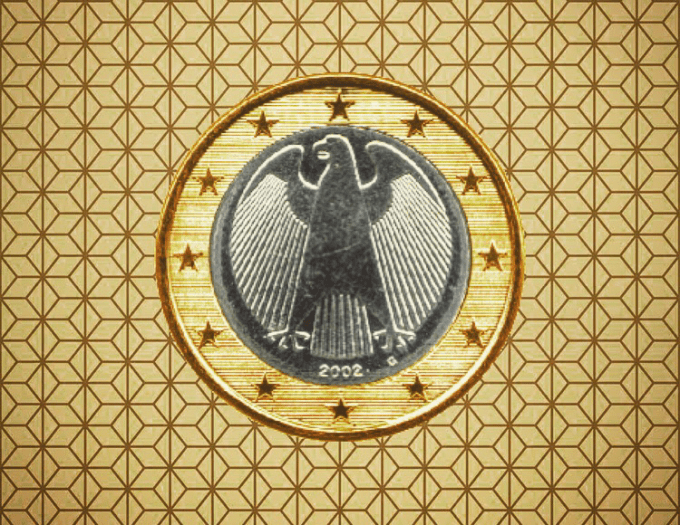

 An output of the euro will not necessarily have the benefits attributed to it. It is true that if some countries were not members of the area, their currencies have been devalued. But it would have been a constraint, which would force them to raise interest rates to restore confidence. The euro still offers advantages in terms of financing the economy, even in Greece. Moreover, even if a country out of the euro, the currency is still used by its citizens, because of the confidence it inspires. The euro is used widely by countries bordering the area. However, what is interesting is the argument put forward by economists who do not believe the euro. They point to the fact that countries in the region are too different to be economically the same currency. Convergence is insufficient. At best, they feel the need to strengthen political governance of the area, so that each country has the same policy. At worst, they predict that these differences can only lead to the bursting of the area, or, at least, the output of some countries. This argument stems from the teaching of economics. The prevailing view is that money is a sovereign domain, a prerogative of the state, and an instrument of economic policy. Therefore, in this paradigm, the euro is part evil. Yet money is not necessarily a prerogative of state. Bills of Exchange, ancestor of paper money, were private. The system of the gold standard can be both public and private. It forced banks to discipline, monetary regulation. Economists, like the Austrians, defending a private currency. Moreover, the fact that the gold standard back in the debate shows that the problem of monetary and economic unrest, it is precisely the fact that money has become an instrument of economic policy.
 The second hypothesis is by far the most likely, to the point that a new banking crisis is possible. Mmany governing bodies in Europe have worked hard to establish a support fund, endowed with impressive response capabilities. European states are unlikely therefore more liquidity crisis. The problem is that they may rather insolvency. What “saves” Greece? Officially, the idea is to provide liquidity to the Greek state to finance for three years, until the remedies are working. The underlying assumption is that the Greek situation can be rectified within three years. In that case, why fund managers expect their stratospheric interest rates to buy Greek debt?

 Perperzona