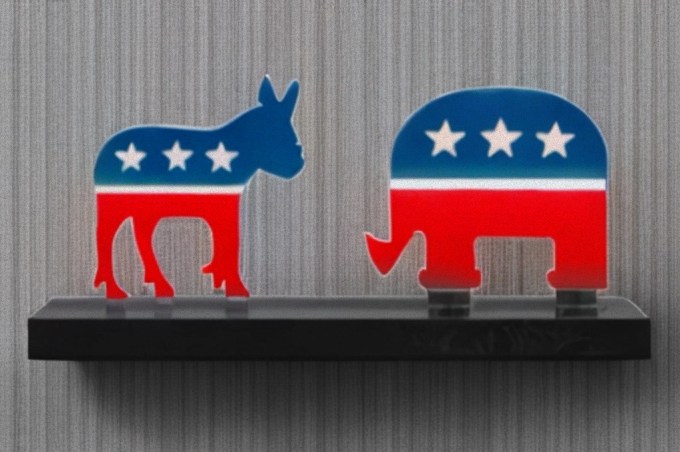
As the presidential elections in the United States approach, the atmosphere is filled with tension, uncertainty, and political maneuvering. Democratic candidate Kamala Harris and Republican candidate Donald Trump are confronting deeply rooted divisions in American society while trying to win over undecided voters in key states. The stakes are enormous, and the fate of American democracy appears uncertain as both sides intensify their strategies for the final phase of the campaign.
The overarching theme of the 2024 election campaign is clear—polarization. This is not just a battle over policy differences, but a stark choice between two opposing views of America. Harris, who took on the candidacy after President Joe Biden decided to withdraw from the race, positions herself as a stabilizing, centrist figure against Trump’s chaotic, populist politics. Yet, despite these clear distinctions, an alarming number of voters remain undecided, reflecting a broader sense of distrust in both the political system and the candidates.
Electoral Rules and Legal Challenges
Among the most noticeable features of this election is the ongoing struggle over electoral rules, particularly in key states. A recent analysis by the Washington Post highlights the legal challenge by the Republican National Committee in Mississippi, where they are trying to invalidate mail-in ballots sent on Election Day that arrive afterward. Such moves are not limited to federal states where voters have consistently voted for the Republican Party—so-called “red” states like Mississippi.
Similar struggles over mail-in ballots are occurring across the country, with Republicans attempting to use judicial rulings to their advantage in key states like Pennsylvania and Arizona. These efforts suggest that Republicans are not relying solely on convincing electoral victories but are focusing on legal and procedural battles to secure even the smallest advantages.
This is not a new tactic for the Republican Party, which has a history of using legal avenues to challenge electoral rules, especially in the context of mail-in voting. The stakes in these legal battles are further heightened by the fact that the Supreme Court, with its conservative majority, has signaled an unwillingness to change electoral rules ahead of the election.
For Harris, the implications of these challenges are serious, as in states like Pennsylvania, where mail-in ballot laws are already complex and subject to change, any alteration of the rules in the final weeks leading up to Election Day could disproportionately impact Democratic voters, who are more likely to vote by mail. Even as both campaigns direct energy toward winning over undecided voters in key states, the struggle over voting mechanisms could be a decisive factor.
The Puzzle of Undecided Voters
Despite the clear differences between the two candidates, both campaigns are targeting an apparently elusive segment of the electorate—undecided voters. A recent analysis by the New York Times summarized the confusion surrounding this group by raising the question of how, in an election with such pronounced differences between candidates, so many voters remain undecided. Polls suggest that roughly one in six voters in key states are still unsure of whom they will vote for. These voters are primarily young, lower-income, and more often of African American or Latino descent—groups that have traditionally leaned Democratic but now express ambivalence toward Harris.
One explanation for this ambivalence is the skepticism many voters feel toward Harris, as concerns about her reliability, preparedness, and even her liberal inclinations persist, even among traditional Democratic voters. Voters from historically marginalized groups—including poorer communities—from whom one might expect support for Harris are questioning whether she truly represents their interests. Some fear that she is “too liberal,” while others are cautious about her relatively untested political experience at the national level.
On the other hand, support for Trump, while narrower in demographic appeal, appears more stable. Despite numerous legal challenges, unpredictable behavior, and a recent assassination attempt that further polarized his base, Trump continues to enjoy the loyalty of his core supporters, which is bolstered by his appeal to deep feelings of discontent, particularly among rural whites and workers who feel alienated from the political system.
However, Trump’s strategy of relying almost exclusively on this base, without significant attempts to attract undecided moderate voters, could prove risky, especially given his failure to address economic issues that could appeal to moderate voters during his televised debate with Harris.
The Battle for the Political Center
Both candidates are making efforts to reach out to the political center, although their strategies differ significantly. Harris, recognizing the delicate balance needed to win over moderate Republicans without alienating her progressive voter base, is taking a cautious approach to her campaign. Her strategy of appearing with Republican figures like Liz Cheney and even invoking the support of former Vice President Dick Cheney reflects her intention to build a broad, centrist coalition, and the message that the country is above the party is directly aimed at voters who may be disappointed with Trump but do not feel entirely comfortable with the progressive wing of the Democratic Party.
Yet, this centrist approach has its costs, and Harris risks alienating key segments of the Democratic coalition, particularly young voters and progressives, who view her outreach to Republican figures with suspicion. Her attempt to balance between these different currents is fraught with tension. For example, as The Guardian notes, her meeting with Arab and Muslim leaders in Michigan highlighted the challenge of balancing domestic political interests with the complex reality of American foreign policy, especially regarding the Israeli-Palestinian conflict. These tensions could cost Harris valuable support in key states like Michigan, where every vote matters.
On the other hand, Trump’s turn toward the center has been less visible, and where it has occurred, it has been clumsy. His attempts to soften his stance on abortion by suggesting that the decision should be left to the states have met skepticism on both sides of the political spectrum; while some conservative voters are concerned that Trump might abandon their cause, polls show that many Americans remain unsure about what another Trump term would mean for abortion rights, primarily because his harsh style and disregard for moderate voters have only solidified his image as a divisive figure rather than someone who could unite the country.
Economic Insecurity and the Forgotten Crisis
Another key factor in this election is the pervasive economic insecurity affecting the nation, as inflation remains a significant issue, especially for lower-income voters and the working class. Both campaigns are focusing on the economic challenges faced by “ordinary” Americans.
However, Trump’s failure to capitalize on these issues during the debate represents a missed opportunity, as his shift to bizarre claims about Haitian migrants and the attack on the Capitol on January 6 not only alienated undecided voters but also diverted attention from potentially strong criticisms of Harris’s alleged inability to address the economic issues faced by average Americans.
Harris has focused on stabilizing the economy, but doubts about her ability to tackle problems like inflation and rising living costs remain a frequent reason for the distrust expressed by surveyed citizens. What undecided voters, particularly those from lower-income and minority communities, are increasingly concerned about is that neither candidate has a clear plan to address the economic challenges they face daily. This dissatisfaction, combined with broader distrust in political institutions, has left a significant portion of the electorate disillusioned on both sides.
The Role of Identity
One of the subtler dynamics of this election is the role of identity. Kamala Harris, as a historic candidate—a darker-skinned woman—represents both an advantage and a challenge. On one hand, her rise to the highest office would be a symbolic victory for diversity and inclusion, while on the other, for some voters, particularly the undecided ones, her identity complicates their perceptions. As an analysis of poll results recently published by the New York Times shows, some voters, notably those from minority communities, express concern that her background could work against her in certain segments of the electorate. This reflects a broader ambivalence about the role of identity in American politics, where symbolic victories do not always translate into political trust or security.
Trump, on the other hand, has long avoided any narrative about diversity and inclusion, instead relying on a white, predominantly male working class. His rhetoric and policies have consistently alienated minority groups, but his loyal supporters seem unfazed by his chaotic tactics.
The contrast between the two candidates is most evident here—while Harris must navigate the complexities of identity politics, Trump’s strategy remains focused on maximizing support from his core base, even if it means alienating all others.
The State of American Democracy
Perhaps the most important theme of this year’s American elections is the fragility of American democracy, given that both Harris and Trump have framed the elections as a struggle for the soul of the nation, yet their approaches to governance and democracy are radically different. Harris has positioned herself as someone who defends democratic norms, emphasizing the importance of compromise, moderation, and the rule of law. Her partnership with figures from the Republican world underscores her commitment to a broad democratic coalition that transcends party lines.
Trump, in contrast, continues to sow doubt about the integrity of the electoral process, and his ongoing legal battles—refusing to accept the results of the 2020 election and incendiary rhetoric—have heightened concerns for the stability of American democracy. His focus on the previous electoral outcome, rather than a vision for the future, reflects a desire to reshape the foundations of the American political system.
This year’s elections are more than just a choice between two, in many ways, opposing candidates—they are a referendum on the future of American democracy.
A Montenegrin version of this article is available on the Antena M portal.
 Perperzona