
Factors Behind the Market Collapse

The world is facing complex economic challenges that require a careful balance between controlling inflation and supporting economic growth. Consumers are making sacrifices due to inflation, technology giants are under pressure, and global markets are unstable. As policymakers seek solutions, investors and the public will need to monitor developments to adapt to the new economic reality.

Global stock markets have recently been on the edge of chaos, chronologically coinciding with the release of a disappointing employment report in the United States. This has exaggerated the cause-and-effect relationship, with reactions to the report data being viewed as the sole factor in the new situation, sparking speculation that the Federal Reserve might lower interest rates. However, a deeper analysis reveals a more complex picture – key causes of the decline are linked to specific investment tactics and global economic changes, particularly in the technology sector, rather than a single isolated report.

Investor reactions to employment reports often seem exaggerated, highlighting that the stock market does not always reflect the real economic picture. Current employment reports appear to be just one of many variations. The market often signals a recession that does not materialize, as evidenced by numerous previous recession predictions that did not come to fruition.

One of the main factors is the phenomenon known as “carry trade” – a strategy where investors borrow money in a currency with a low interest rate and invest in assets denominated in a currency with a higher interest rate, allowing for greater returns due to the interest rate difference.

In carry trading, investors borrow money in a currency from a country with low interest rates, such as Japan, which traditionally has very low or even negative interest rates. The borrowed money is then converted into a currency from a country with higher interest rates, such as the US dollar, and invested in financial instruments or assets that earn interest in that currency. Investors earn on the difference between the interest rate on the borrowed money and the interest rate on the investment. For example, if the interest rate in Japan is 0% and in the US it is 5%, the investor can earn a 5% return minus transaction costs and potential currency risk.

Currency risk is a major risk in this strategy because if the currency of the country with a high interest rate depreciates relative to the currency of the country with a low interest rate, profits may be reduced or the investment result may be negative.

Regarding the current market situation, everything functioned well until there was a change in Japanese monetary policy. The Bank of Japan increased its benchmark interest rate in March for the first time in 17 years and announced another increase at the end of July, signaling the end of the era of ultra-low interest rates in the Land of the Rising Sun, making carry trades less attractive. The yen strengthened against the dollar, reducing the profitability of this trading strategy, and as investors pulled back, markets reacted with declines.

This raises questions about what to expect in the field of monetary policy, particularly concerning the US. The Federal Open Market Committee (FOMC) now has several options—they could opt for an immediate reduction in interest rates, similar to what they did in March 2020 due to the pandemic, or they could wait until the regular September meeting and decide on a larger cut than the initially announced 25 basis points.

What the wider public often does when interpreting sudden shifts in the stock market is to place such phenomena in a political context rather than a detailed market analysis, especially when it comes to the technology sector.

American technology giants such as Apple, Microsoft, Alphabet, Meta, Tesla, Amazon, and NVIDIA have an increasing influence on market trends compared to other factors due to their share of returns in stock market indices. The fact that market performance is not tied to political events is a good sign for the health of the market economy. For instance, technology sector companies, many of which were not favored by Donald Trump during his presidency, recorded excellent business results during that time. We can observe a similar trend now with Joe Biden, who is not particularly favorable towards oil companies, yet these companies are performing well. In other words, investors can achieve profits regardless of the president’s political preferences.

However, what has definitely impacted the markets is how businesses across various sectors have experienced the trend of adopting artificial intelligence solutions, as concerns about overestimated demand for specialized chips and servers have also burdened sentiment. Consequently, NVIDIA, which briefly became the most valuable company in the world this year, lost more than 25% of its value from its record high in June.

Despite the sharp decline, markets are recovering. Asian markets have already regained a significant portion of the lost ground, and US futures have also significantly risen after the earlier week’s decline. Although a recession is inevitable at some point, it is not expected to be triggered by recent stock market events.

Although recent events, including the employment report and changes in Japanese monetary policy, have caused significant turbulence in the capital markets, it is important to understand that these shifts are part of a broader picture and that markets have reacted to a range of factors, from specific investment strategies like carry trade to global economic changes and technological innovations. Regarding the Fed, the most likely option is to maintain the status quo in interest rate policy to avoid additional turbulence.

While short-term volatility is inevitable, the fundamental values of the market economy continue to provide a stable foundation for growth and development, and adapting to new conditions and understanding the complexities of current challenges are crucial for navigating this dynamic economic period.

When placing all this in the context of the financial picture in Montenegro, or any small country that is not immediately affected by the crisis, there is no need to fear a repeat of scenarios similar to those seen in 2008. Global markets continuously go through different phases, but unlike the great crisis of the first decade of this century, we have a significantly different situation.

Caution and active monitoring of market movements are certainly necessary, but the key parameter that becomes relevant for Montenegro, prompted by these developments, is the potential changes in interest rate policy and the costs of future credit arrangements that are expected.
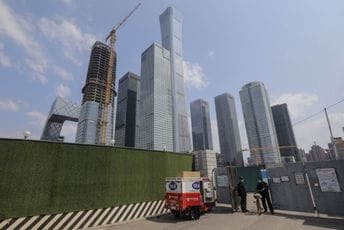
Evergrande Is (Not) The Trigger for a New Crisis

The difficulties faced by the Chinese construction giant could result in consequences of significant magnitude if the government in that country doesn’t find a mechanism for rescue. However, despite many drawing comparisons to the onset of the global financial crisis in 2008, the situation, though extremely complex, is still different.

The Chinese company Evergrande was relatively unknown to most Europeans until it gained global attention with the announcement that its potential collapse could trigger a new global financial crisis.

This is a Chinese real estate giant founded in 1996, less known in Western markets, and it’s also the largest property developer in the country. Its founder, Xu Jiayin, was the richest man in China in 2017.

Uncertainty and Concern

The Chinese giant is facing bankruptcy, and yesterday it announced the payment of interest on a small portion of its debt, but without reassuring the financial markets, which are still waiting to see if the official Beijing government will intervene and to what extent.

The events in Evergrande have sparked concerns worldwide that a scenario similar to the one caused by the collapse of the investment bank Lehman Brothers in September 2008 could be repeated.

The feeling of concern has significantly impacted the capital markets, with all eyes on the Chinese government, which hasn’t clearly indicated whether it will intervene in favor of the troubled construction conglomerate facing a debt of 260 billion euros.

While outstanding obligations still threaten the group’s survival, Evergrande has managed to reach an agreement with bondholders for a small portion of its debt.

In a letter sent to the Shenzhen Stock Exchange, the group mentioned that one of its subsidiaries, Hengda Real Estate Group, had been negotiating a plan to pay interest on a bond due in 2025. According to Bloomberg’s data, Evergrande was supposed to pay 232 million yuan (30.5 million euros) of debt that matured last Thursday, related to a bond with a 5.8% interest rate, limited to the domestic market.

The announcement of interest payments wasn’t sufficient to calm the markets. The Shenzhen and Shanghai stock exchanges continued to decline, even after a four-day pause due to national holidays. The Hong Kong Stock Exchange remained closed.

Creditors’ Claims

The repayment deadline for loan installments is today, and the group hasn’t specified how it intends to settle them. The partial repayment announcement is meant to reduce instability and prevent a collapse.

For trust to truly return, market participants need to see a genuine restructuring of Evergrande. The response from the Chinese government is most anticipated by the owners of 1.4 million apartments under construction, who organized protests outside the company’s headquarters and in various locations across the country last week.

Creditors, employees, and suppliers are also demanding Evergrande fulfill its debts, which increased investments until last year when Beijing tightened borrowing rules. The group’s chairman, who currently denies the possibility of bankruptcy, assured employees that Evergrande would “soon emerge from the darkest days,” as reported by Chinese state media two days ago.

Multi-billionaire Xu Jiayin reassured that construction would continue as planned and the group would offer a “response to customers, investors, partners, and financial institutions.” However, he didn’t provide further details.

The notion of Evergrande’s collapse raises concerns due to its colossal debt exceeding 300 billion euros and its economic involvement spanning over three million direct and indirect jobs, projects in more than 200 cities, and partnerships with over 8,000 companies.

Evergrande’s downfall could have significant implications for China’s job market, as it employs 200,000 people and indirectly engages over 3.5 million associates. Furthermore, it’s facing illiquidity, leading many affiliated companies to halt their activities, consequently stopping construction projects nationwide.

Differences Compared to the Year 2008

Although uncertainty has gripped the markets lately, with questions arising about whether China is heading toward a collapse of the giant Evergrande, the situation is not comparable to the one the world witnessed in 2008. The current scenario is not likely to trigger a global crisis, though efforts to overcome the problem will involve numerous entities.

Despite liquidity issues, the effects of a potential bankruptcy wouldn’t be as severe as the collapse of hedge funds with massive positions or a bank with assets approaching zero value.

Land, Not Financial Assets

Comparisons to Lehman Brothers are inappropriate, as Evergrande owns tangible real estate assets, including land, whose value can fluctuate but won’t disappear entirely. Lehman Brothers, in contrast, had financial assets whose value was completely wiped out. A single stimulus could enable Evergrande to complete some properties, sell them, and gradually repay its debt.

The present value of the land and housing projects is estimated at slightly over 1.4 trillion yuan (185 billion dollars). This is a crucial difference from Lehman Brothers, where the complete erasure of value from financial derivatives—credit default swaps and collateralized debt obligations—affected other banks.

Land prices are more transparent and stable than financial instruments, particularly in China, where local governments have a monopoly on the majority of land and can even repurchase it if needed. The value of land isn’t expected to depreciate due to such events.

Moreover, unlike Lehman Brothers, which operated in a somewhat independent system, Evergrande is subject to high levels of government control and involvement in the Chinese real estate sector. Additionally, intermediaries don’t play a pivotal role as they did in the case of the U.S. bank. All strings are in the hands of the Chinese government.

Awaiting Concrete Government Action

Chinese banks and numerous other entities are under the supervision of national institutions with decision-making authority. Even non-state financial services can be controlled to an extent that’s unimaginable outside China.

In other words, if a commercial entity in China truly fails, it means the government has assessed that there’s no broader interest justifying its rescue. Chinese authorities have two key objectives: preventing excessive risk-taking and maintaining stability in the real estate market.

Thirteen years ago, Lehman Brothers went bankrupt, and the U.S. government began rescuing other financial entities. This was also seen in Europe, where banks were saved instead of economies. The collapse of one bank, caused by overvalued assets that were suddenly devalued, was addressed by saving other banks.