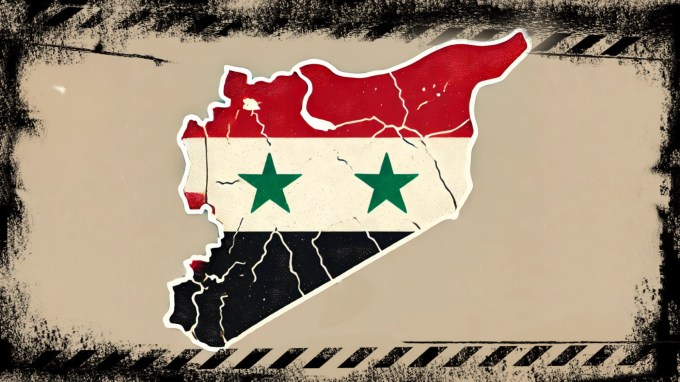
The civil war in Syria is one of the key crisis points of the 21st century, with complex interactions between local, regional, and global powers, each with its own agendas, alliances, and rivalries. For over a decade, the war has involved a broad range of state and non-state actors, from Assad’s regime to Kurdish forces, from Iran and Hezbollah to the United States and Russia. However, despite the blockade that marked most of the war, the sudden and unexpected change in Syria’s political landscape has raised numerous questions about the future of the region, as the rapid advancement of opposition forces in Syria marks a key turning point in the civil war.
The regime of Bashar al-Assad, once thought to be invincible, is beginning to show cracks. The complex political landscape of Syria has been largely altered by recent events, highlighting the fragile nature of Assad’s power.
A London student, who was more interested in new technologies than politics, was unexpectedly called to return to Syria to inherit his father, Hafez al-Assad, the “Lion of Damascus” (Assad means lion in Arabic), who came to power in a 1970 coup. After Hafez died in 2000, Bashar took power. However, the 50-year regime was toppled when rebels launched a stunning attack, seized Damascus, and forced Assad to flee, marking the fall of the long-standing Assad dynasty.
This “accidental president,” as Le Monde called him, was not groomed for leadership, as he was trained to be an ophthalmologist, and his older brother, Basel, was meant to be the successor. However, the tragic death of Basel in a car accident in 1994 pushed Bashar into political prominence. With little experience in governance, he quickly took leadership, relying on his father’s old allies to consolidate power and shape the country’s complex political landscape.
Influence of External Powers
Historically, Assad’s regime largely depended on strategic alliances with Russia and Iran, who invested heavily in its survival. The decline in external support for Assad, particularly from Russia and Iran, led to a sudden decrease in his authority, making his regime more vulnerable. Russia’s diminished military capacity due to the war in Ukraine, as well as Iran’s focus shifting to its conflict with Israel, have significantly weakened the pillars that once upheld Assad’s rule.
In essence, the collapse of the regime is not only a domestic phenomenon but also a result of the withdrawal of these foreign political factors. As CNN points out, the political vacuum created by reduced support for Assad is quickly being filled by forces that were previously marginalized, particularly Hayat Tahrir al-Sham (HTS), a group that began as a faction of al-Qaeda but later presented itself as a more sophisticated actor. With Turkey’s support, HTS has gained ground as an alternative to Assad’s regime, particularly among the diverse ethnic groups in the country that have long been divided.
One of the most significant developments in Syria’s changing landscape is the growing role of Turkey, which has long been involved in the conflict but is now emerging as a key player. Turkey’s involvement in relations with Syria can be traced back to its strategic concerns regarding the Kurdish population along its border. The Syrian Democratic Forces, which received support from the United States in the fight against ISIS, were seen by Turkey as a direct threat due to their links to the Kurdistan Workers’ Party. U.S. support for the Syrian Democratic Forces put Ankara in a delicate position, forced to balance its NATO membership with its own regional security interests.
Despite these tensions, Turkey has become a key player in shaping Syria’s post-Assad future. Turkey’s support for HTS, particularly in recent weeks, suggests that Ankara sees an opportunity to reshape Syria’s political dynamics to its advantage. CNN reports that Turkish President Recep Tayyip Erdoğan openly supported the opposition attack, signaling Ankara’s growing influence on the course of events. The swift military success of HTS, despite its controversial roots in al-Qaeda, marks a new period in Syria’s civil war, where foreign political actors, particularly Turkey, will play a decisive role in determining the country’s future direction. HTS’s apparent evolution from an extremist group to a more inclusive political force, though still unclear, offers Ankara a potential ally in its efforts to secure its borders and influence Syria’s future governance.
Turkey’s growing influence also reflects broader changes in the geopolitical landscape of the Middle East, as its proactive engagement in Syria can be seen as part of its ambition to expand regional influence, especially in the context of diminished Russian and Iranian power. Turkey’s increasing alignment with certain factions in Syria is not only a matter of immediate military interests but also an attempt to establish a long-term strategic presence in the region, where Turkey can exert significant influence over its neighbors and challenge other regional powers.
Shifting Power Balance
The weakening of Assad’s regime coincides with a broader regional trend — the decline of Russian and Iranian influence in the Middle East. Russian military interventions in Syria were a key feature of the conflict, providing Assad with essential air support and diplomatic protection. However, Russia’s involvement in the war in Ukraine has drastically drained its resources, both in terms of military capacity and political focus. Russia’s inability to effectively assist Assad in this new phase of the war was underscored by the comments of Russian Foreign Minister Sergey Lavrov, who acknowledged that Syria’s future is uncertain and beyond Moscow’s immediate control.
Similarly, Iran’s influence has been weakened by its ongoing conflict with Israel, leading to more visible Iranian military activities in the region. The Washington Post evaluates that Iran’s support for Assad has waned, as the Islamic Republic has been overstretched in trying to balance its proxy war policy against Israel and broader regional ambitions. Iran’s inability to create the same level of influence in Syria, along with the shift in global alliances and reduced benefits from its involvement in Syria, suggests that Tehran’s once-dominant role is now facing significant limitations.
This decline in the power of Russia and Iran has created a vacuum in Syria, allowing Turkey to take the initiative. With Russia focused on Ukraine and Iran facing numerous regional challenges, the geopolitical center of gravity in Syria has shifted, and Ankara is seizing the opportunity. The withdrawal of these once-dominant powers from Syria, whether due to overstretching or changing priorities, has significantly disrupted the regional balance of power.
With the sudden erosion of Assad’s regime and the rapid rise of opposition forces like HTS, Syria finds itself at a crossroads, and the country’s future remains highly uncertain, with the possibility of fragmentation still present. Le Monde highlights that Syria’s complex ethnic and sectarian structure makes any attempt at reconciliation or stabilization even more difficult. The rise of HTS, despite its messages of inclusivity, has raised concerns about the potential for greater fragmentation as ethnic groups fight for control of key territories. These divisions, which have existed throughout Syria’s history, are now exacerbated by interventions from foreign powers, each with opposing interests.
The possibility of reaching a resolution through negotiations seems increasingly distant, especially with the weakening of Assad’s regime and the emergence of rival factions vying for control. The West’s failure to act decisively during earlier stages of the conflict may have helped create conditions that allowed extremist groups to flourish, leading to the complex and chaotic situation that now threatens to engulf the entire region.
Syria’s future will depend on how foreign political powers adjust their strategies in response to these changes, and whether Syria moves toward a more stable political order or further fragmentation will ultimately depend on the ability of regional and global actors to reconcile changes in alliances, which continues to delay the end of the Syrian crisis.
A Montenegrin version of this article is available on the Antena M portal.
 Perperzona