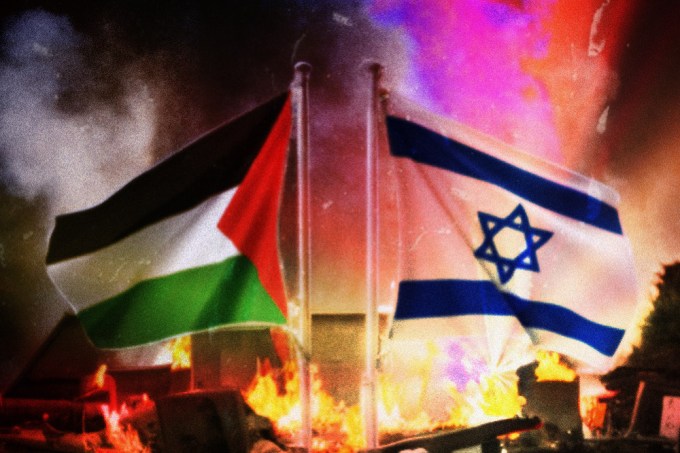
The year marks the aftermath of a sudden yet carefully planned bloody attack by the militant Hamas movement in southern Israel, and the events that followed have fundamentally changed the geopolitical and humanitarian landscape of the Middle East. What began as a terrorist attack by Hamas escalated into a prolonged, multi-front conflict, with devastating consequences not only for Israelis and Palestinians but also for regional stability and international law.
The war started with horrific violence that resonated around the world. At 7:43 AM local time on October 7, 2023, Hamas launched a massive and coordinated attack on Israel, catching the Israel Defense Forces (IDF) off guard and inflicting significant casualties on both civilians and soldiers. Israeli settlements and military bases in the south were attacked, leading to a profound sense of vulnerability in a country that had long prided itself on its military strength. The Washington Post describes this attack as a moment that “turned the Middle East upside down,” marking a point where Israeli military power appeared weakened, and Hamas’s audacity shocked the world.
Israel’s response was swift and devastating. The IDF launched airstrikes and began a ground invasion of Gaza, aiming to dismantle Hamas’s infrastructure and leadership. By October 2024, Hamas’s military power was severely diminished, with many of its fighters killed or hidden in underground tunnels. Iran openly supported the attacks and expressed solidarity with Hamas, while Hezbollah, another key Iranian ally, also suffered significant losses, including the assassination of its leader Hassan Nasrallah by Israeli forces.
Attacks on leaders in both Hezbollah and Hamas led to a temporary shift in the balance of power in the region, with Israel regaining some of its lost defense capabilities and becoming emboldened to expand its military operations into Lebanon.
However, while Israel may have achieved tactical victories, the strategic picture remained more uncertain than before. The conflict, instead of consolidating Israeli security, increased the risk of a wider regional war. According to an analysis published by The Atlantic Council, daily skirmishes along the Israeli-Lebanese border, rocket attacks carried out by Iranian allies the Houthis in Yemen, and previously unseen launches of over 500 Iranian rockets brought the region closer to a direct confrontation between Israel and Iran.
Humanitarian Crisis in Gaza
Despite Israel revitalizing part of its military status, the human cost of its campaign has become alarming and disheartening. Gaza has borne the brunt of the conflict, with the number of Palestinian casualties reaching 41,000, according to data published in the scientific journal Nature. The United Nations estimates that nearly 90 percent of Gaza’s population has been displaced, indicating the catastrophic toll the war has taken on civilians, especially children.
The humanitarian crisis in Gaza has been further exacerbated by the destruction of infrastructure, from homes to hospitals, leaving millions without adequate shelter, food, or medical care, leading to the spread of disease, while the already fragile healthcare system collapsed under the weight of thousands of casualties. The blockade, which Israel tightened as the war progressed, further worsened conditions, resulting in severe food shortages and the spread of waterborne diseases.
While Hamas bears responsibility for the outbreak of the war with its initial attack, Israel’s military response has been widely condemned for its disproportionate impact on civilians. The scale of destruction and loss of life has led to accusations of war crimes from international human rights organizations, including the United Nations and the International Criminal Court (ICC). The Atlantic Council emphasizes that both Israeli and Hamas leaders are under investigation by the ICC, which seeks to hold them accountable for the devastation caused during the conflict.
Collapse of International Norms
In addition to the immediate humanitarian and military dimensions of the war, the conflict seriously undermined the liberal international order established after World War II. The British Guardian notes that how the war has been conducted, particularly due to support from the United States, has “permanently undermined the idea that all states would be equally accountable under international law.”
This criticism is based on the apparent double standards exhibited by the U.S. and its Western allies, who have vigorously defended Israeli actions despite widespread accusations of war crimes, thus eroding trust in international institutions and norms, especially among nations of the Global South. The war has thus become a focal point for the growing rift between the Global North and South, with the latter increasingly questioning the legitimacy of the U.S.-led international order.
Unconditional support for Israeli actions, as assessed by the Guardian, has deepened doubts that international law applies only to the Global South, while Western powers, particularly the U.S. and its allies, remain beyond the reach of criticism, pushing countries in the Global South to seek alternatives to the U.S.-dominant system. This shift is predicted to accelerate the decline of U.S. global influence, with warnings of an “epidemic of impunity worldwide” if the country does not change course.
Diplomatic efforts to quell the war have so far been largely unsuccessful. Despite numerous mediation attempts by the U.S., Egypt, and Qatar, ceasefires have been short-lived, and peace talks have made little progress. Partly, this is due to the maximalist goals of Israeli Prime Minister Benjamin Netanyahu and Hamas leader Yahya Sinwar, whose intransigence has perpetuated the cycle of violence. Both sides are driven by existential fears and political survival, making compromise extremely difficult.
Cracks Within Israeli Society
In addition to military and geopolitical changes, the war has deeply scarred Israeli society. A nation already divided over controversial Netanyahu’s judicial reforms now faces the social and political consequences of an increasingly nationalist and militaristic ethos. The war has exacerbated long-standing divisions within Israeli society, and although Israel has never fully realized its self-perception as an egalitarian democracy, the past 12 months have essentially conditioned the collapse of this ideal.
The erosion of democratic norms is most evident in the way Israeli authorities treat Arab citizens, who have faced persecution on an unprecedented scale during the war. Protests against the campaign in Gaza have been heavily suppressed, and Arab citizens have largely been excluded from the public discourse, further alienating the Arab population and deepening the already profound rift between Jewish and Arab communities in Israel. The leaders of the country now appeal to the “people of Israel,” referring exclusively to Jews rather than “citizens of Israel,” which once encompassed the entire diverse population of the country.
This rise in nationalist fervor has also led to growing tolerance for violence within Israeli society. Netanyahu’s government, prioritizing military objectives over humanitarian issues, has normalized a brutal form of governance that cares little for international law or democratic values, which could have long-term consequences for the Israeli political landscape, even after the current conflict ends. The legacy of the war will be a more deeply divided society, in which the rule of law and democratic principles will be subordinated to security and survival imperatives.
Palestinian Struggle
On the Palestinian side, the war has only deepened the despair and divisions that have plagued them for decades. Hamas, while militarily weakened, remains a powerful force in Gaza, and its leaders show little willingness for compromise. Sinwar has made it clear that the group seeks not only survival but also to retain control over Gaza and position itself as the dominant actor in Palestinian politics after the war, a goal that complicates prospects for lasting peace, as it is unlikely that its demands, including a permanent ceasefire and humanitarian aid, will be met without significant concessions from Israel—those that Netanyahu is unwilling to make.
The broader Palestinian movement is also divided, as while Hamas enjoys significant support in Gaza, the West Bank remains under the control of the Palestinian Authority, which has been marginalized during the conflict. This division weakens Palestinians’ ability to present a united front in negotiations with Israel and the international community. Moreover, the destruction of infrastructure in Gaza and the displacement of millions of its residents means that any post-war reconstruction will be a colossal task, requiring not only international aid but also a political solution addressing the underlying issues of occupation and self-determination.
Escalation of Conflict in Lebanon
Conflicts spread to Lebanon in September of this year, following the assassination of Nasrallah, who died in an Israeli airstrike. His death led to a sharp increase in Hezbollah’s rocket attacks on northern Israel, prompting Israel to launch extensive bombardments of southern Lebanon and initiate a broad ground invasion aimed at dismantling Hezbollah’s military infrastructure. The conflict soon escalated into a wider regional crisis when Iran, Hezbollah’s main patron, retaliated by firing nearly ballistic missiles at Israel, while other Iranian allies, including the Houthis in Yemen, joined the conflict, intensifying violence and deepening regional instability.
Lebanon has faced catastrophic consequences due to the ongoing conflict between Israel and Hezbollah, with at least 1,000 Lebanese civilians killed and more than 6,000 injured, according to a Washington Post report. The violence has also displaced over a million people, triggering a humanitarian crisis in a country that has been struggling with serious economic problems for years. Israeli airstrikes, aimed at destroying Hezbollah’s military capacities, have inflicted significant damage on Lebanese infrastructure, worsening living conditions for civilians.
A year after the start of the war in Gaza, the Middle East region is not only no closer to peace than it was on October 7, 2023, but the fear of the conflict spreading is even more pronounced. In all of this, the immediate military objectives of both Israel and Hamas remain unfulfilled, while the death toll continues to rise.
A Montenegrin version of this article is available on the Antena M portal.
 Perperzona