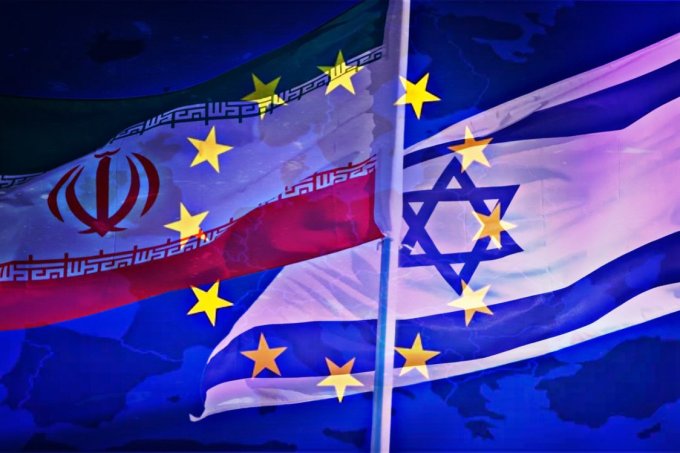
Conflicts in the Middle East are increasingly worrying the rest of the world, while the European Union, caught in internal political struggles, appears indecisive and incapable of taking concrete action. This complex geopolitical situation, in which Iranian missile attacks on Israel and Israel’s aggressive responses are destabilizing the region, exposes an evident weakness in European foreign policy. As the threat of war grows by the day, the EU, grappling with internal divisions and focused on its own problems, sends the message that it cannot assert itself as a decisive player in mitigating the crisis.
The Middle East is experiencing an escalation of violence, with recent attacks, including an Iranian missile strike on Israel, pushing the region to the brink of a catastrophic war. According to Euro News reports, the attack involved around 180 ballistic missiles, sparking fears of a broader conflict that could spread to neighboring countries such as Lebanon and Syria, while Israeli Prime Minister Benjamin Netanyahu’s promise to retaliate only increases the risks of uncontrolled escalation.
European Commission President Ursula von der Leyen and other European leaders have condemned Iran’s actions, calling for restraint and a ceasefire in conflict zones like Lebanon and Gaza. The urgency is felt in Europe, as EU High Representative for Foreign Affairs Josep Borrell warned of the risks of a chain of attacks that could spiral out of control. Similar condemnations of the violence came from UK Prime Minister Keir Starmer and German Chancellor Olaf Scholz. However, these verbal condemnations are mostly reactive, reflecting Europe’s limited influence in the region, rather than proactive diplomatic engagement.
At the core of Europe’s problem lies its inability to present a coherent strategy for addressing the Middle East crisis. According to an analysis published by The Guardian, while the EU has managed to develop ambitious policies on economic and environmental issues, its stance towards the Global South, especially the Middle East, remains uncoordinated and weak. Although the EU previously achieved successes, such as the 2015 Iran nuclear deal, it now seems passive, almost absent from current efforts to resolve or even influence events in the region.
European leaders have repeatedly called for ceasefires and negotiations, but few concrete actions have followed these statements. For instance, despite growing consensus on the need for de-escalation, few European countries are willing to suspend arms sales to Israel or engage more actively in diplomacy. This is further complicated by internal divisions, as evidenced by the EU’s weak performance at the United Nations General Assembly, where its votes on the Israeli-Palestinian conflict were scattered and inconsistent. While individual EU member states, such as France, Germany, and Italy, have historical and strategic interests in the region, these efforts remain fragmented, and Europe’s overall response is, at best, incoherent.
The paralysis in EU foreign policy is closely tied to domestic political challenges, particularly regarding migration and the rise of nationalism across Europe. As violence in the Middle East escalates, especially in Lebanon and Gaza, the risk of a new refugee crisis grows. Lebanon, a key flashpoint in the current conflict, is just over 160 km away from Cyprus, an EU member state, and any regional war could lead to a sharp increase in refugees heading towards Europe.
This possibility is already causing concern in European capitals, particularly in countries where anti-immigration sentiment is on the rise. From France and Italy to Austria and Germany, populist and right-wing parties have gained popularity by exploiting fears of uncontrolled migration, and a new influx of refugees from the Middle East would only exacerbate these tensions. In fact, domestic political pressure often dictates the EU’s foreign policy approach, making it more focused on short-term crisis management, such as migration agreements with North African countries, rather than long-term engagement.
This was evident in the EU’s ineffective response to recent Iranian provocations. Despite the immense importance of this issue, the EU is stuck in its own internal problems. Perhaps the most damaging aspect of Europe’s current position is its sense of helplessness. While the EU has sent aid to Lebanon and deployed peacekeeping troops as part of a UN mission in the country, it appears completely unprepared to deal with the consequences of an all-out regional conflict. Sixteen EU member states, including France, Italy, and Spain, have significant peacekeeping forces in Lebanon, but as tensions between Israel and Hezbollah rise, there is no indication that Europe can protect its interests or have a significant impact.
Although the EU has expressed concern over regional stability and offered diplomatic initiatives, such as von der Leyen’s calls for hostage releases and ceasefire negotiations, these efforts have not changed the situation. Despite Borrell’s public appeal for all sides to show “maximum restraint”, the reality is that Europe lacks the leverage to impose its will in the Middle East. The EU’s focus has shifted to internal problems, and its once prominent role in international diplomacy has significantly diminished.
One of the most glaring failures of the EU is its neglect of the Global South, particularly in relations with Middle Eastern and African countries. As The Guardian notes, increasingly protectionist and inward-looking policies in Europe have alienated many countries in these regions, further diminishing their influence on shaping international outcomes. EU initiatives that have often been announced, such as the €300 billion Global Gateway infrastructure program, have so far had little impact on these countries, while its internal regulations, such as the Carbon Border Adjustment Mechanism, have been criticized for imposing unfair burdens on developing nations.
The crisis in the Middle East highlights a broader challenge facing Europe – its withdrawal from the global stage, particularly about the Global South. As violence continues in the West Bank, Gaza, and Lebanon, the EU risks becoming irrelevant in a region where it once had significant influence. In its current state, Europe is seen more as an economic partner than as a geopolitical power capable of making a decisive impact.
A Montenegrin version of this article is available on the Antena M portal.
 Perperzona