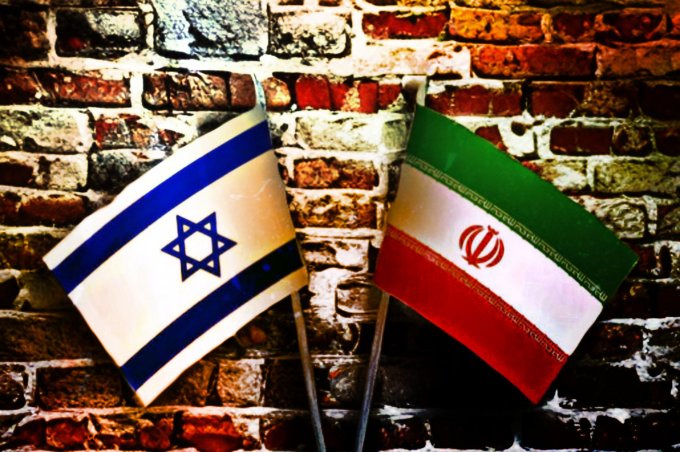
Yesterday’s rocket attacks by Iran on Israel pose a threat not only to Israel’s security but also to American policy in the region, which is facing challenges such as the rise of Iranian nuclear ambitions and uncertainties regarding regional alliances. The Middle East is once again a hotspot of conflict following yesterday’s Iranian rocket attacks on Israel, which threaten to provoke a full-scale regional conflict. While Israeli and American air defenses intercept these attacks, the rest of the world watches the situation with great concern, not overlooking the fact that the balance between deterrence and escalation is becoming increasingly unstable. What once seemed like a distant scenario – a direct military conflict between Iran and Israel – is now becoming a reality.
The recent rocket attacks on Israel are just part of a broader mosaic. In a recent analysis by the New York Times, it was assessed that Iranian nuclear ambitions are no longer a hypothetical threat. Secretary of State Antony Blinken recently warned that Iran is one step away from producing enough uranium for a nuclear bomb. The proximity of the Iranian regime to nuclear capability, combined with its willingness to carry out direct rocket attacks, places the entire Middle Eastern region on high alert. The Iranian regime has shown a readiness to cross boundaries, and as it gets closer to the status of a nuclear power, the stakes for Israel, and indirectly for the United States, have never been higher.
This development represents a decisive moment for U.S. President Joe Biden and his administration. Long-standing U.S. policy to curb the Iranian nuclear program through diplomacy and covert sabotage has failed to prevent Tehran from approaching the nuclear threshold. For decades, Israel has tried to slow Iranian nuclear ambitions through secret actions – assassinations, sabotage, and cyberattacks – but these efforts have always aimed at buying time rather than permanently neutralizing the threat. Today, Israel has fewer options at its disposal, and the Biden administration must confront the uncomfortable reality – that diplomatic engagement is insufficient to deter Iranian aggression.
To understand the seriousness of the current crisis, one must also consider the broader geopolitical dynamics. Iran does not act in isolation. Its partnerships with Russia, China, and North Korea provide it with strategic protection, encouraging Tehran to act more aggressively. According to the New York Times, such alliances result not only in the Iranian attacks on Israel but also in challenges to the liberal international order led by the U.S. Tehran sends a clear message that it is ready to target American allies and test U.S. resolve in the region.
However, the Biden administration’s response so far has been restrained. The hesitation to confront Iran more aggressively reflects a more complex American fatigue with conflicts in the Middle East, particularly after the disastrous withdrawal from Afghanistan. The U.S. administration, cautious not to be drawn into another protracted war, has instead opted for diplomatic gestures and cautious rhetoric. Yet, as Iran continues to act, the question arises whether such an approach is sustainable.
As CBS News reported, U.S. missile defense strategies, rooted in Cold War thinking, have proven inadequate in addressing the complexities of modern missile threats. Billions spent on missile defense have failed to produce a system that reliably counters these threats, whether from North Korea or Iran, leaving the U.S. and its allies in a precarious position – while missile defenses save lives in the short term, they do not offer a long-term solution to the broader strategic problem posed by Iran’s growing missile and nuclear capabilities.
Moreover, the assumption that missile defense alone can ensure security is a dangerous fallacy. Even if technology advances, missile defense systems are fundamentally reactive, contributing little to preventing aggression or neutralizing the root causes of conflict. As CBS News emphasizes, the U.S. has focused on hypothetical missile threats, such as those from North Korea, while ignoring the actual, present danger posed by Iran’s increasingly sophisticated arsenal. The technical challenges of intercepting missiles are enormous, and any system, even if reliable, could easily be overwhelmed by a barrage of missiles.
The consequences of these technological and political failures are severe. The latest Iranian rocket attacks on Israel are not isolated incidents – they are part of a broader strategy of regional destabilization, which includes the use of proxy forces such as Hezbollah and the Houthis. Iran’s support for Hezbollah, which has fired thousands of projectiles at Israel in solidarity with Hamas, illustrates how the conflicts in Gaza and Lebanon are connected to the larger Iranian-Israeli struggle. Israel, already burdened by fighting on multiple fronts, cannot afford to be constrained by American calls for restraint.
However, as Israel prepares for an escalation of military response, it faces a paradox. Biden’s administration’s calls for restraint may reflect a desire to avoid deeper involvement in the conflict, but Washington’s unwavering commitment to Israel’s security ensures that any action by Israel, whether aggressive or not, will ultimately receive U.S. support. As the New York Times notes, the Israeli missile defense system, previously criticized, has proven its worth by saving lives, yet even the most sophisticated defensive technology cannot resolve the fundamental problem – Iran’s pursuit of regional dominance and nuclear weapon capability.
In this context, it is clear that Israel is unlikely to heed American calls for restraint for long. The Israeli government and Benjamin Netanyahu, encouraged by recent successes against Hezbollah and Hamas, may decide that now is the time for a stronger blow against Iran, hoping to deliver a decisive strike against its military infrastructure and nuclear program. While the Biden administration would prefer to avoid direct military involvement, it may face pressure to support Israel in any confrontation with Iran.
This situation poses a dilemma for Biden. Allowing Iran to operate with impunity, whether through support for proxies or advancing its nuclear program, could embolden Tehran and undermine U.S. influence in the region. Moreover, the convergence of these events, along with the campaign for the American presidential election, adds a political dimension to the crisis. As Donald Trump positions himself as a candidate who claims he can restore global stability, Biden must not allow his administration to appear weak or indecisive on national security.
The Biden administration must decide whether to continue with a cautious approach or take a firmer stance against Iran. The consequences of either decision are profound. Escalating the conflict would risk drawing the U.S. into another conflict in the Middle East, while inaction could allow Iran to become a nuclear-armed state. This is a dangerous balancing act for the U.S. as the future of American leadership in the region is now at stake.
The current approach of the Biden administration to the escalating conflict between Israel and Iran is unsustainable. Iranian aggression and nuclear ambitions require a more decisive response, both from Israel and the U.S. While missile defense systems have provided temporary security, they are not a long-term solution. The U.S. must reassess its strategy, acknowledging that failure to act decisively now may lead to even greater conflict soon. The stakes are high, and the eyes of the world are on their next move.
A Montenegrin version of this article is available on the Antena M portal.
 Perperzona